The Many Faces of Nana Patekar: Five Decades of Reinvention
Some actors become stars because they fit the hero image. Others build their legacy by refusing to fit into any mould. Nana Patekar belonged firmly to the second category.
Written by
Anupam Pandey
Published
16 October 2026
Reading time
4 min read
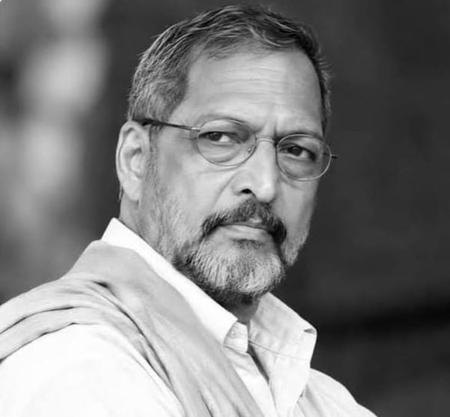
Some actors become stars because they fit the hero image. Others build their legacy by refusing to fit into any mould. Nana Patekar belonged firmly to the second category.
With an unmistakable voice, an intense screen presence, and a remarkable ability to navigate between disturbing drama and effortless comedy, Nana Patekar carved out a unique place in Indian cinema that few performers could replicate.
Over a career spanning nearly five decades, Patekar demonstrated that an actor didn't need conventional glamour to command attention. Instead, he relied on conviction, a deep understanding of human behaviour, and the courage to embody characters that were often complicated, unpredictable, and deeply flawed. His performances could be explosive, quietly vulnerable, intimidating, or unexpectedly funny, sometimes all within the same film.
After his death at age 75 on October 8, 2026, his body of work reminds us how one performer continually challenged the boundaries of stardom. His journey wasn't just about accumulating memorable roles; it was about repeatedly reinventing himself without losing the raw intensity that made him distinctive.
From Theatre to the Big Screen
Born Vishwanath Patekar on January 1, 1951, in Murud-Janjira, Maharashtra, Nana Patekar developed his craft through theatre before establishing himself in films. The discipline he acquired on stage remained central to his acting style, shaping his command of dialogue, physical expression, and dramatic timing.
His early screen work included Muzaffar Ali’s *Gaman* (1978), but he gained wider recognition in the 1980s as he took on increasingly challenging roles. Rather than following the conventional path to romantic-hero stardom, Patekar gravitated toward characters with psychological depth and dramatic complexity.
As a result, his presence could transform a scene even when he was not the central protagonist. His facial expressions, pauses, gestures, and sharply delivered lines became as significant as the words themselves.
The Intensity of Parinda
A defining turning point in Patekar’s career came with Vidhu Vinod Chopra’s *Parinda* (1989). His portrayal of Anna, a violent underworld figure, showcased a disconcerting blend of menace, unpredictability, and psychological complexity.
Anna was not a one-dimensional villain; his volatility made him frightening precisely because his next move was difficult to predict. Patekar infused the role with emotional instability that helped make the film a landmark in Hindi crime cinema.
His performance earned him the National Film Award for Best Supporting Actor and the Filmfare Award in the same category. More importantly, it established him as an actor who could make morally troubling characters impossible to ignore.
Patekar did not rely solely on exaggerated gestures to create intensity; a change in expression, a sudden shift in tone, or a prolonged silence could communicate as much as an entire monologue. This style became one of his greatest strengths.
From Krantiveer to Prahaar: The Voice of Conviction
If *Parinda* revealed Patekar’s darker side, *Krantiveer* (1994) demonstrated his ability to channel anger into a performance driven by social frustration and moral urgency.
As Pratap Narayan Tilak, a disillusioned man confronting corruption and injustice, Patekar delivered a performance that resonated with audiences through its emotional force. His character's speeches became central to the film’s identity, turning dialogue into a tool for confrontation.
Yet Patekar did not want to be known solely for his powerful speeches. With *Prahaar: The Final Attack* (1991), he also stepped behind the camera as a director. This film, centred on military discipline, violence, and the consequences of trauma, reflected his interest in characters shaped by difficult moral choices.
These projects revealed another dimension of his career: an artist interested not only in performing stories but also in exploring the social and psychological forces behind them.
The Vulnerability Beneath the Tough Exterior
For all the anger and authority in his performances, Patekar’s filmography also included characters marked by grief, emotional isolation, and vulnerability.
In Sanjay Leela Bhansali’s *Khamoshi: The Musical* (1996), he played Joseph Braganza, a father whose love for his daughter coexists with the limitations of his own world. The film required restraint rather than the confrontational energy that defined some of his most celebrated roles.
His performance in *Agni Sakshi* (1996) similarly showcased his capacity to portray disturbing emotional dynamics within a domestic setting. He could make a character frightening without reducing him to a caricature, allowing moments of tenderness and menace to coexist.
These performances complicated the public image of Patekar as an actor defined by aggression. Beneath his forceful delivery was a performer who could communicate pain, helplessness, and the contradictions of human relationships.
The Reinvention Nobody Expected: Comedy
Perhaps one of the most striking chapters of Patekar’s career was his transition into mainstream comedy.
In *Welcome* (2007), he portrayed Uday Shetty, a powerful underworld figure whose carefully cultivated authority became a source of humour and intrigue. Through this role, Patekar showcased his versatility and ability to explore a lighter side of his craft.
Filed under
About the author
Anupam Pandey
Reporting and storytelling across theEntertainment vertical for 4thWall Network.
More from 4thWall
Continue with Entertainment.
Related reporting first, followed by more stories from across the 4thWall Network.
‘Baba Cannot Be Put Into Words’: Mallhar Patekar’s Moving Tribute to Nana Patekar
14 October 2026
From Gaman to Krantiveer: The Extraordinary Journey of Nana Patekar
13 October 2026
Amitabh Bachchan Gets Emotional Hearing Late Mother Teji Bachchan’s Voice Ahead of 84th Birthday
10 October 2026
Madhuri Dixit Recalls Being Shocked After Spotting Director Crying During a Shot
10 October 2026