‘Baba Cannot Be Put Into Words’: Mallhar Patekar’s Moving Tribute to Nana Patekar
Some personalities are defined by their achievements. Others leave behind a body of work so distinctive that words seem insufficient to capture the person behind it.
Written by
Anupam Pandey
Published
14 October 2026
Reading time
4 min read
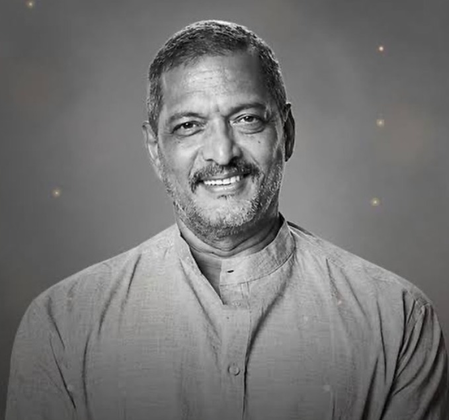
Some personalities are defined by their achievements. Others leave behind a body of work so distinctive that words seem insufficient to capture the person behind it.
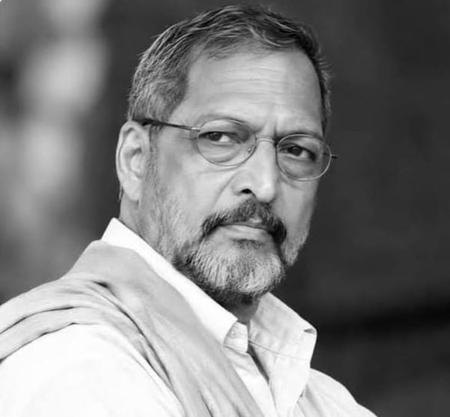
For Nana Patekar, one of Indian cinema’s most recognisable and unconventional performers, perhaps the most meaningful description comes from someone who knows him beyond the screen.
In a brief conversation with 4th Wall Network, Mallhar Patekar, the veteran actor's son, offered a remarkably concise response when asked about his father.
“Baba cannot be put into words. He is beyond.”
It was a short statement, but one that invites deeper reflection. Coming from his son, the words carry a personal significance that no list of awards, celebrated performances or career milestones could quite replicate.
They suggest the difficulty of defining a person whose identity cannot be contained within the roles he has played or the public image he has built over decades.
For audiences, Nana Patekar is an actor whose performances have frequently resisted easy categorisation. His characters have been angry, vulnerable, intimidating, compassionate, flawed and deeply human.
He has occupied the centre of a scene without necessarily relying on the conventions of a traditional leading man. His voice, expressions, pauses and physical presence have become recognisable elements of a screen persona that remains distinctly his own.
Yet the actor audiences encounter on screen is only one dimension of a person’s life.
Beyond the Characters the World Knows
Nana Patekar’s career has unfolded across Hindi and Marathi cinema, with performances ranging from intense crime dramas and socially conscious films to family stories and mainstream comedy.
His work has demonstrated a willingness to move between different cinematic worlds without surrendering the individuality of his performances.
For many viewers, his most memorable characters have become cultural reference points. But the danger of a long and celebrated career is that the person can gradually become inseparable from the characters audiences remember. The actor becomes a collection of classic scenes, powerful dialogues and familiar expressions.
Mallhar’s words remind us that a father cannot be reduced to a public image.
The relationship between a parent and a child exists beyond film sets, public appearances, critical acclaim and audience expectations. It is shaped by experiences that spectators do not necessarily witness and moments that rarely become part of a celebrity profile.
Mallhar did not elaborate on those private dimensions in his brief exchange with us, and his statement should not be mistaken for a longer interview. Nevertheless, its simplicity gives it an emotional resonance of its own.
The choice of the word “Baba” is revealing. It is not the language of a film critic assessing a performance or a journalist documenting a career. It is the language of a son speaking about his father.
The Difference Between a Public Legacy and a Private Life
Public figures are often understood through the stories told about them. Their professional achievements are documented, their statements are scrutinised, and their reputations are shaped by audience and media opinion. Over time, these accounts can create the impression that people fully understand the individual.
But no public record can capture an entire human being.
Nana Patekar’s artistic legacy can be examined through his films, his creative choices and his contribution to Indian cinema. His public life can be discussed through his work outside the industry, his interviews and the controversies that have formed part of his public record. Each offers a different perspective, but none should be mistaken for a complete account of the man himself.
That distinction matters in an age when public personalities are frequently reduced to headlines, viral clips and sharply defined narratives. The pressure to explain everyone and everything can leave little room to acknowledge that some aspects of a person remain private, complicated, or difficult to articulate.
Mallhar’s response does not attempt to explain his father. It does something more understated: it acknowledges the limits of explanation.
A Legacy That Continues to Invite Reflection
The significance of Nana Patekar’s career lies not only in the characters he has portrayed, but also in the questions his performances have encouraged audiences to consider. His work has often engaged with moral conflict, power, social inequality, personal responsibility and the contradictions of human behaviour.
His presence across generations of cinema-goers has also created different points of connection. Some audiences remember the intensity of his dramatic roles; others know him through his comic performances or his work in Marathi cinema. Younger viewers may encounter his films through streaming platforms, film discussions or the circulation of memorable scenes online.
Each generation discovers a different entry point into his work. None necessarily arrives at the same understanding of the person behind it.
That is why a tribute to Nana Patekar need not always begin with a filmography or end with a list of achievements. Sometimes, it can begin with a brief exchange that raises a more personal question: how do we describe someone whose significance to us extends beyond what the outside world can see?
Mallhar Patekar’s answer was not a detailed account of his father’s life. It wasn't meant to be. Its value lies precisely in its brevity.
When Words Are Not Enough
As 4th Wall Network continues its 30 Days of Nana Patekar Spotlight of the Month series, it aims to explore the many dimensions of an artist whose career has left a substantial mark on Indian cinema. His films, performances, creative choices and wider public life each deserve their own examination.
But this brief conversation with Mallhar Patekar offers a different kind of tribute: one that begins not with the actor’s achievements, but with the difficulty of describing the person behind them.
“Baba cannot be put into words. He is beyond.”
Perhaps the most fitting response is not to treat those words as a definitive explanation of Nana Patekar, but to recognise them for what they are: a son’s personal expression of how difficult it can be to define his father.
Cinema can preserve performances. Journalism can document careers. Audiences can debate legacies for decades. Yet the relationship between a father and his son belongs to a world that public recognition can never entirely capture.
And sometimes, in a tribute to an artist who has spent a lifetime expressing himself through characters and stories, the most memorable words are the ones that admit their own limitations.
4th Wall Network’s 30 Days of Nana Patekar continues with a series examining the performances, choices and legacy of one of Indian cinema’s most distinctive actors.
Filed under
About the author
Anupam Pandey
Reporting and storytelling across theEntertainment vertical for 4thWall Network.
More from 4thWall
Continue with Entertainment.
Related reporting first, followed by more stories from across the 4thWall Network.
From Gaman to Krantiveer: The Extraordinary Journey of Nana Patekar
13 October 2026
Amitabh Bachchan Gets Emotional Hearing Late Mother Teji Bachchan’s Voice Ahead of 84th Birthday
10 October 2026
Madhuri Dixit Recalls Being Shocked After Spotting Director Crying During a Shot
10 October 2026
Nana Patekar: The Actor Who Never Needed to Shout to Command the Screen
10 October 2026