From Gaman to Krantiveer: The Extraordinary Journey of Nana Patekar
Some actors become stars because the camera loves them. Others become unforgettable because they make the camera confront something real. Nana Patekar belonged to the latter category.
Written by
Anupam Pandey
Published
13 October 2026
Reading time
4 min read
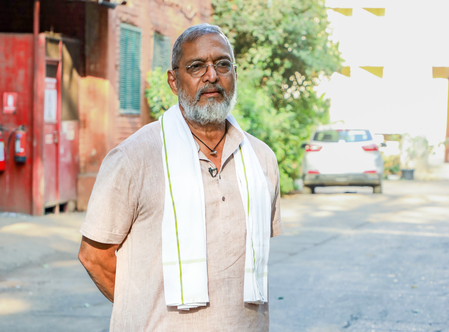
Some actors become stars because the camera loves them. Others become unforgettable because they make the camera confront something real. Nana Patekar belonged to the latter category.
Nana Patekar didn't need the conventional glamour of Hindi cinema, elaborate mannerisms, or carefully manufactured screen personas to command attention. He had a face that could communicate anger, vulnerability, and exhaustion; a voice that could silence a room; and an intensity that made even the smallest gesture feel significant.
With his passing on October 8, 2026, at the age of 75, Indian cinema has lost one of its most distinctive performers. Yet Nana Patekar’s legacy cannot be measured simply by the number of films he appeared in, the awards he received, or the dialogues audiences still remember.
His contribution lies in the kind of actor he chose to become: uncompromising, unpredictable and unwilling to make his performances comfortable merely because comfort was commercially convenient.
In this edition of *Spotlight of the Month*, 4thWallNetwork looks back at the extraordinary journey of an actor who moved from serious, socially conscious cinema to mainstream superstardom without entirely surrendering the unconventional sensibility that defined his craft.
The Beginning: Finding His Voice in *Gaman*
Nana Patekar’s journey on the big screen began with Muzaffar Ali’s *Gaman* in 1978. It was not the kind of debut that immediately made him a household name, but it placed him in a tradition of filmmaking that valued atmosphere, character, and the complexities of ordinary lives.
That beginning matters because Patekar never seemed particularly interested in becoming a conventional Bollywood hero. His screen presence did not depend on the familiar ingredients of romance, glamour or effortless charm. He was more compelling when his characters were troubled, conflicted, angry or carrying the weight of circumstances they could not entirely control.
His early years were shaped by theatre and serious acting, disciplines that demand an understanding of character beyond the surface. Theatre requires an actor to communicate through voice, movement, timing and emotional truth. Those qualities would eventually become central to Patekar’s cinematic identity.
Something strikingly unpolished about his performances, in the best possible sense. He could appear uncomfortable, impatient or emotionally exposed. Rather than conceal those qualities, he often used them to make his characters feel human. His performances did not always invite admiration; sometimes, they demanded attention by making audiences uncomfortable.
In an industry where image can matter as much as acting, Patekar built a career on the conviction that the character had to matter more than the performer’s vanity.
*Parinda*: The Performance That Changed The Trajectory
If *Gaman* marked the beginning, Vidhu Vinod Chopra’s *Parinda* in 1989 became a defining turning point in Patekar’s career.
In the film, Patekar played Anna, a violent and deeply unsettling underworld figure. He did not portray the character as a conventional cinematic villain whose evil could be understood through exaggerated gestures alone. Instead, he gave Anna a frightening unpredictability. The character could be quiet one moment and terrifying the next, making his violence feel even more disturbing.
The performance demonstrated Patekar’s remarkable control of intensity. He understood that a character didn't have to shout constantly to dominate a scene. Sometimes, the pause before a line, the stillness in a face or a sudden change in tone could communicate far more than an extended monologue.
His work in *Parinda* earned him the National Film Award for Best Supporting Actor, bringing major recognition to an actor who had spent years developing his craft away from the usual machinery of stardom.
*Parinda* mattered more than an award. It helped establish Patekar as an actor who could make morally complicated characters compelling without making them easy to like. His Anna was not simply a villain to be defeated. His presence altered the film's atmosphere.
That ability to command a scene would become one of Patekar’s defining strengths.
*Krantiveer*: When an Actor Became a Cultural Force
Five years after *Parinda*, Nana Patekar delivered one of the most memorable performances of his career in *Krantiveer* (1994).
As Pratap Narayan Tilak, a disillusioned man who becomes a forceful voice against corruption and injustice, Patekar brought together anger, moral conviction and emotional vulnerability. The character was no polished public speaker or traditional hero. He was rough around the edges, frequently confrontational and driven by a deep frustration with the world around him.
That was precisely what made the performance effective.
Patekar gave Pratap a sense of urgency that audiences could feel. His dialogue delivery was powerful, but the performance was not built on volume alone. Beneath the anger was a character wrestling with disappointment, disillusionment and the belief that society had become too comfortable with injustice.
*Krantiveer* earned Patekar the National Film Award for Best Actor, further establishing his position among Hindi cinema’s most respected performers.
The film also demonstrated something important about his relationship with audiences. Patekar could inhabit the world of parallel cinema and then connect with mainstream moviegoers without losing the qualities that made him distinctive.
His performance became associated with a particular kind of cinematic defiance: a refusal to accept corruption, indifference or hypocrisy as inevitable features of society. The film’s emotional force came from the character’s frustration, but also from the uncomfortable questions it placed before its audience.
Patekar did not merely play Pratap Narayan Tilak. He made the character difficult to ignore.
Beyond the Angry Man: The Range Behind the Intensity
It would be easy to reduce Nana Patekar’s legacy to his fiery performances and unforgettable dialogue delivery. That, however, would overlook the range that made his career so remarkable.
In *Khamoshi: The Musical* (1996), directed by Sanjay Leela Bhansali, Patekar played Joseph Braganza, the father of a young woman raised by deaf parents. The role demanded a different kind of emotional expression, one shaped by family relationships, tenderness, frustration and sacrifice.
Here, his intensity did not simply emerge as aggression. It became part of a deeply personal portrayal of a father whose love and limitations shaped his daughter's life.
In *Ab Tak Chhappan* (2004), he portrayed Sadhu Agashe, a police officer working in the world of encounter killings and organised crime. The performance was controlled, restrained and morally complicated. Rather than presenting a straightforward hero, Patekar inhabited a man whose professional duties and personal convictions existed in uneasy tension.
These performances revealed the actor’s ability to move between different emotional registers without becoming unrecognisable. He could be explosive, vulnerable, quietly affectionate or unsettlingly detached. What connected these characters was not a single mannerism, but his willingness to explore their contradictions.
Then came Uday Shetty in *Welcome* (2007), a role that introduced another side of Patekar to a broad audience. As a gangster whose threatening image repeatedly collided with absurd situations, he demonstrated impeccable comic timing.
His performance showed that the same voice and stern expression that made him formidable in serious cinema could become hilarious in comedy. The humour worked because he played the absurdity with conviction rather than winking at the audience.
For an actor often associated with anger, Uday Shetty reminded audiences that comic precision can be as demanding as dramatic intensity.
A Career That Crossed Languages and Generations
Patekar’s contribution extended beyond Hindi cinema. His work in Marathi films, particularly *Natsamrat* (2016), demonstrated his continued commitment to emotionally demanding performances.
In *Natsamrat*, adapted from the celebrated Marathi play by V. V. Shirwadkar, he played Ganpat Ramchandra Belwalkar, a veteran stage actor confronting ageing, family relationships and the loss of his place in the world.
The role carried added significance for a performer whose career had been shaped by theatre. It explored the painful distance between a life spent inhabiting characters and the vulnerability of the person beneath the performance.
Patekar’s portrayal brought the character’s pride, loneliness and emotional devastation to the forefront. It was not simply a story about an ageing performer. It was about identity, dignity and what happens when the world no longer offers someone the recognition to which they have grown accustomed.
For audiences who had known him primarily through the anger of *Krantiveer* or the menace of *Parinda*, *Natsamrat* offered another reminder of the emotional depth he could bring to a role.
His career crossed generations because he never belonged entirely to one cinematic era. He could inhabit the serious storytelling of one period, the mainstream cinema of another, and the more layered, character-driven films that continued to emerge later in his career.
The Man Beyond the Screen
Nana Patekar’s public image was often associated with his straightforward manner, modest lifestyle and reputation for being demanding about his work. Stories about his personal habits and temperament have circulated widely, though individual anecdotes should be treated carefully unless independently verified.
More firmly established is his involvement in social work. Alongside actor Makarand Anaspure, Patekar co-founded the Naam Foundation in 2015. The organisation has worked on issues affecting drought-hit communities and farmers in Maharashtra, including water conservation and rural support.
This work adds another dimension to his public legacy. Beyond the characters who confronted injustice on screen, Patekar also supported efforts to address real challenges faced by rural communities.
It would be simplistic to suggest that an actor’s charitable work tells us everything about the person behind the performances. But his involvement with the foundation demonstrates that his public life extended beyond cinema and that he devoted time and resources to causes affecting vulnerable communities.
His career also carried its share of controversies and difficult public conversations. A meaningful tribute need not erase those complexities or present any public figure as flawless. Respecting an artist’s legacy means acknowledging the work, the influence and the full humanity of the individual rather than turning remembrance into unquestioning praise.
Awards Were Recognition, Not the Whole Story
Patekar received three National Film Awards during his career and was honoured with the Padma Shri in 2013.
These recognitions reflected the breadth of his contribution to Indian cinema. Yet awards alone cannot fully explain why his performances remained memorable.
His influence came from his willingness to take risks with a character. He did not always make his performances attractive or easy to consume. He allowed characters to be unpleasant, vulnerable, contradictory and occasionally difficult to understand.
His distinctive voice became a storytelling instrument. His expressions could suggest frustration before he spoke. His silences could be as meaningful as his speeches. Even in films that relied heavily on dramatic dialogue, he often made the moments around the words matter.
That quality is difficult to quantify. You can't reduce it to a box-office figure or a list of awards. It is the difference between an actor who performs a scene and an actor who changes it simply by being present.
## From *Gaman* to *Krantiveer*: A Legacy That Endures
Looking back at Nana Patekar’s journey, the distance between *Gaman* and *Krantiveer* represents more than the passage of sixteen years. It captures the evolution of a performer who built his identity through unconventional choices, demanding roles and an unmistakable screen presence.
From the menace of *Parinda* to the emotional complexity of *Khamoshi: The Musical*, the moral ambiguity of *Ab Tak Chhappan*, the comedy of *Welcome* and the tragedy of *Natsamrat*, Patekar repeatedly demonstrated that an actor’s greatest asset is not a fixed image but the ability to inhabit different human experiences.
His death on October 8, 2026, marks the end of a remarkable life in cinema. But the work remains, preserved in films that continue to introduce his performances to new audiences. <Cite refs={["turn402035search0","turn402035search1"]}/>
For younger viewers discovering him today, Nana Patekar offers a lesson in the value of craft. Stardom can be manufactured, publicity can create temporary attention and trends can change with every passing season. But performances built on observation, discipline and emotional conviction have a different kind of longevity.
He was never an actor who needed to fit neatly into the industry's idea of a leading man. He made space for himself by bringing a singular personality to the screen, one that could be intimidating in a crime drama, moving in a family tragedy and unexpectedly funny in a commercial comedy.
That is why the journey from *Gaman* to *Krantiveer* remains worth revisiting. It is the story of a performer who did not simply chase recognition but built a body of work that made recognition inevitable.
Nana Patekar’s legacy will live not only in the dialogues audiences remember or the awards displayed in his name, but in the scenes that continue to hold their attention long after the credits roll.
Some actors leave behind famous characters. Others leave behind a way of understanding performance itself.
Nana Patekar did both.
**For 4thWallNetwork, his journey is a reminder that true cinematic distinction does not always come from glamour, but from the courage to remain unmistakably oneself.**
Filed under
About the author
Anupam Pandey
Reporting and storytelling across theEntertainment vertical for 4thWall Network.
More from 4thWall
Continue with Entertainment.
Related reporting first, followed by more stories from across the 4thWall Network.
Amitabh Bachchan Gets Emotional Hearing Late Mother Teji Bachchan’s Voice Ahead of 84th Birthday
10 October 2026

Madhuri Dixit Recalls Being Shocked After Spotting Director Crying During a Shot
10 October 2026
Nana Patekar: The Actor Who Never Needed to Shout to Command the Screen
10 October 2026

Shreya Ghoshal Reunites With Sonu Nigam for ‘Tujh Mein Basi Meri Jaan’
9 October 2026