Nana Patekar: The Actor Who Never Needed to Shout to Command the Screen
Nana Patekar belonged to the rare category of actors who could do both. He could fill a screen with barely a movement, silence a room with a single look and make a few words feel heavier than an entire monologue.
Written by
Anupam Pandey
Published
10 October 2026
Reading time
4 min read
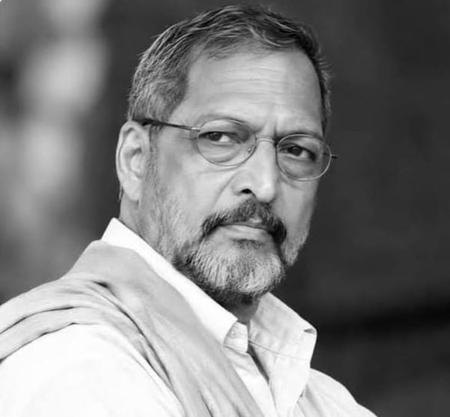
Nana Patekar belonged to the rare category of actors who could do both. He could fill a screen with barely a movement, silence a room with a single look and make a few words feel heavier than an entire monologue.
Some actors enter a scene and immediately demand your attention. Others make you forget you are watching a performance at all. Nana Patekar never needed Bollywood's conventional machinery to establish his presence. His face, his voice and the restless intelligence behind his eyes were enough.
With Nana Patekar’s passing at the age of 75 on October 8, 2026, Indian cinema has lost one of its most distinctive performers. Yet to remember him only through the circumstances of his death would be to overlook what made his life in cinema so extraordinary. His legacy is not simply a collection of celebrated performances or awards. It reminds us that acting, at its most powerful, has little to do with looking like a star and everything to do with making an audience believe in a human being.
Bollywood has traditionally understood stardom through familiar images: the romantic hero, the impeccably dressed leading man, the larger-than-life action star whose arrival is announced through music, spectacle and carefully constructed glamour. Nana Patekar rarely fitted comfortably into these categories. He was too unpredictable to be confined to one screen persona, too intense to be reduced to a conventional hero and too willing to expose the uglier corners of human nature to be easily packaged.
His performances carried a roughness that felt almost uncomfortable. His expressions could shift from tenderness to suspicion in an instant. A slight tightening of his jaw, a pause before answering a question, or a glance that lingered a second too long could change the atmosphere of an entire scene.
He did not always play characters who were easy to like. Often, they were angry, damaged, morally complicated or capable of extraordinary cruelty. But even when his characters were difficult to sympathise with, they were difficult to ignore. He gave them histories, contradictions and vulnerabilities that existed beyond the immediate demands of the screenplay.
That was the difference between merely occupying a role and inhabiting it. Patekar made the audience feel that something was happening inside his characters even when nothing was being said.
Few performers in Indian cinema possessed a voice as immediately recognisable as Nana Patekar’s. Its texture was distinctive, but its real power came from the way he used it. He could make a line sound like a threat without raising his volume, deliver a rebuke with the weariness of someone who had seen too much and turn an ordinary sentence into a declaration of principle.
His dialogue delivery often seemed to exist somewhere between conversation and confrontation. Words came with deliberate pauses, abrupt changes in rhythm and an intensity that suggested the character was thinking, calculating or struggling with an emotion even as he spoke.
Consider Krantiveer, where his performance as Pratap Narayan Tilak became one of the defining roles of his career. The film gave him opportunities for the kind of impassioned speech that Hindi cinema remembers, but what made the performance endure was the conviction behind it. His anger did not feel like an ornamental device designed to excite an audience. It seemed to emerge from a character who could no longer tolerate the world around him.
The same force appeared in a very different register in Parinda. As Anna, Patekar created a chilling presence through volatility and unpredictability. His character was frightening not merely because he could be violent, but because the audience could never be entirely certain what might provoke him. The menace lived as much in the smallest gestures as in moments of explosive rage.
His voice could dominate a scene, but he knew it didn't have to. Sometimes the most effective thing he could do was stop speaking.
The title of this tribute rests on a simple observation: Nana Patekar never needed to shout to command the screen. That does not mean he was an actor of quiet performances alone. His filmography contains some of the most explosive moments in Hindi cinema. Rather, it means his intensity never depended on volume.
He understood the value of contrast. An outburst became more powerful when it followed stillness. A moment of vulnerability carried greater weight when it emerged from a character who had spent the rest of the film concealing his emotions. A silence could become threatening when the audience knew what the character was capable of doing next.
In Ab Tak Chhappan, his portrayal of encounter specialist Sadhu Agashe drew much of its impact from this controlled intensity. The character was a policeman accustomed to violence, a professional whose work had blurred the boundaries between duty, personal conviction and moral compromise. Patekar did not need to turn every moment into a dramatic declaration. The character’s exhaustion, economy of movement, and apparent familiarity with death communicated a great deal on their own.
In Khamoshi: The Musical, he demonstrated another side of his craft as Joseph Braganza, a father whose love for his daughter existed alongside the limitations and frustrations of his own world. Here, the intensity was rooted in family, affection and pain rather than menace. The performance showed how much emotional territory he could cover without losing the character's specificity.
These roles remind us that great acting is not about displaying emotion at every opportunity. It is about understanding when an emotion should surface, when it should remain hidden and how the audience can sense its presence either way.
Patekar’s career also challenged the idea that an actor must remain within a carefully defined image to sustain a lasting connection with audiences.
He could be intimidating in Parinda, politically charged in Krantiveer, emotionally exposed in Khamoshi: The Musical and controlled in Ab Tak Chhappan. He could also embrace comedy, most memorably as Uday Shetty in Welcome, where his deadpan reactions and wonderfully distinctive delivery turned the character into an unlikely comic favourite.
The humour worked partly because it came from the same qualities that made his dramatic performances compelling. He took his characters seriously, even when the situations around them became absurd. He did not seem to ask the audience to laugh at a performance. He let the character’s temperament, impatience, and contradictions generate the comedy.
His work in Marathi cinema further demonstrated the breadth of his artistic identity. His performance in Natsamrat, based on the celebrated Marathi play, placed him within a theatre tradition in which language, memory, family, and the fragility of human dignity carry enormous weight. It was another reminder that his artistic home was never limited to the boundaries of Hindi commercial cinema.
Across languages and genres, he remained recognisably himself without making every character feel like the same person. That balance is difficult to achieve. An actor can possess a signature style and still disappear into a role. Patekar understood how to preserve the former without sacrificing the latter.
What made Nana Patekar compelling was not that he always made audiences comfortable. Often, he did the opposite precisely.
His characters could expose the hypocrisy of institutions, the brutality hidden beneath authority and the uneasy relationship between personal morality and public responsibility. They could be righteous without being gentle, vulnerable without being innocent and powerful without being admirable.
That complexity gave his performances a life beyond the plot. The audience might disagree with a character’s decisions or recoil from his behaviour, yet remain interested in understanding the person making those choices.
Cinema frequently asks us to identify with its heroes. Patekar’s work often asked something more demanding: to look closely at people we might otherwise dismiss, fear or judge. He made their contradictions visible without necessarily offering easy answers.
His three National Film Awards and the Padma Shri recognised the significance of his contribution. Still, the more enduring measure of his work lies in the scenes audiences continue to remember. The clipped delivery of a line. The sudden shift in expression. The character who appears to be losing control but is, in fact, revealing something carefully concealed.
These details separate a memorable performance from a merely competent one.
Nana Patekar’s legacy also extends beyond the screen. His association with social initiatives, including the NAAM Foundation’s work supporting farmers and rural communities in Maharashtra, reflected an engagement with concerns beyond the film industry. His public image was often as direct and uncompromising as the characters he portrayed, though an actor's work and an individual's actions must always be understood in their own contexts.
For audiences, however, the most intimate connection was often through his performances. Cinema let people who had never met him recognise something familiar in the characters he played: frustration with injustice, the difficulty of expressing affection, the burden of responsibility, and the stubborn desire to retain one’s dignity in an imperfect world.
His passing leaves behind a filmography that rewards revisiting. Watch Parinda again and notice how menace can emerge from unpredictability. Return to Krantiveer and consider the conviction that makes its confrontations endure. Revisit Ab Tak Chhappan and observe how a character can communicate exhaustion without explaining it. Then watch Welcome and discover how the same performer could turn restraint into comedy.
Each film reveals a different dimension of the same artistic instinct: an insistence on treating characters as people rather than as convenient instruments of a story.
The easiest way to remember a performer is through their most famous dialogue. The harder, more meaningful task is to understand why those words mattered in the first place.
Nana Patekar mattered because he brought consequence to his performances. His characters rarely felt as though they existed to move a story forward. They seemed to carry the weight of everything that had happened before the camera arrived and everything that might happen after it stopped rolling.
He did not need conventional glamour to become unforgettable. He did not need to turn every scene into a spectacle. He did not need to raise his voice to remind the audience that he was there.
He understood that presence is not something an actor can demand. It is something an actor earns, moment by moment, through conviction, precision and the courage to reveal the uncomfortable parts of being human.
Indian cinema will continue to produce stars, commanding performances and unforgettable dialogue. But performers with Patekar’s particular combination of intensity, restraint, unpredictability and emotional depth are rare.
His life in cinema reminds us that the screen does not always belong to the loudest person in the room. Sometimes it belongs to the one who says less, reveals more and leaves the audience thinking long after the scene has ended.
Nana Patekar may be gone, but the characters he brought to life remain. And every time one of them appears on screen, that unmistakable presence returns.
Some actors leave behind films. Nana Patekar leaves behind moments that refuse to let go.
Filed under
About the author
Anupam Pandey
Reporting and storytelling across theEntertainment vertical for 4thWall Network.
More from 4thWall
Continue with Entertainment.
Related reporting first, followed by more stories from across the 4thWall Network.
Amitabh Bachchan Gets Emotional Hearing Late Mother Teji Bachchan’s Voice Ahead of 84th Birthday
10 October 2026
Madhuri Dixit Recalls Being Shocked After Spotting Director Crying During a Shot
10 October 2026

Shreya Ghoshal Reunites With Sonu Nigam for ‘Tujh Mein Basi Meri Jaan’
9 October 2026
The Sahib of Indian Cinema: A Nana Patekar Special
9 October 2026