The Sahib of Indian Cinema: A Nana Patekar Special
Nana Patekar was unusual… He could command millions on screen, deliver dialogue that turned a scene into a memorable moment, and earn some of Indian cinema’s most prestigious honours.
Written by
Anupam Pandey
Published
9 October 2026
Reading time
4 min read
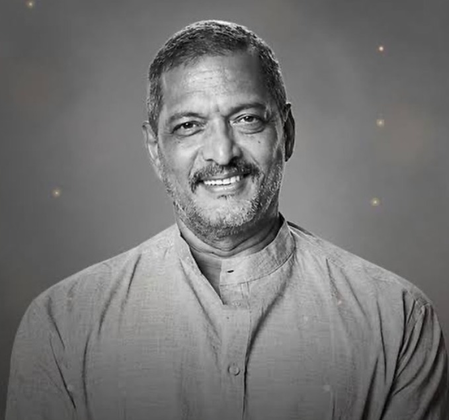
Nana Patekar was unusual… He could command millions on screen, deliver dialogue that turned a scene into a memorable moment, and earn some of Indian cinema’s most prestigious honours.
A life of astounding performances, meek simplicity and a personality that refused to be tamed, Nana Patekar was unusual… He could command millions on screen, deliver dialogue that turned a scene into a memorable moment, and earn some of Indian cinema’s most prestigious honours. Yet, away from the cameras, the image that emerges from the recollections of people who knew and worked with him is remarkably different from the conventional picture of a cinema star.
A modest home. A simple kurta-pyjama. A preference for farming over Mumbai’s glamour. A cup of tea that a visitor might be expected to make himself. And an actor whose uncompromising approach to his craft could make him as intimidating on a film set as he was compelling in front of the camera.
Nana Patekar was a man of contradictions. He could be generous yet fiercely demanding, humble in his lifestyle yet unyielding about his professional worth. He could make people laugh with his comic timing, unsettle them with his intensity and, according to colleagues, leave them wondering how to navigate his temper.
To understand the man behind the performances, perhaps the most revealing stories may not be the ones told at award ceremonies. They are the stories shared by people who sat across from him, worked alongside him and experienced the actor beyond the frame.
A home that did not look like a superstar’s
In Bollywood, success often comes with visible symbols of achievement: expansive homes, elaborate interiors, luxury cars, and carefully managed encounters with visitors. Nana Patekar, according to people who knew him, appeared comfortable with a different set of priorities.
A 2009 Mid-Day feature, in which director Sangeeth Sivan photographed Patekar’s Pune flat and farmhouse, described both spaces as unassuming and simple. Sivan, who directed Patekar in Ek, spoke about the actor’s preference for bare essentials, his personal involvement in designing his surroundings and his pride in farming. The report also described a home where visitors could go into the kitchen and make tea for themselves and Patekar.
It is a detail that says more than an expensive interior ever could. A visitor was not necessarily entering a carefully staged celebrity environment. The expectation was straightforward: make the tea, sit down and talk.
Actor Paresh Rawal, one of Patekar’s longtime collaborators and friends, has shared a similarly memorable anecdote. Recalling an incident involving a producer who visited Patekar’s home, Rawal said Patekar served him mutton and subsequently asked him to clean the utensils after the meal. Rawal recounted the episode in an interview with The Lallantop, and The Economic Times and Filmfare later reported it.
It is an extraordinary story precisely because of its ordinariness. A producer, a meal and the dishes that needed cleaning. No special arrangement simply because the visitor belonged to the film industry.
Whether one interprets the incident as a joke, an expression of Patekar’s unconventional hospitality, or a deliberate rejection of hierarchy, it captures the personality Rawal described: unpredictable, direct, and uninterested in behaving like a conventional star merely because the opportunity existed.
The tea story has another version, too. According to Rawal, director Ram Gopal Varma once approached Patekar about Shiva. When Patekar offered him tea, Varma reportedly said he did not know how to make it. Patekar then called Varma’s mother and complained about her son’s inability to prepare tea. The role ultimately went to Raghuvaran.
These are anecdotes, not a complete account of how Patekar treated every visitor. Together, they paint a portrait of a man whose home did not necessarily follow the familiar rules of celebrity etiquette.
The actor who returned to the soil
Patekar’s simplicity was not limited to his home. It extended to his relationship with farming, an interest that gave him an identity beyond cinema.
In the same Mid-Day feature, Sangeeth Sivan described Patekar growing rice, wheat and chickpeas at his farmhouse near Pune. According to Sivan, Patekar sold the produce and shared the proceeds with the farmers. The report also described him cooking with vegetables grown on his land and taking considerable pride in his work as a farmer.
For an actor whose career placed him among the most recognisable faces in Indian cinema, this was an unusual way to spend time away from the set. Instead of treating rural life as a distant memory, he maintained a direct connection with the land.
He also expressed that connection through his public social work. Patekar and actor Makarand Anaspure spearheaded NAAM Foundation in 2015, responding to drought, water shortages and farmer distress in Maharashtra. The foundation’s work has focused on rural communities and the challenges farmers face.
It would be simplistic to suggest that farming automatically made Patekar more grounded than other actors. But the available reporting does establish that his relationship with agriculture was more than a passing interest. He worked his land, took pride in its produce, and helped address rural distress.
The image of Patekar sitting among farmers, away from the attention of Mumbai’s film industry, is therefore not merely an appealing anecdote. It fits into a broader, documented pattern of engagement with agriculture and rural life.
For Patekar, the farmhouse was not simply somewhere to escape the city. It was a reminder of a world that continued to exist beyond the film industry.
A character actor who knew his worth
Patekar’s approach to money reveals another side of his personality.
He was not necessarily an actor who believed that a simple lifestyle required him to undervalue his work. In fact, one of the most striking accounts of his professional confidence comes from Paresh Rawal.
In an interview with The Lallantop, Rawal recalled that Patekar was the first character actor in Hindi cinema to demand a fee of ₹1 crore for a role, at a time when even leading actors were hesitant to quote such an amount. The Economic Times and The Times of India reported the recollection. It is an important distinction. Patekar’s reputation was not built on playing the conventional romantic hero or relying on the commercial machinery surrounding a superstar. He established his position through performances that could be intense, unpredictable and difficult to forget.
His willingness to command a substantial fee challenged the idea that a character actor should automatically accept a lower valuation of his contribution.
The same insistence on his own terms, however, did not necessarily translate into a desire to accumulate money for its own sake.
In 2010, reports in The Times of India and Mid-Day described how Patekar declined to take his remuneration for the film Paathshaala personally. Producer Shaira Khan confirmed that he had asked the production team to issue the cheques to charitable organisations instead. According to Khan, the decision surprised the producers when payment was due.
This is a documented example of Patekar directing his earnings towards charity. It does not establish that he donated 90 per cent of every fee or followed a fixed charitable formula throughout his career. But it does show that, on at least one significant occasion, he chose to forgo his personal remuneration in favour of charitable organisations.
There is a compelling contrast here. Patekar could insist that his professional contribution be valued appropriately, yet decide that the money earned from a particular project should serve another purpose.
He did not have to choose between valuing his work and supporting a cause. The two could coexist.
The anger that became part of his reputation
Any serious portrait of Nana Patekar must acknowledge the more difficult aspects of his personality. His temper was not merely a rumour circulating the industry; Patekar himself spoke about it openly.
In an interview published by The Indian Express, the actor acknowledged that his anger had cost him opportunities and that people in the industry sometimes hesitated to approach him. He explained that he found it difficult to tolerate what he considered serious mistakes, and admitted that he could react aggressively when he disagreed with someone.
That admission matters. It moves the discussion beyond the convenient explanation that every account of a difficult actor is simply a misunderstanding.
Patekar recognised that his temperament had consequences. His intensity could be an asset in front of the camera, but it could also become a liability in professional relationships.
The same report recalled his conflict with director Vidhu Vinod Chopra during the making of Parinda. It also described how Patekar had to persuade director Amol Palekar to cast him in Thodasa Roomani Ho Jayen, as Palekar was wary of his reputation for anger.
These recollections reveal a paradox. The force of personality that helped Patekar create such memorable performances could also complicate collaboration.
An actor’s conviction can improve a scene, but conviction alone does not guarantee that every disagreement will be productive. A director has to retain the ability to lead, and colleagues should not have to endure hostility simply because an actor is committed to his craft.
Patekar’s own acknowledgement that his anger cost him opportunities makes it possible to discuss this aspect of his legacy without either exaggerating it or dismissing it.
His talent and his temper were both part of the story.
When acting meant every movement mattered
People who worked with Patekar often described a performer who approached his work with extraordinary intensity. His acting could appear explosive, but it was not simply about raising his voice or delivering dialogue with force. His physical movements, expressions and pauses could carry as much meaning as his words.
A recent Indian Express tribute recalled director Jabbar Patel’s experience of casting Patekar in Simhasan in 1979. In a scene in which Patekar’s character had to be beaten, the young actor reportedly insisted, “Mujhe sachhi maro”, asking to be struck for real so the pain would appear authentic. Patel recalled that the actor was genuinely beaten and bore marks on his body afterwards.
The incident captures the seriousness with which Patekar approached performance, though it also raises questions about the lengths an actor might go to in pursuit of realism.
The story fits the intensity that became a defining feature of his screen presence. He didn't always take the easiest route to a convincing performance. At times, his commitment could become extreme.
An industry insider has also recalled Patekar arguing that even a finger could be acting, that the smallest physical movement mattered to a scene. That exact anecdote and wording have not been independently verified, so it is best understood as the insider’s recollection rather than a confirmed quotation.
Nevertheless, the underlying idea is visible in Patekar’s work. His performances often relied on more than dialogue. The movement of his eyes, the tension in his face, a pause before speaking or a sudden change in posture could transform the emotional temperature of a scene.
It helps explain why he was so effective in roles that didn’t fit the conventional image of a Hindi film hero. His characters could be disturbing, wounded, morally conflicted or unexpectedly funny. They did not always ask the audience to like them. They asked the audience to pay attention.
A different equation between the actor and the director
Patekar was not always content to remain a passive participant in the filmmaking process. According to an industry insider who shared recollections for this tribute, he could challenge directors, argue for different approaches to a scene and offer strong opinions about how a performance should unfold.
The insider also recalls that Patekar sometimes preferred to receive script narrations in Pune rather than travel to Mumbai for them. That specific pattern has not been independently established in the published accounts reviewed for this article, and it should be treated as an individual industry recollection.
A separate story, however, illustrates how unconventional Patekar could be during script discussions. In an interview reported by The Indian Express, director Anees Bazmee recalled going to narrate Welcome to the actor. Patekar initially questioned why he needed to hear the story. Bazmee insisted on narrating it, and Patekar eventually listened. Bazmee also challenged the industry’s assumption that the actor was necessarily difficult to work with.
The anecdote suggests that an interaction with Patekar did not always follow the expected script. It could begin with resistance, proceed through disagreement and eventually reach a professional understanding.
This does not prove that his approach was always effective or that every director welcomed his interventions. It does, however, reinforce the picture of an actor with his own ideas about the work, and one willing to express them.
For some collaborators, that intensity may have been demanding. For others, it may have been part of what made him such a compelling performer.
A simple life did not mean a simple personality.
The recollections surrounding Patekar are fascinating because they resist an easy conclusion.
The man who could live in unassuming surroundings could also insist on a substantial fee. The actor who directed remuneration towards charity could be uncompromising in professional negotiations. The performer whose attention to detail could produce extraordinary work could also struggle to control his anger.
These contradictions should not be erased to create a more convenient tribute.
A modest home does not automatically make someone humble in every interaction. Philanthropy does not cancel out professional difficulties. Equally, a difficult temperament does not erase years of achievement or make acts of generosity meaningless.
Patekar’s story becomes more interesting when all these elements are allowed to coexist.
His involvement in NAAM Foundation and his documented decision to direct his Paathshaala remuneration to charitable organisations offer concrete examples of his social engagement. His comments about anger show that he understood the personal cost of his temperament.
Recollections from colleagues such as Sangeeth Sivan and Paresh Rawal also offer glimpses of the private life that existed alongside his public career.
This portrait is more meaningful than a list of awards or an account that turns every unusual habit into evidence of greatness.
Why they called him Saheb
The word saheb carries respect. Still, in Patekar’s case, the stories behind it reveal a man who did not necessarily live up to the expectations that came with his status.
He could be an award-winning actor and still prefer a simple home. He could be a recognised face of Indian cinema and continue to take pride in farming. He could command a substantial fee and, on a particular film, choose to send the money to charity. He could be fiercely committed to his craft while openly acknowledging that his anger had cost him opportunities.
For the people who admired him, his authority came from the force of his personality and the conviction he brought to his work. For those who found him difficult, that same force could be intimidating.
Neither perspective needs to be dismissed.
The insider’s recollections of tea-making, script narrations, farming and life away from Mumbai add another dimension to the stories told by his colleagues. Some are supported by published interviews and reporting; others remain personal anecdotes that deserve to be presented as such.
Together, they suggest a man who did not feel obliged to perform celebrity in his private life.
The legacy beyond the screen
Nana Patekar’s contribution to Indian cinema will be remembered through the characters he brought to life, from the intensity of Parinda and Krantiveer to the realism of Ab Tak Chhappan, the emotional depth of Natsamrat and the comic brilliance of Uday Shetty in Welcome.
His career crossed Hindi and Marathi cinema, and his performances challenged the assumption that an actor needed to fit a conventional leading-man mould to command the screen. His honours included three National Film Awards and the Padma Shri, awarded in 2013.
Yet people who knew him suggest his legacy cannot be measured only through performances and awards.
There is the farmer who remained connected to his land. The actor who, according to Sangeeth Sivan, preferred a home defined by simplicity rather than display. The colleague whose unconventional habits became stories Paresh Rawal recounted. The professional who could command a substantial fee but, in the case of Paathshaala, chose to direct his remuneration toward charitable organisations.
And there is the man who admitted that his temper had cost him opportunities — a reminder that even a celebrated artist can struggle with the aspects of his personality that others find difficult.
The point is not to turn these recollections into a legend in which every contradiction becomes admirable. It is to recognise the complexity of the person behind the performances.
In an industry where celebrity can become an identity in itself, Patekar’s story offers a different kind of portrait: an actor who achieved extraordinary recognition without fully adopting the conventional trappings of stardom, whose relationship with money was more complicated than simple material ambition, and whose commitment to his work could be both his greatest strength and a source of friction.
The films will endure. So will the stories told by those who worked with him.
Some will remember the actor who could transform a scene with a look. Others will remember the temper, the arguments or the unusual demands. Still others will remember the modest home, the farmhouse, the tea and the insistence that a guest clean up after a meal.
Taken together, these stories form a portrait that is imperfect, deeply human and far more revealing than a conventional celebration of celebrity.
The Sahib of Indian cinema was not a man without contradictions. His contradictions were impossible to ignore, and his performances have made it equally impossible to forget him.
Filed under
About the author
Anupam Pandey
Reporting and storytelling across theEntertainment vertical for 4thWall Network.
More from 4thWall
Continue with Entertainment.
Related reporting first, followed by more stories from across the 4thWall Network.

Shreya Ghoshal Reunites With Sonu Nigam for ‘Tujh Mein Basi Meri Jaan’
9 October 2026
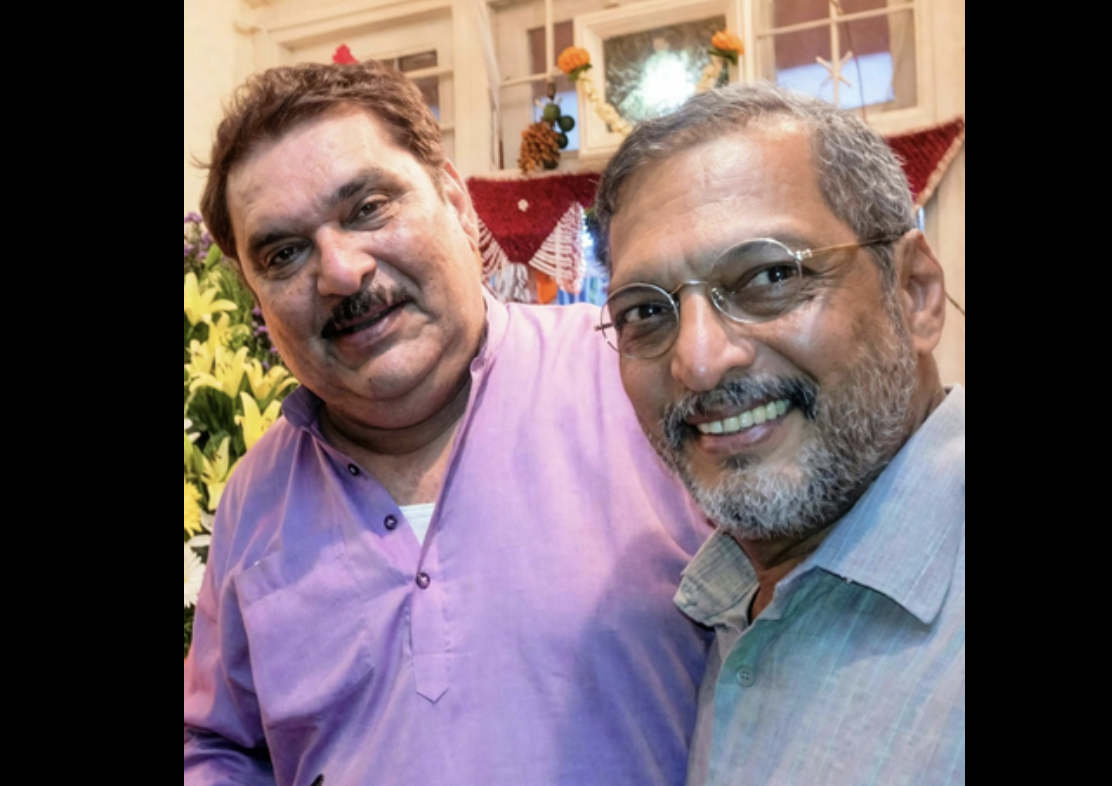
Raza Murad Remembers Nana Patekar’s Generosity, Recalls Support for Farmers and Marathi Theatre Artists
9 October 2026
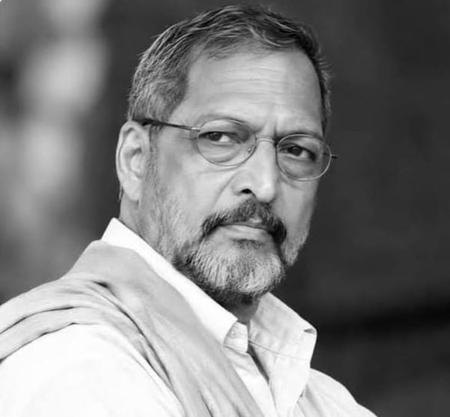
NDA Leaders Pay Tribute to Nana Patekar, Recall His Social Work and Acting Legacy
9 October 2026
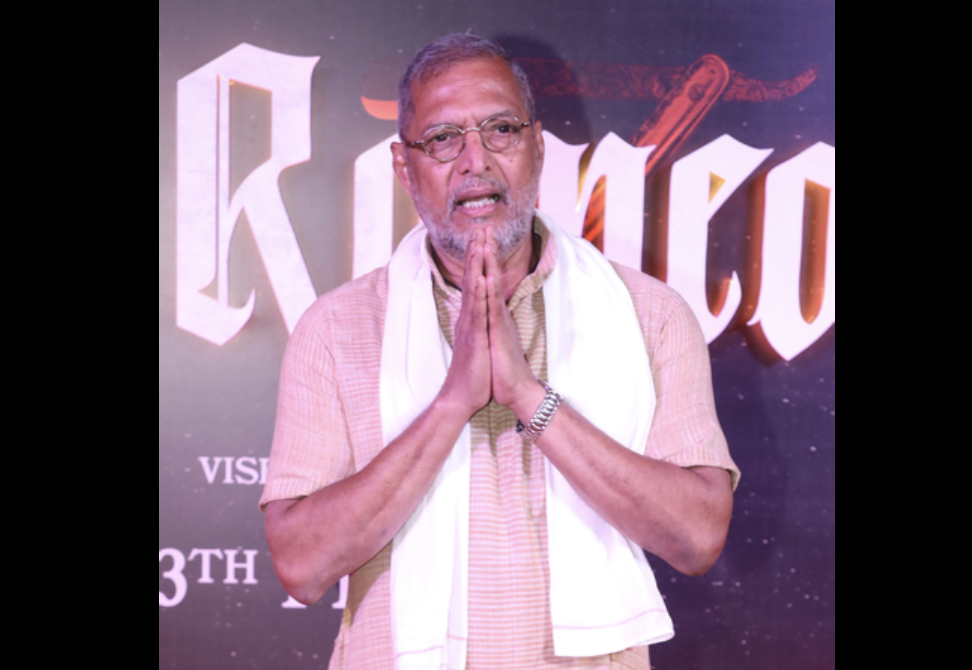
Revanth Reddy, Pawan Kalyan and Other Leaders Condole Nana Patekar's Demise
9 October 2026