A Decade of Pink: The Film That Rewrote the Vocabulary of Consent in Indian Cinema
Ten years after its release, Pink remains a landmark in Indian cinema that redefined how mainstream films address bodily autonomy and consent. By portraying three independent working women in Delhi rather than relying on the traditional "blameless victim" trope, the film dismantled the societal reflex of victim-blaming and asserted that a woman's lifestyle never justifies assault.
Written by
Sheetal Kumar
Published
16 September 2026
Reading time
4 min read
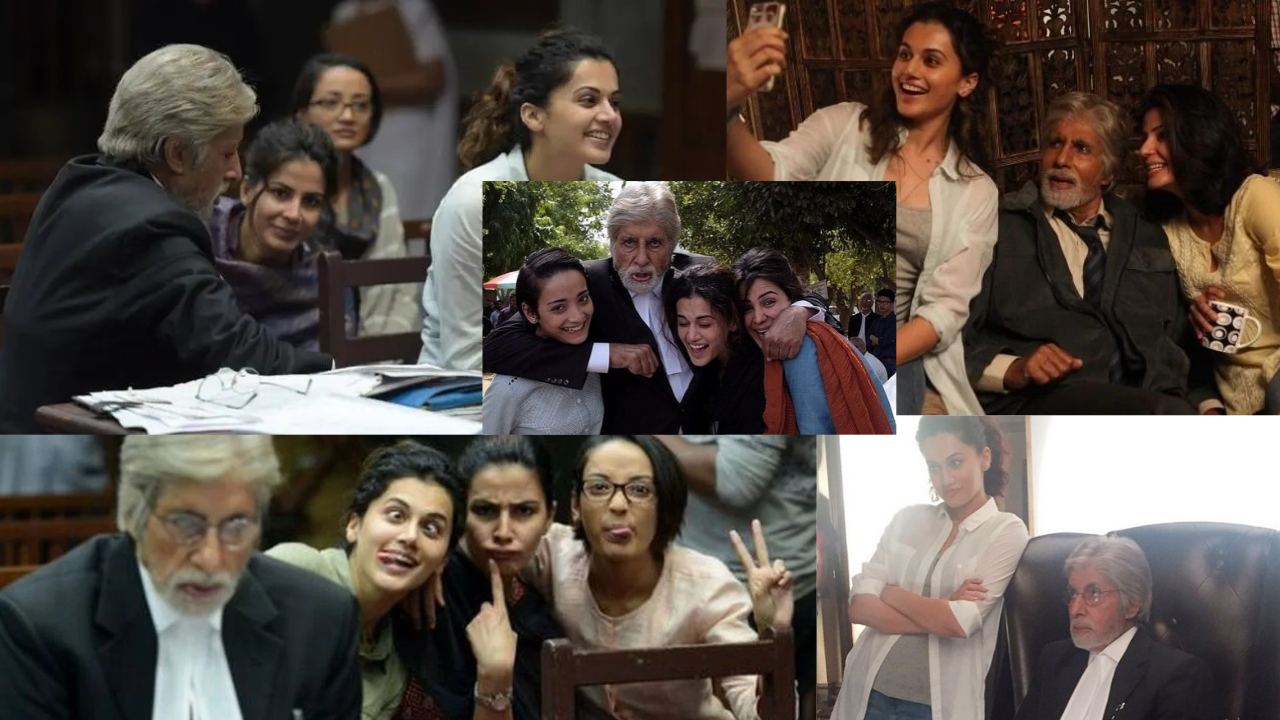
Ten years after its release, Pink remains a landmark in Indian cinema that redefined how mainstream films address bodily autonomy and consent. By portraying three independent working women in Delhi rather than relying on the traditional "blameless victim" trope, the film dismantled the societal reflex of victim-blaming and asserted that a woman's lifestyle never justifies assault.
A full decade after its release, Pink stands as a defining watershed moment in Indian mainstream cinema, permanently recalibrating how films address sexual assault, systemic bias, and female autonomy. Directed by Aniruddha Roy Chowdhury, written by Ritesh Shah, and creatively steered by Shoojit Sircar, the courtroom thriller avoided the melodrama typical of traditional legal dramas. Instead, it delivered an uncompromising portrait of contemporary society by interrogating urban misogyny through three young women; Minal, Falak, and Andrea navigating life in Delhi.
Before the film’s arrival, cinematic empathy for survivors of assault was almost exclusively reserved for characters framed as entirely meek, traditional, and morally faultless. Pink decisively dismantled that archetype. Its protagonists lived on their own terms: they had active social lives, shared drinks with colleagues, attended rock concerts, and dressed casually. By grounding the characters in everyday reality, the narrative confronted the viewer’s inherent prejudices, proving that bodily autonomy is an absolute right that does not diminish based on lifestyle, clothing, or social choices.
The narrative arc operates in two distinct, calculated halves. The first builds claustrophobic dread as a psychological thriller, choosing not to show the physical altercation at the resort until the final credits. This deliberate structural choice forced audiences to share the terrifying isolation of the characters as they faced police intimidation, predatory threats from political elites, landlord hostility, and invasive public scrutiny. It captured the quiet, crushing violence of institutional complicity that occurs long before anyone ever enters a courtroom.
The legal showdown in the second half transformed the trial into an audit of ingrained cultural double standards. Amitabh Bachchan’s restrained performance as defense attorney Deepak Sehgal used cutting irony to dissect the unwritten rules imposed on Indian women, exposing how simple expressions of friendliness or independence are routinely weaponized to justify male entitlement. Alongside him, Taapsee Pannu, Kirti Kulhari, and Andrea Tariang delivered grounded, raw performances that captured the visceral trauma of character assassination on the witness stand, particularly highlighting how regional identity and socio-economic standing complicate justice.
The cultural impact of Pink crystallized in its defining decree: "No means no." In a society where consent was persistently clouded by assumptions of acquaintance, marriage, or past intimacy, the film articulated consent as an unambiguous, non-negotiable principle requiring neither justification nor debate. Ten years later, while its dialogue remains an indelible part of legal and public discourse, the film’s resonance remains uncomfortably acute. A decade after its premiere, Pink functions less as a nostalgic cinematic milestone and more as an urgent, ongoing measure of how far real-world attitudes still have to travel.
Filed under
About the author
Sheetal Kumar
Reporting and storytelling across theEntertainment vertical for 4thWall Network.
More from 4thWall
Continue with Entertainment.
Related reporting first, followed by more stories from across the 4thWall Network.

Asian Games: India Stage Dramatic Comeback to Beat China for Men’s Compound Team Gold
30 September 2026

Rajat Bedi on Moving Beyond Negative Roles: ‘I Don't Want to Limit Myself to One Image’
29 September 2026

Anupam Kher Reveals How Anu Malik Helped Fulfil His Dream of Singing in a Musical
29 September 2026
Ayushmann Khurrana Praises Sooraj Barjatya’s Legacy: ‘He Has the Ability to Connect Families’
29 September 2026