RBI Has Less Room to Keep Interest Rates Unchanged Amid Rising Oil, Inflation: Report
The Reserve Bank of India may have less flexibility to keep interest rates unchanged as rising crude oil prices, higher inflation and tightening global financial conditions put pressure on India's economic outlook.
Written by
Anupam Pandey
Published
29 September 2026
Reading time
4 min read
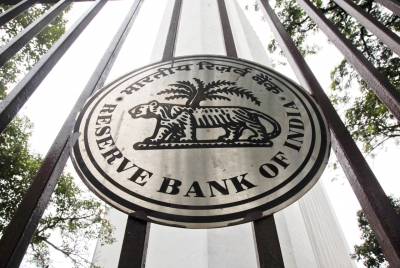
The Reserve Bank of India may have less flexibility to keep interest rates unchanged as rising crude oil prices, higher inflation and tightening global financial conditions put pressure on India's economic outlook.
The report said India's macroeconomic outlook has weakened in recent weeks, with Brent crude prices moving above $100 a barrel and US 10-year Treasury yields approaching 5 per cent.
The combination of higher energy prices and tighter global monetary conditions could create additional challenges for India, particularly as central banks in other major economies continue to raise borrowing costs.
“In our view, rising oil prices and commodity inflation remain a material challenge for India in the near term. The INR has already depreciated by nearly 1 per cent and the RBI now has less room to keep interest rates unchanged,” the report said.
The latest escalation in the Middle East has pushed Brent crude above the $100-a-barrel mark, while the European Central Bank and Bank of Japan have raised their policy rates by 25 basis points, according to the report. The resulting tightening in global financial conditions could also increase the risk of capital outflows from emerging markets such as India.
“India's macro-outlook is sensitive to oil prices, and the latest escalation in the Middle East is a negative,” said Kunal Vora, Head of India Equity Research.
The report noted that the Indian rupee had weakened by around 1 per cent over the previous two weeks, while India's 10-year government bond yield had moved above 7 per cent. Foreign institutional investor selling had also resumed during the period.
At the same time, foreign currency non-resident (FCNR) deposits have provided additional support to India's foreign exchange reserves, which the report said had reached around $800 billion, aided by approximately $127 billion in FCNR flows.
However, BNP Paribas said the support from these inflows may be temporary, as FCNR deposits could reverse over a three-to-five-year period. The report also warned that persistently high inflation could weigh on high-frequency economic indicators in the coming months.
Despite the deterioration in the near-term outlook, the report identified several areas of resilience in the Indian economy.
“India's macro indicators have remained resilient, but the outlook is weakening due to rising oil prices and inflation,” it said, while pointing to strong credit growth, robust automobile sales, improving employment data and large food-grain stocks as positive factors.
The report said these food-grain reserves could provide some protection against potential weather-related disruptions, including the impact of an El Niño event.
However, some consumption indicators have shown signs of moderation. Urban wages declined in the previous month, while rising inflation and weaker business confidence added to concerns about urban demand.
Rural economic conditions have also faced pressure from a monsoon deficit, higher food inflation and lower crop sowing, according to the report.
The combination of external pressures and domestic inflation risks has therefore reduced the room for monetary policy to remain unchanged indefinitely, while the RBI continues to balance price stability, economic growth and financial-market conditions.
Filed under
About the author
Anupam Pandey
Reporting and storytelling across theBusiness vertical for 4thWall Network.
More from 4thWall
Continue with Business.
Related reporting first, followed by more stories from across the 4thWall Network.
India-New Zealand FTA a Transformative Milestone for Trade Policy: TPCI
30 September 2026

Piyush Goyal Invites US Manufacturers to Explore Investment Opportunities in India
30 September 2026

Sitharaman Urges Qatar Businesses to Explore Trade and Investment Opportunities in India
30 September 2026

India’s Strong Growth and Changing Consumer Preferences Strengthen Consumption Outlook
29 September 2026