Krantiveer! Why Nana Patekar’s Pratap Narayan Still Resonates With the Audience
Three decades after its release, Pratap Narayan Tilak remains one of Hindi cinema’s most combustible figures: a disillusioned outsider whose anger exposes corruption, communal hatred and the dangers of a society.
Written by
Anupam Pandey
Published
23 October 2026
Reading time
4 min read
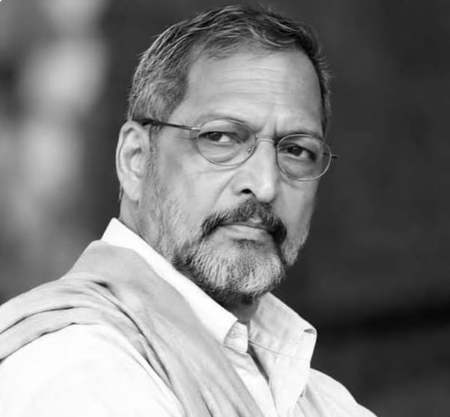
Three decades after its release, Pratap Narayan Tilak remains one of Hindi cinema’s most combustible figures: a disillusioned outsider whose anger exposes corruption, communal hatred and the dangers of a society.
There are angry heroes, and then there is Pratap Narayan Tilak.
When Krantiveer arrived in cinemas in 1994, Nana Patekar’s protagonist offered audiences a different kind of revolutionary. He was not a polished idealist delivering carefully measured speeches, nor was he a conventional hero driven by an uncomplicated belief in justice. Pratap was abrasive, cynical, unpredictable and frequently uncomfortable to be around. He had little patience for authority, even less faith in the public, and seemingly no interest in becoming anyone’s saviour.
Yet beneath that hostility was a man who had not entirely stopped caring. He had become deeply suspicious of a society that spoke about morality while repeatedly abandoning it.
Directed by Mehul Kumar, Krantiveer placed Pratap in a world shaped by corruption, exploitation and communal divisions. The film’s dramatic confrontations gave Patekar room to unleash his extraordinary intensity, but the character’s lasting significance lies in something more complicated than his famous outbursts. Pratap represents the moment when frustration with the world collides with the uncomfortable realisation that indifference can make a person complicit in its failures.
For a film remembered as much for its thunderous dialogue as its action, that contradiction remains central to its appeal.
The Making of a Reluctant Revolutionary
Pratap does not begin his journey as a crusader. He is a disillusioned man who has drifted towards cynicism, carrying the bitterness of personal disappointment and a growing contempt for the hypocrisy around him. His instinct is to dismiss rather than participate, to mock rather than believe. He sees injustice, but he has little faith that speaking against it will make any meaningful difference.
This is what separates him from the familiar cinematic rebel who appears fully formed, armed with principles and ready to challenge the establishment. Pratap must first confront his own indifference.
His transformation is shaped by ordinary people's suffering and the manipulation of communal tensions for political and financial gain. As the story unfolds, the violence inflicted upon vulnerable communities exposes the relationship between powerful interests and those who bear the consequences of their decisions. Political influence, criminal networks and economic exploitation become intertwined, while religious identity is used to turn neighbours against one another.
Pratap’s anger gradually acquires direction. His refusal to remain a passive observer becomes a willingness to confront the forces responsible for the suffering around him.
The transformation is deliberately dramatic, sometimes even excessive. But its underlying question is recognisable: what happens when a person who has stopped believing in change is forced to witness the human cost of doing nothing?
Nana Patekar’s Anger Was Never Just Volume
Patekar’s performance is the defining force of Krantiveer. His voice, facial expressions, abrupt movements and cutting sarcasm make Pratap impossible to ignore. He can turn a seemingly ordinary exchange into a confrontation, and his silences often carry the same hostility as his most explosive speeches.
What makes the performance memorable, however, is the bitterness beneath the aggression. Pratap does not sound like someone who has only just discovered injustice. He sounds like someone who has watched it repeat itself until outrage has become inseparable from his personality.
His humour is frequently cynical. His defiance can feel reckless. Even his moral certainty carries an edge that makes him difficult to romanticise completely. Patekar allows the character to remain abrasive rather than sanding him down into a conventional, universally likeable hero.
That choice matters. Pratap is compelling not because he represents an ideal citizen, but because he embodies a familiar emotional response to a world that repeatedly disappoints its people. His anger feels personal before it becomes political.
The performance also helped distinguish Patekar’s screen persona from the more composed versions of the angry young man seen in earlier Hindi cinema. Where some cinematic rebels channel their frustration through controlled authority, Pratap often appears almost consumed by it. He does not always command a room through dignity; sometimes he disrupts it through sheer refusal to behave as expected.
That rawness is both the character’s strength and a limitation. At points, the film pushes its speeches and confrontations towards melodrama, leaving little room for subtlety. Yet Patekar’s conviction gives those moments a force that audiences continue to remember.
His portrayal earned him the National Film Award for Best Actor, recognising a performance that became one of the defining roles of his career.
When Communal Hatred Becomes a Political Instrument
One of Krantiveer’s most enduring themes is its challenge to communal division.
The film presents religious identity as something those who stand to benefit from conflict can manipulate. When violence erupts, ordinary people are encouraged to see one another as enemies, while the interests operating behind the unrest risk escaping scrutiny.
Pratap’s response cuts through this manufactured distinction. In one of the film’s best-known confrontations, he challenges a crowd to distinguish Hindu blood from Muslim blood. The question is deliberately simple, but its implications are profound: if human suffering looks the same regardless of religious identity, what justifies the hatred that turns one community against another?
The scene is unmistakably theatrical. It relies on the heightened conventions of popular Hindi cinema, where a single confrontation can bring an entire social argument into focus. Yet the moral premise remains clear. The dead and injured do not become less human because of their religion, and communal violence does not become less destructive because it is justified through slogans or political loyalties.
The film’s setting is significant, too. Released in 1994, in the aftermath of the Babri Masjid demolition and the communal violence that followed, Krantiveer emerged during a period of deep social and political tension. Its depiction of communities being pushed toward conflict resonated beyond the screen.
Three decades later, the film can still prompt questions about how identity is mobilised in public life, how fear spreads, and why people sometimes find it easier to blame one another than to examine the interests that profit from division.
That does not mean every aspect of the film’s politics or storytelling has aged equally well. Its moral framework is often blunt, and its characters can serve as vehicles for arguments rather than fully developed individuals. But its insistence on the shared humanity of people caught in communal conflict remains an important part of its legacy.
The Politics of Silence
If Pratap’s confrontation with communal hatred gives Krantiveer its social urgency, the film’s climax gives his anger a more unsettling target: the public itself.
As he faces execution, Pratap turns towards the crowd gathered to witness his death. His accusation that people have arrived to watch the spectacle transforms the scene from a conventional heroic sacrifice into a condemnation of spectatorship.
The crowd has come to look. But looking is not the same as understanding, and witnessing injustice is not the same as resisting it.
Pratap’s frustration is directed at people who can recognise suffering without feeling responsible for responding. His anger suggests that a society cannot rely indefinitely on exceptional individuals to confront wrongs that ordinary citizens have learned to tolerate.
This is where the character moves beyond the familiar image of the revolutionary who defeats an enemy through courage. Pratap questions the audience’s own relationship with injustice. He asks what it means to remain silent when the consequences of that silence may eventually reach one's own family and community.
The idea has particular relevance in an age of constant information. News, videos and images of violence or wrongdoing can reach millions of people within minutes. Public outrage can be immediate, widespread and intensely emotional. But attention often moves on before accountability follows.
The modern spectator may not be standing in a crowd outside a gallows. They may be watching a video, sharing a post or following a controversy from a distance. The medium has changed; the underlying question has not disappeared. At what point does witnessing become a substitute for meaningful action?
Pratap’s answer is uncompromising, perhaps even unfair in its treatment of an often powerless public. Not every person who remains silent is indifferent, and not every act of resistance is visible. Nevertheless, the film’s challenge remains forceful: a public that treats every injustice as someone else’s responsibility risks surrendering its own agency.
A Hero Who Distrusts the System — and the People
Pratap’s political frustration is not limited to individual villains. The world of Krantiveer is shaped by a wider network of power, where wealth, criminal influence, and political connections reinforce one another. People at the bottom are left to navigate consequences they had little power to prevent.
The film presents corruption not merely as a matter of dishonest individuals, but as part of a structure that allows powerful interests to operate with relative impunity. Its villains are often broad, its moral divisions sharply drawn, and its solutions more dramatic than realistic. Yet the story's frustration comes from a recognisable perception: institutions lose public trust when their actions appear to protect the influential while leaving ordinary people exposed.
Pratap is not a patient reformer. He does not offer a detailed programme for institutional change, nor does the film spend much time exploring the practical difficulties of building one. His politics emerge primarily through confrontation, denunciation and personal sacrifice.
That makes him an emotionally potent figure, but not necessarily a blueprint for real-world change. Anger can expose hypocrisy and break through public apathy, but lasting accountability also requires evidence, functioning institutions, sustained civic participation and solutions that survive beyond the moment of confrontation.
This tension is central to the character’s enduring interest. Pratap can identify the failures of the world around him, yet his own methods raise questions about the limits of righteous rage. The film celebrates his willingness to act, but it also leaves viewers to consider whether the lone rebel can truly repair a broken system.
Perhaps Pratap’s most valuable contribution is not that he provides an answer, but that he refuses to let the question disappear.
Does Pratap Narayan Still Speak to a New Generation?
For younger viewers discovering Krantiveer today, Pratap arrives from a different cinematic era. The film’s heightened performances, extended monologues and emphatic moral declarations may feel distant from the more restrained or psychologically complex storytelling that contemporary audiences often encounter.
Some of its dramatic choices invite criticism. Its supporting characters do not always receive the same depth as Pratap, and its tendency to turn social conflict into a succession of speeches can flatten the complexities of the issues it addresses. A character who is almost always angry can also leave limited room for the quieter emotions that make political disillusionment believable.
But Pratap’s underlying conflict remains accessible. He distrusts the promises made by those in power, doubts the public's willingness to challenge injustice, and struggles to decide whether disengagement is wisdom or surrender.
That dilemma is not restricted to any one generation or political ideology. It can be encountered wherever people feel that institutions are unresponsive, public debate is increasingly polarised, or the gap between promises and lived experience has become difficult to ignore.
The character’s continued circulation through remembered scenes and dialogue is part of his cultural afterlife. His words are often quoted for their intensity, but the ideas behind them deserve more than repetition. They invite viewers to examine the distance between declaring something wrong and accepting responsibility to do something about it.
The test of Pratap’s legacy is therefore not simply whether audiences can still recite his speeches. It is whether they recognise the questions those speeches raise.
The Man Behind the Myth
* K rantiveer* is not a subtle film in the conventional sense. It prefers confrontation to ambiguity and conviction to hesitation. Its dramatic world is built to make injustice visible, its villains are often unmistakable, and its protagonist is given the language to challenge them directly.
Yet the film’s impact cannot be reduced to a collection of famous dialogues. Patekar’s performance gives Pratap a contradictory humanity: he is cynical but not entirely indifferent, angry but capable of moral clarity, distrustful of the public yet unwilling to accept its surrender to fear and hatred.
That contradiction prevents him from being merely a mouthpiece for the film’s message. Pratap’s anger is rooted in disappointment, and his eventual willingness to confront injustice suggests that disillusionment need not be the end of idealism. Sometimes it is the difficult starting point from which idealism must be rebuilt.
The character also reminds us of the double edge of political rage. Anger can expose a lie, challenge complacency and give language to people who feel ignored. But anger alone cannot establish justice. Without restraint, accountability and a willingness to understand complexity, it can reproduce the very simplifications it seeks to challenge.
Pratap Narayan is most compelling when viewed through that tension: not as an infallible hero, but as a flawed man whose refusal to look away forces others to confront what they would rather ignore.
The Lasting Resonance of Krantiveer
More than three decades after its release, Krantiveer remains closely associated with Nana Patekar’s ability to turn a character’s fury into a larger social confrontation. Pratap Narayan Tilak became memorable because he gave voice to frustrations larger than his personal circumstances: anger at corruption, disgust at communal hatred, distrust of political power, and impatience with a public content to watch from the sidelines.
The film’s melodrama may date some of its storytelling, but the questions at its centre continue to invite debate. Who benefits when communities are divided? What happens when institutions lose the confidence of the people they serve? And what responsibility does an individual have when confronted with injustice?
Pratap does not answer these questions with moderation. He shouts, provokes, condemns, and ultimately places himself in the path of the forces he opposes. His approach is not a practical model for every struggle, but the moral discomfort he creates is precisely what makes the character endure.
In the end, Pratap Narayan’s legacy is not only about the anger of a man who refuses to surrender. It is about the society that gives rise to that anger — and the choices available to those who witness its consequences.
That is why Krantiveer still matters. Not because every speech remains beyond criticism, or because its hero offers a perfect vision of justice, but because it refuses to let the audience remain entirely comfortable as spectators.
And that may be the most enduring challenge Pratap leaves behind: when injustice unfolds before us, are we merely watching, or are we prepared to take responsibility for what happens next?
Filed under
About the author
Anupam Pandey
Reporting and storytelling across theEntertainment vertical for 4thWall Network.
More from 4thWall
Continue with Entertainment.
Related reporting first, followed by more stories from across the 4thWall Network.

Bombay High Court Grants Interim Relief to Actor Imran Khan, Stays ‘Leave India’ Notice
27 October 2026

Tiger Shroff Firing Case: Crime Branch Probes Arrested Woman’s Visit to Bandra Bandstand
27 October 2026
Tiger Shroff Firing Case: Crime Branch Suspects Bishnoi Gang Planned Attack for Extortion
27 October 2026

‘Kalki 2898 AD 2’ Makers Celebrate Prabhas’ Birthday with Special Behind-the-Scenes Video
23 October 2026