Warehousing Growth to Move Beyond Grade A Cities, Says Adani Ports’ Pankaj Bhardwaj
India’s warehousing sector is expected to see increasing growth beyond the country’s major consumption centres, with states such as Odisha, West Bengal and Assam emerging as potential new logistics hubs.
Written by
Anupam Pandey
Published
29 September 2026
Reading time
4 min read
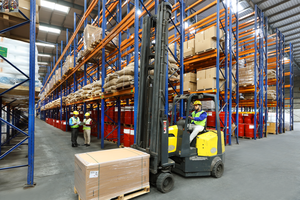
India’s warehousing sector is expected to see increasing growth beyond the country’s major consumption centres, with states such as Odisha, West Bengal and Assam emerging as potential new logistics hubs.
According to Pankaj Kumar Bhardwaj, Senior Vice President and Business Head, Warehousing and Adani Agri Logistics at Adani Ports and SEZ.
Bhardwaj said the expansion of state-level logistics policies aimed at attracting manufacturers, logistics companies and industrial developers is creating fresh opportunities for the warehousing industry in emerging markets.
He said a significant share of the company’s existing warehousing footprint is concentrated in major cities, but its future strategy will increasingly include smaller markets.
“If you talk about 13, 14 million square feet, 60-70 per cent would be in A and B Grade A cities only. But if we talk about our future roadmap, we are focusing not just on the consumption centres which are Grade A, but we are focusing on B and C grade cities as well,” Bhardwaj said.
According to Bhardwaj, the company already has land parcels in several emerging locations, allowing it to develop warehouses based on the requirements of customers. It can also offer build-to-suit facilities for businesses looking for customised warehousing infrastructure.
Another area of focus is expected to be export-import and port-linked logistics. Bhardwaj said the company’s existing presence across India’s ports and inland container depots provides a base for developing warehousing infrastructure connected to international trade.
“We have 15-16 ports across both the coasts. In due course of time, in a 5 to 10 years period, with the government focus on increasing exports from the country,” he said.
Bhardwaj highlighted the company’s presence along both the eastern and southern coasts as part of its broader logistics strategy. Adani Ports is developing its operations at Dhamra on the eastern coast and has also been focusing on Vizhinjam Port in Kerala, which has developed as an important transshipment facility.
The company has also recently secured two berths at Paradip Port, further strengthening its presence along the eastern coastline.
Bhardwaj said the eastern part of the country remains relatively underdeveloped from a warehousing perspective, leaving considerable room for future expansion.
“Eastern side has not developed that much, and going further, major growth can also come from states like Odisha, West Bengal, Assam,” he said.
He added that expanding warehousing and logistics infrastructure across these markets could help increase cargo volumes while lowering costs across the broader supply chain.
The shift towards smaller cities and port-linked locations reflects the changing nature of India’s logistics network, as manufacturers expand their geographic footprint and rising exports create demand for infrastructure closer to production centres, consumption markets and ports.
For Adani Ports, the strategy combines its existing port network with warehousing and logistics facilities, potentially allowing the company to build integrated supply chains across emerging markets over the coming years.
Filed under
About the author
Anupam Pandey
Reporting and storytelling across theBusiness vertical for 4thWall Network.
More from 4thWall
Continue with Business.
Related reporting first, followed by more stories from across the 4thWall Network.

India-New Zealand FTA a Transformative Milestone for Trade Policy: TPCI
30 September 2026
Piyush Goyal Invites US Manufacturers to Explore Investment Opportunities in India
30 September 2026

Sitharaman Urges Qatar Businesses to Explore Trade and Investment Opportunities in India
30 September 2026

Government Notifies CAFE-3 Norms for Automakers, Retains EV Incentives
30 September 2026