VB-G RAM G Scheme: Active Workers Reach 10.88 Crore, Over 31.69 Crore Person-Days Generated
The Centre's new Viksit Bharat–Guarantee for Rozgar and Aajeevika Mission (Gramin), or VB-G RAM G, has recorded 10.88 crore active workers and generated more than 31.69 crore person-days of employment since its rollout
Written by
Anupam Pandey
Published
29 September 2026
Reading time
4 min read
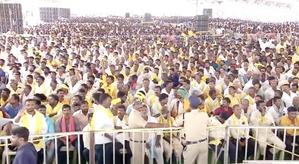
The Centre's new Viksit Bharat–Guarantee for Rozgar and Aajeevika Mission (Gramin), or VB-G RAM G, has recorded 10.88 crore active workers and generated more than 31.69 crore person-days of employment since its rollout
The figures, which cover the period up to September 24, show that women account for 61.65 per cent of participation under the rural employment programme. The government said employment is being provided to workers based on demand.
The number of works currently under execution has reached 97.17 lakh, while approved works are available to meet the future employment requirements of around 73.24 lakh people.
Nearly 2.31 lakh Gram Panchayats are currently implementing works under the new framework. The average wage rate is reported at Rs 283.24 per person per day, while 3.76 crore direct benefit transfers have been made to workers' bank accounts during the first three months.
The Centre has allocated Rs 93,841 crore to states and Union Territories as an interim allocation for 2026-27. Of this amount, a first instalment of Rs 25,880 crore has been released as a Mother Sanction, according to the factsheet.
The VB-G RAM G Act, 2025 came into force nationwide on July 1, replacing the Mahatma Gandhi National Rural Employment Guarantee Act (MGNREGA). The new legislation raises the statutory employment guarantee from 100 days to 125 days in a financial year for every eligible rural household whose adult members volunteer to undertake unskilled manual work.
The government has said the transition from MGNREGA to VB-G RAM G was carried out without disruption, with the digital systems required to implement and monitor the new framework operational from the beginning.
The programme focuses on four broad categories of work: water security, core rural infrastructure, livelihood-related infrastructure and measures aimed at mitigating the impact of extreme weather events.
A key feature of the new framework is the preparation of Viksit Gram Panchayat Plans (VGPPs). These plans are intended to bring together different development requirements at the Gram Panchayat level through participatory and convergence-based planning.
VGPPs are prepared with the involvement of Gram Sabhas and Gram Panchayats and are designed to identify local development needs, existing assets and gaps before prioritising works. The government has described them as an important institutional mechanism for coordinating rural development programmes.
The VB-G RAM G framework also provides for technology-enabled planning, monitoring and transparency, with the Centre stating that its implementation is supported by an online management information system for real-time monitoring.
The scheme's rollout represents a significant change in India's rural employment framework, with the government linking guaranteed employment more closely to the creation of rural infrastructure, livelihood assets and climate-resilient works.
Filed under
About the author
Anupam Pandey
Reporting and storytelling across theBusiness vertical for 4thWall Network.
More from 4thWall
Continue with Business.
Related reporting first, followed by more stories from across the 4thWall Network.
India-New Zealand FTA a Transformative Milestone for Trade Policy: TPCI
30 September 2026
Piyush Goyal Invites US Manufacturers to Explore Investment Opportunities in India
30 September 2026
Sitharaman Urges Qatar Businesses to Explore Trade and Investment Opportunities in India
30 September 2026

Government Notifies CAFE-3 Norms for Automakers, Retains EV Incentives
30 September 2026