Israel Elections: 7.3 Million Voters to Elect 120-Member Parliament
Around 7.3 million eligible voters in Israel are expected to cast their ballots on Tuesday to elect members of the country’s 120-seat parliament, with the outcome set to determine the next government amid concerns.
Written by
Anupam Pandey
Published
26 October 2026
Reading time
4 min read
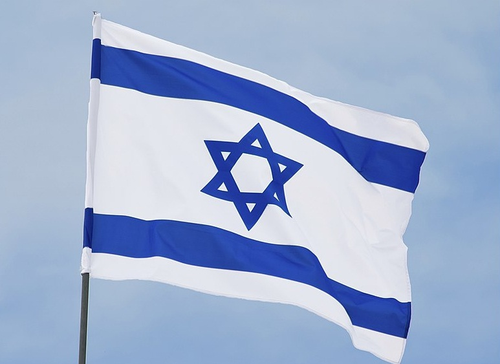
Around 7.3 million eligible voters in Israel are expected to cast their ballots on Tuesday to elect members of the country’s 120-seat parliament, with the outcome set to determine the next government amid concerns.
Michelle Sirota, spokesperson for the Embassy of Israel in India, described the election as an important expression of the country’s democratic process, with voters choosing parties that will represent them either in the governing coalition or the opposition.
“Our elections are happening tomorrow, on the 27th of October. We have 7.3 million eligible voters who are able to vote. We hopefully will have a very high percentage of voters,” Sirota told IANS.
She said the election would give citizens an opportunity to influence Israel’s future and determine which political parties would represent them in parliament.
Israel’s parliament has 120 seats, with each party’s representation determined by the votes it receives. The distribution of seats will shape the negotiations required to establish the next government.
Coalition Formation to Determine Next Government
Explaining the process following the election, Sirota said the President of Israel would decide which party would receive the first opportunity to form a governing coalition after the votes were counted.
The party given the mandate would have 28 days to negotiate with other political parties and secure sufficient support to form a government.
If the first attempt failed, another party would get an opportunity to put together a coalition. If the process remained unsuccessful, Israel could face another election, potentially within 90 days, Sirota said.
The outcome of the negotiations will be crucial in determining whether a stable governing arrangement can emerge from the parliamentary results.
Polls Point to Uncertain Political Outcome
Senior Israeli journalist Yaron Decel told IANS that opinion polls were not indicating a clear majority for either political bloc, leaving several possible scenarios open after voting concludes.
These include another round of elections, a national unity government involving parties from opposing camps, or a minority government led by the opposition bloc seeking to replace Prime Minister Benjamin Netanyahu’s government.
“Right now, the polls do not show a clear majority for either side, so there is a scenario in which there could be another round of elections, a national unity government in which both parties find a way to cooperate, or a minority government formed by the bloc opposing Mr. Netanyahu,” Decel said.
He added that the opposition could attempt to form a minority government without securing 61 seats, provided it could obtain sufficient parliamentary support to govern.
The possibility of a coalition deadlock therefore remains a key factor in the election, with the final seat distribution likely to influence negotiations between parties.
National Security and Peace Among Voters’ Concerns
Alongside political calculations, Israeli voters have expressed concerns about national unity, security and the prospects for peace after years of conflict.
One Israeli citizen told IANS that people should remain united regardless of the election outcome, stressing the difficult circumstances facing the country.
Another voter said national security was a major concern for the electorate after three years of war, adding that many people were hoping for peace.
The election comes at a critical juncture for Israel, with the composition of the next parliament expected to shape the country’s political direction and its response to continuing security challenges.
Filed under
About the author
Anupam Pandey
Reporting and storytelling across thePolitics vertical for 4thWall Network.
More from 4thWall
Continue with Politics.
Related reporting first, followed by more stories from across the 4thWall Network.
12th BRICS Parliamentary Forum Adopts Joint Declaration as Om Birla Calls for Dialogue to Address Global Challenges
27 October 2026
US Midterm Polls Point to Challenges for Trump as Republicans Face Uncertain Battle for Congress
27 October 2026

US and Pacific Island Nations Step Up Joint Efforts Against Cybercrime and Drug Trafficking
27 October 2026
India Criticises ‘De Facto Veto’ Blocking Progress on UN Security Council Reforms
27 October 2026