India Criticises ‘De Facto Veto’ Blocking Progress on UN Security Council Reforms
India has criticised the use of what it described as a “disguised, de facto veto” that continues to stall efforts to reform the United Nations Security Council, calling for formal negotiations with clear timelines.
Written by
Anupam Pandey
Published
27 October 2026
Reading time
4 min read
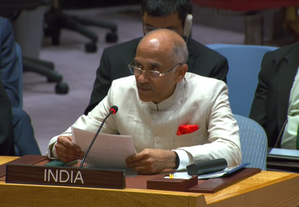
India has criticised the use of what it described as a “disguised, de facto veto” that continues to stall efforts to reform the United Nations Security Council, calling for formal negotiations with clear timelines.
Harish said the Intergovernmental Negotiations (IGN), established to discuss Security Council reforms, had failed to produce a negotiating text despite 17 rounds of discussions.
He argued that the principle of consensus was being used as an unofficial veto, allowing a small group of countries to block progress through procedural manoeuvres. The group known as Uniting for Consensus, led by Italy and including Pakistan, has opposed the adoption of a negotiating text.
Referring to a 2008 General Assembly resolution that established the framework for the IGN process, Harish said the guiding principle was the widest possible political acceptance rather than mandatory consensus.
He maintained that the resolution did not provide a basis for countries to prevent negotiations from moving forward indefinitely.
India called for the early commencement of text-based negotiations supported by clearly defined timelines and milestones, describing these steps as essential to comprehensive reform.
Harish also raised concerns about informal vetoes exercised within the Security Council beyond the formal veto powers granted to its five permanent members — China, France, Russia, the United Kingdom and the United States.
He said the practice of requiring consensus on certain decisions allowed individual Council members, including elected non-permanent members, to block presidential statements, press statements and decisions of sanctions committees without providing an explanation.
India also highlighted instances in which China had blocked proposals to designate Pakistan-based individuals as terrorists through the UN sanctions system. These included Lashkar-e-Taiba figures Zaki-ur-Rehman Lakhvi, Shahid Mahmood and Sajid Mir, as well as Jaish-e-Mohammed chief Masood Azhar.
Harish argued that addressing the formal veto alone would not resolve the broader concerns surrounding the Security Council’s credibility, legitimacy and effectiveness.
He called for a comprehensive restructuring of the Council, including an expansion of permanent membership to reflect contemporary geopolitical realities rather than the international order established after the Second World War.
India maintains that countries admitted as permanent members through any future reform must also receive veto powers.
“As long as the veto exists, it must be held by all permanent members of a reformed Council,” Harish said, arguing that equal treatment was a matter of fairness and justice.
He also rejected proposals to establish new categories of membership that would give certain countries longer terms or permanent status without veto rights. According to Harish, such arrangements would create additional inequalities and complicate an already difficult reform process.
The Indian representative further questioned the effectiveness of a General Assembly mechanism requiring countries to explain their use of the Security Council veto.
Although the mechanism was intended to improve accountability and encourage change, Harish said the continued use of vetoes since its introduction had produced results contrary to those expectations.
India’s position underscores its call for a more representative and effective Security Council, with reforms that address both the distribution of power among members and the procedural practices that can prevent decisions and negotiations from advancing.
Filed under
About the author
Anupam Pandey
Reporting and storytelling across thePolitics vertical for 4thWall Network.
More from 4thWall
Continue with Politics.
Related reporting first, followed by more stories from across the 4thWall Network.
Amit Shah Challenges Rahul Gandhi to Write to PM Modi, Says Special Parliament Session Can Be Convened for SIR Debate
5 November 2026
Karnataka CM Thanks PM Modi for Rajyotsava Greetings, Seeks Drought Relief and Action on Sugarcane Farmers’ Demands
5 November 2026
From Gunfire to Bullet Trains: Assam Embarking on New Era of Progress, Says CM Himanta Biswa Sarma
5 November 2026
Tamil Nadu BJP Chief Accuses Vijay Government of Interfering in Hindu Religious Practices
5 November 2026