India's Fastest-Growing Economy, Making Progress in Poverty Reduction: PM Modi at Pune Metro Inauguration
Prime Minister Narendra Modi on Tuesday said India has emerged as the world's fastest-growing major economy and is making significant progress in reducing poverty, while highlighting infrastructure investment as a key.
Written by
Anupam Pandey
Published
3 November 2026
Reading time
4 min read
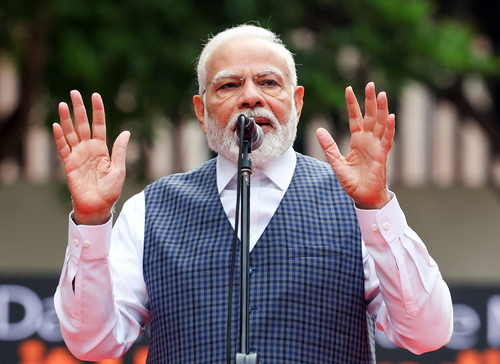
Prime Minister Narendra Modi on Tuesday said India has emerged as the world's fastest-growing major economy and is making significant progress in reducing poverty, while highlighting infrastructure investment as a key.
Speaking virtually at the inauguration of Pune Metro's 23.2-km Line 3, also known as the Pink Line, Modi said public funds were increasingly being directed to development projects and reaching intended beneficiaries directly, rather than being lost to leakages.
He said infrastructure investments were creating employment opportunities and strengthening the country's economic growth.
Pune Metro Line 3 inaugurated
The Prime Minister inaugurated the elevated corridor connecting Maan and Hinjewadi, Pune's prominent information technology hub, with Shivajinagar's District Court Metro station.
Developed under a public-private partnership (PPP) model at an estimated cost of more than Rs 8,300 crore, the corridor is expected to improve connectivity, reduce travel time and ease congestion for commuters, particularly those travelling to and from the IT hub.
Highlighting the project's operational features, Modi said women train operators operate the Pink Line. Around 30 per cent of its electricity requirements are also met through solar power.
He also laid the foundation stone for the second phase of Pune Metro, estimated to cost approximately Rs 13,500 crore. The expansion will improve connectivity between major residential and commercial areas, including Kharadi, Wagholi, Hadapsar, Swargate and Khadakwasla.
Recalling his association with Pune's metro development, Modi said he had laid the foundation stone for the first phase around a decade ago. He expressed confidence that the new corridor and proposed expansion would strengthen connectivity between different parts of the city.
Metro expansion to support urban development
The Prime Minister said India's expanding urban centres need sustainable, environmentally friendly public transport systems. He stressed that metro networks could improve ease of living, reduce road congestion and vehicular emissions, and strengthen connections with bus terminals and railway stations.
Describing Pune as an important contributor to the vision of a 'Viksit Bharat', Modi highlighted the city's role in information technology, automobiles, pharmaceuticals, startups, innovation and manufacturing.
He said improved metro connectivity would provide fresh momentum to Pune's growth and make it a more competitive city by improving its infrastructure and quality of life, particularly for young people.
Modi also pointed to India's economic performance amid global challenges, citing a recent World Bank report that he said showed around 50 crore people had moved out of extreme poverty.
He added that public investment in roads, railways, airports and metro systems was generating employment and creating new economic opportunities.
Modi highlights growth of India's metro network
The Prime Minister described Pune's metro project as significant because of its public-private partnership model. He also referred to the Centre's Rs 1 lakh crore Urban Challenge Fund, aimed at developing smaller cities as emerging centres of economic growth, and called for greater collaboration between local bodies and the private sector.
Comparing metro expansion before and after 2014, Modi said services operated in only five cities during the Congress-led UPA government's tenure. Since 2014, he said, metro services had expanded to 26 cities under the BJP-led NDA government.
He added that India's metro network had grown from 248 km in 2014 to nearly 1,200 km, with more than one crore passengers using the system every day. According to the Prime Minister, the expansion has also generated employment through large-scale infrastructure investment.
Addressing the situation in Maharashtra, Modi referred to drought conditions caused by inadequate rainfall and assured the state of the Centre's support in dealing with the situation.
Filed under
About the author
Anupam Pandey
Reporting and storytelling across theBusiness vertical for 4thWall Network.
More from 4thWall
Continue with Business.
Related reporting first, followed by more stories from across the 4thWall Network.
India Records Major Poverty Reduction Between 2011 and 2023, Says Piyush Goyal Citing World Bank Report
31 October 2026

India's Social Protection Coverage Rises to 68.4% in 2026, Reaching Over One Billion People
31 October 2026
PNB Customers Allege Multi-Crore Fraud at Greater Noida Branch, File Police Complaints
27 October 2026

Dr PK Mishra Calls for AI-Powered Early Warning Systems to Strengthen Disaster Preparedness
27 October 2026