India Has Navigated Global Turbulence With Economic Fundamentals Intact: Sitharaman
India has successfully navigated a period of global uncertainty, including the impact of the West Asia crisis, while retaining strong economic fundamentals, Union Finance Minister Nirmala Sitharaman said on Saturday.
Written by
Anupam Pandey
Published
3 October 2026
Reading time
4 min read
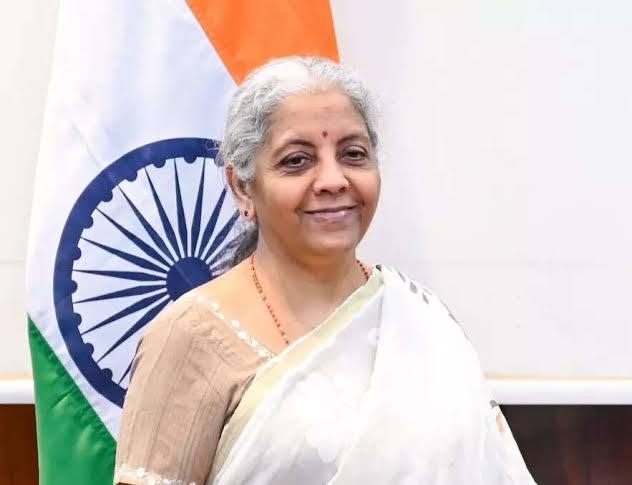
India has successfully navigated a period of global uncertainty, including the impact of the West Asia crisis, while retaining strong economic fundamentals, Union Finance Minister Nirmala Sitharaman said on Saturday.
India has successfully navigated a period of global uncertainty, including the impact of the West Asia crisis, while retaining strong economic fundamentals, Union Finance Minister Nirmala Sitharaman said on Saturday.
Addressing a special plenary on “Resilience in an Age of Flux: India’s Economic Priorities” at the fifth Kautilya Economic Conclave in New Delhi, Sitharaman said India had emerged from the recent period of global turbulence with its economic foundations intact and, according to her assessment, stronger. The three-day conclave is being held from October 3 to 5 under the theme “Resilience in an Age of Flux”.
Sitharaman pointed to the growing burden of global public debt, which she said had reached nearly 94 per cent of global GDP in 2025 and was projected to touch 100 per cent by 2029. She noted that such levels had last been seen in the period following the Second World War.
She said conventional price shocks could be addressed through monetary and fiscal measures, but supply or “quantity” shocks placed greater pressure on macroeconomic systems, public delivery mechanisms and the capacity of governments to respond, particularly when economic buffers were already limited.
Against this backdrop, Sitharaman highlighted several indicators of India's economic performance. Real GDP growth stood at 7.8 per cent in the first quarter of 2026-27, while consumer price inflation was around 4.8 per cent in August 2026. The current account deficit stood at 0.5 per cent of GDP during the first quarter of the financial year, she said.
The Finance Minister said the government had, since 2014, focused on building resilience at multiple levels, including strengthening the state's ability to respond to shocks, expanding productive capacity and enabling households and businesses to participate more fully in economic activity.
She cited the Jan Dhan-Aadhaar-Mobile framework and Direct Benefit Transfer system as mechanisms that have helped channel government assistance directly to beneficiaries. Schemes covering housing, sanitation, clean cooking fuel, healthcare and food security were also highlighted as measures aimed at reducing household-level vulnerabilities.
On access to finance, Sitharaman said the PM MUDRA Yojana had sanctioned more than 52 crore collateral-free loans, supporting self-employment and small businesses. She also referred to PM SVANidhi for street vendors and said banking-sector reforms, including recapitalisation, resolution of stressed assets and stronger governance and risk-management systems, had strengthened the financial system.
Non-food bank credit grew 18.8 per cent in the year to August 2026, according to figures cited by the Finance Minister. She also pointed to the Emergency Credit Line Guarantee Scheme as a measure that helped businesses manage working-capital requirements, maintain operations and employment, and deal with liquidity pressures during periods of disruption.
Sitharaman identified infrastructure development as another key component of India's economic resilience. She said the Centre had budgeted Rs 12.22 lakh crore for capital expenditure in 2026-27, while effective capital expenditure was estimated at Rs 17.15 lakh crore, equivalent to 4.4 per cent of GDP.
She said the impact of sustained infrastructure investment since 2014 could be seen in the expansion of national highways, the growth in operational railway routes and increased cargo-handling capacity at major ports. She also cited the expansion of operational airports as part of the country's infrastructure growth.
Sitharaman further highlighted reforms including the Goods and Services Tax, Insolvency and Bankruptcy Code, Labour Codes and Jan Vishwas measures, describing them as part of the government's broader reform framework.
The Finance Minister said the government's approach to reforms had been driven by a long-term focus on strengthening India's economic capacity rather than responding only to immediate pressures.
The Kautilya Economic Conclave, organised by the Institute of Economic Growth in partnership with the Ministry of Finance, is bringing together policymakers, economists, academics and financial experts to discuss global fragmentation, technology, trade, finance and India's economic priorities.
Filed under
About the author
Anupam Pandey
Reporting and storytelling across theBusiness vertical for 4thWall Network.
More from 4thWall
Continue with Business.
Related reporting first, followed by more stories from across the 4thWall Network.

UN Releases $160 Million Emergency Funding for 12 Humanitarian Crises
3 October 2026

Cuba Eases Wholesale Market Rules for Foreign Companies to Boost Investment
3 October 2026
Inclusive Growth Key to India’s Economic Resilience, Says Vice-President Radhakrishnan
3 October 2026
India Plans Large Multi-Sector Business Delegation to US Early Next Year: Goyal
3 October 2026