Inclusive Growth Key to India’s Economic Resilience, Says Vice-President Radhakrishnan
India's ability to withstand future economic shocks will depend not only on the pace of growth but also on how widely its benefits are distributed, Vice-President C.P. Radhakrishnan said on Saturday.
Written by
Anupam Pandey
Published
3 October 2026
Reading time
4 min read
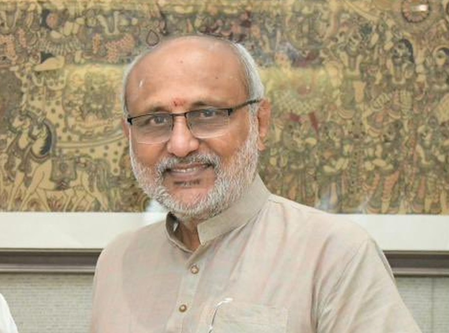
India's ability to withstand future economic shocks will depend not only on the pace of growth but also on how widely its benefits are distributed, Vice-President C.P. Radhakrishnan said on Saturday.
India's ability to withstand future economic shocks will depend not only on the pace of growth but also on how widely its benefits are distributed, Vice-President C.P. Radhakrishnan said on Saturday.
Addressing the inaugural session of the fifth Kautilya Economic Conclave in New Delhi, Radhakrishnan said economic progress should be measured by whether people and regions across the country are able to participate in and benefit from growth.
“GDP alone cannot be the measure of development,” he said, arguing that genuine economic resilience requires ensuring that no section of society or geographical region is left behind.
The Vice-President placed women's participation in the economy at the heart of this broader approach to development. He said providing women with access to education and economic opportunities would enable them to become increasingly empowered and assume leadership roles.
“We want to empower the woman, give them the right to education and they will empower themselves,” Radhakrishnan said.
He said India was undergoing a significant economic transformation as it moves towards its stated objective of becoming a developed economy. However, he stressed that policymakers would need to consider inclusion alongside conventional indicators of economic performance.
Radhakrishnan described inclusion as a potential source of economic resilience, saying the concept should extend beyond financial markets, infrastructure and other conventional measures of an economy's strength.
He cited financial inclusion and the improved delivery of government benefits as examples of how broader participation in the formal economy can help households and communities withstand economic disruptions.
The Vice-President pointed to the Jan Dhan-Aadhaar-Mobile (JAM) framework as an example, saying the system has expanded access to banking services and facilitated direct transfers of government benefits to citizens.
Radhakrishnan also said more than 25 crore people had moved out of poverty over the past decade, while describing the Goods and Services Tax as one of India's most significant tax reforms.
His remarks came against the backdrop of India's latest economic growth figures. According to the data cited at the event, India's real GDP expanded by 7.8 per cent in the first quarter of financial year 2026-27, compared with 6.9 per cent in the corresponding quarter of FY2025-26.
Real GDP at constant prices was estimated at Rs 81.36 lakh crore in Q1 FY2026-27, up from Rs 75.46 lakh crore in the same period a year earlier.
Radhakrishnan said the challenge for India would be to sustain economic expansion while ensuring that the gains from that growth translate into broader opportunities for citizens across different regions and sections of society.
Filed under
About the author
Anupam Pandey
Reporting and storytelling across theBusiness vertical for 4thWall Network.
More from 4thWall
Continue with Business.
Related reporting first, followed by more stories from across the 4thWall Network.

Cuba Eases Wholesale Market Rules for Foreign Companies to Boost Investment
3 October 2026
Apple to Strengthen Mac Privacy Controls Amid Concerns Over AI Agent Access
3 October 2026
India Plans Large Multi-Sector Business Delegation to US Early Next Year: Goyal
3 October 2026
India Building Trade Network That Could Reach 75% of Global Trade: Goyal
3 October 2026