IIT Madras Team AgniRath Finishes Third at Sasol Solar Challenge in South Africa
Team AgniRath from IIT Madras has secured third place overall at the Sasol Solar Challenge 2026 in South Africa, marking a significant achievement for India's student-led solar racing efforts.
Written by
Anupam Pandey
Published
8 October 2026
Reading time
4 min read
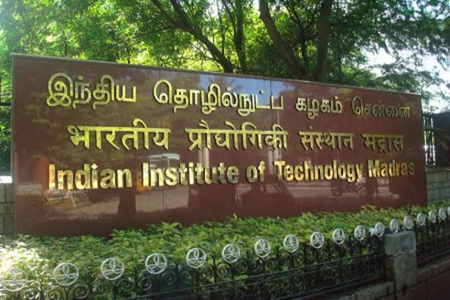
Team AgniRath from IIT Madras has secured third place overall at the Sasol Solar Challenge 2026 in South Africa, marking a significant achievement for India's student-led solar racing efforts.
The team completed 1,192.6 km over eight days in its solar-powered vehicle, Aagneya, navigating challenging terrain and varying weather conditions. IIT Madras said AgniRath became the first Indian team to compete in the Sasol Solar Challenge and return with a trophy.
The institute described the podium finish as a recognition of student innovation, engineering expertise, teamwork and the team's commitment to developing sustainable mobility solutions.
The Sasol Solar Challenge is a biennial international competition that brings together teams to design, build and race solar-powered vehicles across South Africa. The 2026 participants travelled from Johannesburg to Cape Town via Jeffreys Bay, putting their vehicles, engineering strategies and manufacturing capabilities to the test.
Team AgniRath was founded in 2021 by six students and has since grown into a multidisciplinary group of more than 45 undergraduate engineers. Its members work across areas including aerodynamics, electrical systems, battery technology, telemetry, vehicle dynamics, manufacturing and business operations.
The team develops its solar race cars entirely in-house, handling their design, construction, testing and racing. Aagneya is its second-generation solar vehicle, with every stage from conceptual development and engineering to manufacturing and testing undertaken by the students.
Described by the team as one of the largest solar racing vehicles built by a student group in India, Aagneya is the result of thousands of hours of research, engineering work and testing. The team said the vehicle was developed to explore the potential of solar-powered transportation and demonstrate India's capabilities in sustainable mobility.
For AgniRath, solar racing also serves as a practical platform for students to apply academic knowledge to real-world engineering challenges. The team said competing under demanding conditions helps its members develop expertise in energy management, aerodynamics, system integration and vehicle reliability.
The team said its international participation is aimed not only at competing but also at showcasing Indian engineering capabilities and encouraging students, researchers and industry stakeholders to explore renewable energy and sustainable transportation.
Congratulating the team, IIT Madras said the historic third-place finish had placed the institute and India on the global solar racing map.
Filed under
About the author
Anupam Pandey
Reporting and storytelling across theBusiness vertical for 4thWall Network.
More from 4thWall
Continue with Business.
Related reporting first, followed by more stories from across the 4thWall Network.

Apple to Strengthen Mac Privacy Controls Amid Concerns Over AI Agent Access
3 October 2026
Goyal Woos US Investors, Positions India as Global Data Centre Hub
3 October 2026
Goyal Highlights India’s Talent and Innovation Potential During US Business Meetings
3 October 2026
India’s Space Programme Expands From Satellites to Moon, Human Spaceflight and Beyond
2 October 2026