India’s Space Programme Expands From Satellites to Moon, Human Spaceflight and Beyond
India is steadily expanding its presence in the global space sector, moving from the developmental use of satellites and space technology towards complex scientific missions, human spaceflight and long-term exploration.
Written by
Anupam Pandey
Published
2 October 2026
Reading time
4 min read
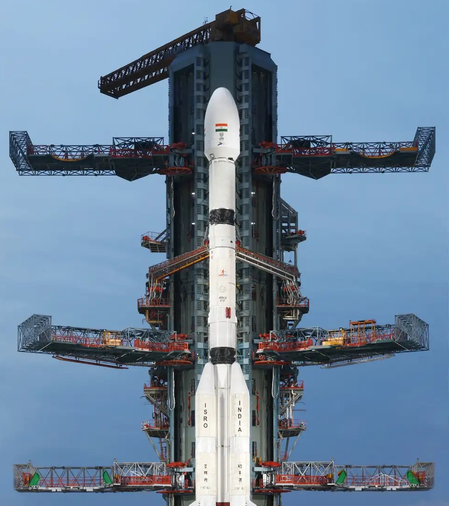
India is steadily expanding its presence in the global space sector, moving from the developmental use of satellites and space technology towards complex scientific missions, human spaceflight and long-term exploration.
An article published by Tanzania's *The Guardian* traces India's space journey from the launch of Aryabhata in 1975 to missions such as Chandrayaan-3 and Aditya-L1, while pointing to upcoming programmes including Gaganyaan and the planned Bharatiya Antariksh Station.
The country's space programme is increasingly being viewed as more than a platform for launching rockets and operating satellites. Its technologies are being applied across communications, agriculture, education, healthcare, navigation, disaster management and environmental monitoring, while the broader space ecosystem is contributing to research, industrial development, employment and technological innovation.
India's successful Chandrayaan-3 mission in 2023 marked a major milestone after the spacecraft achieved a controlled landing on the Moon. The Aditya-L1 mission subsequently expanded India's scientific efforts to the study of the Sun, while the SpaDeX mission demonstrated India's ability to conduct orbital docking operations.
The country's ambitions are now extending to sample-return missions. Chandrayaan-4, approved in 2024, is planned to land on the Moon, collect lunar samples and bring them back to Earth. Such a mission involves significantly greater technological complexity than a lunar landing, requiring multiple launches, rendezvous and docking operations, sample collection, ascent from the lunar surface and a controlled return to Earth.
India is also preparing for exploration of Venus. The proposed Shukrayaan, or Venus Orbiter Mission, is targeted for launch in March 2028 and is intended to examine the planet's atmosphere, surface and subsurface. Meanwhile, Aditya-L1 operates from a position roughly 1.5 million km from Earth, allowing scientists to study solar activity and space weather.
Human spaceflight represents another major stage in India's space ambitions. The Gaganyaan programme is being developed with a strong focus on safety and reliability, including crew escape systems, life-support equipment, parachutes and re-entry technologies.
The programme is following a phased testing strategy, with uncrewed missions being used to validate critical systems before astronauts are sent into space.
Gaganyaan is also part of a longer-term roadmap that extends beyond human spaceflight. The first module of the Bharatiya Antariksh Station is targeted for 2028, with the broader space station envisioned for completion by 2035. India has also outlined an ambition for a crewed lunar mission by 2040.
The development of India's space capabilities is simultaneously producing applications on Earth. Satellite systems are increasingly important for weather forecasting, agricultural planning, navigation, communications, disaster response and environmental monitoring.
Earth-observation satellites can help authorities track areas vulnerable to floods, cyclones and landslides, while satellite communications can provide critical connectivity during emergencies, particularly in remote locations.
Space-based data is also being used to monitor forests, water resources, urban growth, pollution and changing weather patterns. These capabilities can contribute to climate monitoring and disaster preparedness, while satellite-enabled connectivity can help extend healthcare and other services to underserved communities.
The country's space programme is also generating technological benefits beyond the sector itself. Advances in electronics, sensors, materials, communications, navigation and precision manufacturing developed for space missions can be adapted for other industries.
Technology transfers from the space programme are contributing to domestic manufacturing and helping Indian companies participate in more advanced supply chains. One example cited in the report is the development of more than 900 application-specific integrated circuits by ISRO's Semi-Conductor Laboratory for use in railway locomotives.
The broader impact of India's space investments therefore extends beyond individual missions. The programme is building scientific expertise, intellectual property, engineering capabilities and manufacturing capacity while creating opportunities for new commercial applications and industries.
From its early satellite programmes to lunar exploration, solar science, human spaceflight and plans for a space station and future lunar missions, India's space programme is entering a phase in which its impact is increasingly being felt both beyond Earth and across the wider economy.
Filed under
About the author
Anupam Pandey
Reporting and storytelling across theBusiness vertical for 4thWall Network.
More from 4thWall
Continue with Business.
Related reporting first, followed by more stories from across the 4thWall Network.

Global Fuel Subsidies Could Top $1 Trillion as Energy, Financial and Climate Risks Mount
2 October 2026

Centre Expands Agri Support to Strengthen Rural Livelihoods, Says Sitharaman
2 October 2026
India, France Discuss Trade, Investment and Economic Cooperation at G20 Meet
2 October 2026

Mid-Sized IT Firms Seen Outpacing Larger Peers in Q2 FY27: Nuvama
2 October 2026