Drug Smugglers Turn to Micro-Consignments and Hidden Compartments to Evade Surveillance
Drug trafficking networks are increasingly exploiting postal and courier services to transport narcotics across India, with law enforcement agencies identifying a growing pattern of small consignments.
Written by
Anupam Pandey
Published
7 November 2026
Reading time
4 min read
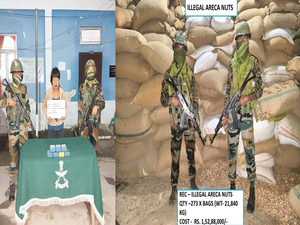
Drug trafficking networks are increasingly exploiting postal and courier services to transport narcotics across India, with law enforcement agencies identifying a growing pattern of small consignments.
Drug trafficking networks are increasingly exploiting postal and courier services to transport narcotics across India, with law enforcement agencies identifying a growing pattern of small consignments, fabricated identities and concealed packages.
A module recently dismantled by Tamil Nadu Police under Operation Deep Source has exposed the scale of this emerging supply chain, in which operators reportedly dispatch thousands of parcels containing only a few grams of drugs each to destinations across the country.
According to officials, the strategy, described as micro-dosing, involves splitting larger quantities into numerous small consignments. This reduces the potential financial loss from an individual seizure and makes it harder for investigators to identify the wider network through a single intercepted parcel.
Thousands of parcels dispatched using fake identities
Investigators have found that suspected traffickers use fabricated identities and false sender addresses to conceal the origins of consignments.
An official said the networks attempt to dispatch large numbers of parcels simultaneously from multiple locations, often directing them towards smaller towns and remote villages where screening infrastructure may be more limited than in major cities.
Once the consignments reach their destinations, they are allegedly collected and redistributed through local courier networks to other parts of the country.
Officials estimate that some operators aim to send at least 1,000 parcels daily, with each containing approximately 5 to 20 grams of narcotics. Although individual shipments are relatively small, the cumulative volume presents a significant challenge for enforcement agencies.
Tamil Nadu probe uncovers interstate supply network
The Tamil Nadu Police investigation found that parcels had allegedly been dispatched from Ambala over the past year, with destinations spread across 19 states and Union Territories.
Police identified Mahender Singh Bisht as a key coordinator operating from Ambala. The supply network was reportedly being facilitated across different states by Sunil Kumar, who was operating from Jammu and Kashmir.
An Intelligence Bureau official said traffickers also exploit weaknesses in verification procedures at certain postal and courier facilities.
According to the official, once a parcel reaches its destination, the intended recipient may be instructed to contact a temporary or burner phone number. Delivery personnel are then directed to hand over the package at a public location rather than a fixed residential address, making it more difficult to trace the recipient.
Narcotics concealed inside everyday consumer goods
Investigators have also identified the use of deep-concealment techniques, in which drugs are hidden inside ordinary consumer products rather than being transported in recognisable packages.
Recent operations have reportedly uncovered consignments containing MDMA, hashish and opioids concealed inside items such as steam irons and religious offerings.
Some suspected traffickers have also targeted rural post offices that may lack advanced parcel-screening equipment and digital infrastructure.
In response, the government has directed private logistics companies to strengthen security procedures through stricter parcel scanning, mandatory KYC checks and verification of shipments.
Agencies intensify action against domestic and international networks
The crackdown on domestic courier-based trafficking is taking place alongside wider efforts by central and state agencies to dismantle international narcotics networks.
The Narcotics Control Bureau (NCB), Indian Coast Guard and state police forces have carried out several operations targeting drug trafficking modules. Border security agencies have also continued efforts to intercept drones allegedly used to drop narcotics from Pakistan into Jammu and Kashmir and Punjab.
An official said that while major networks operating from countries such as Pakistan, Myanmar and Mexico were being targeted, smaller and decentralised domestic operations were emerging as a growing concern.
The NCB's strategy has increasingly focused on identifying the sources of supply, targeting alleged masterminds and pursuing extradition requests, rather than limiting action to arrests at the distribution level.
Officials said sustained coordination and consistent enforcement would be essential to dismantling these networks and advancing the government's stated objective of making India drug-free.
Filed under
About the author
Anupam Pandey
Reporting and storytelling across theNews vertical for 4thWall Network.
More from 4thWall
Continue with News.
Related reporting first, followed by more stories from across the 4thWall Network.

Faridabad Man Shot Dead by Neighbour Over Parking Dispute; Accused Allegedly Fires 15-16 Rounds
7 November 2026

NCB, Security Forces Destroy Over 1.37 Lakh Kg of Cannabis Plants Across 458 Acres in Arunachal Pradesh
7 November 2026
One Injured in Police Encounter in Greater Noida; Two Suspects Escape
7 November 2026

Heavy rain forecast for Tamil Nadu for the next two days; eight districts on alert for Diwali
7 November 2026