Trade Divisions Prevent G20 Consensus on Key Issues, Says Piyush Goyal
Differences among G20 members prevented the trade ministers from reaching consensus on several major issues at their Milwaukee meeting, Commerce and Industry Minister Piyush Goyal said.
Written by
Anupam Pandey
Published
3 October 2026
Reading time
4 min read
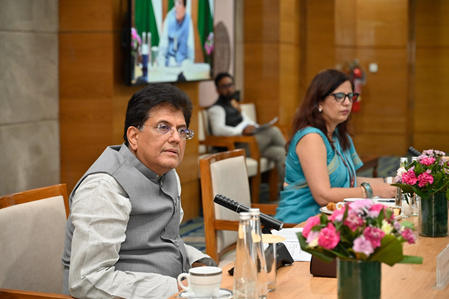
Differences among G20 members prevented the trade ministers from reaching consensus on several major issues at their Milwaukee meeting, Commerce and Industry Minister Piyush Goyal said.
Speaking to the Indian-American community in Chicago after attending the G20 Trade Ministers’ Meeting in Milwaukee, Goyal said the two-day discussions focused on some of the most pressing challenges facing the global trading system, including forced labour, excess industrial capacity and the future of the World Trade Organisation.
Goyal said the talks were “very fruitful” but acknowledged that differences among participating countries meant the meeting did not produce a comprehensive outcome document on the contentious issues.
The official G20 chair’s statement confirmed that ministers discussed four major priorities: the use of food trade as a coercive tool, structural excess capacity and production, reform of the Most-Favoured-Nation principle and forced labour in global supply chains. While members agreed on condemning the weaponisation of food through coercive trade measures, consensus was not reached on forced labour or several other areas.
On forced labour, Goyal said India supported collective efforts to prevent goods produced through forced labour from entering international markets. The US, Mexico and Argentina backed a separate statement on eliminating forced labour from global supply chains, but the wider G20 did not reach consensus on the issue.
The Indian minister also stressed the importance of preserving a rules-based multilateral trading system and said the WTO is facing significant challenges. India has argued that changes to global trade rules should remain consistent with WTO principles and should take into account the policy space available to developing economies.
Another major point of discussion was structural excess production capacity and its impact on manufacturers in other countries. Goyal argued that government-supported production concentrated in particular regions should not distort competition or undermine manufacturing in economies that follow what he described as fair-trade practices.
India has separately rejected the suggestion that it has structural excess manufacturing capacity in the sectors under discussion. Goyal has argued that India's expanding production is primarily linked to domestic demand and that trade measures should be based on specific, verifiable evidence rather than broad assumptions about an entire country.
The US had made excess industrial capacity, forced labour and reforms to the WTO's Most-Favoured-Nation framework key priorities of its 2026 G20 presidency. However, several members resisted proposals for collective action on industrial overcapacity, reflecting continuing differences over subsidies, industrial policy and global supply chains.
Goyal also said decisions concerning the G20 leaders’ summit in Miami would ultimately be taken at the leadership level.
After the Milwaukee ministerial, Goyal travelled to Chicago, where he met representatives of American businesses and investors and interacted with the Indian-American community. He said he held meetings with companies of different sizes and separately engaged with major investors.
The minister also used the Chicago visit to encourage Indian-American entrepreneurs and businesses to expand their investment and commercial engagement with India.
The Milwaukee meeting formed part of the wider programme under the US presidency of the G20, which is scheduled to culminate in the leaders’ summit later this year. The trade discussions highlighted both areas of cooperation and continuing disagreements among major economies over the future rules governing international commerce.
Filed under
About the author
Anupam Pandey
Reporting and storytelling across theBusiness vertical for 4thWall Network.
More from 4thWall
Continue with Business.
Related reporting first, followed by more stories from across the 4thWall Network.
UN Releases $160 Million Emergency Funding for 12 Humanitarian Crises
3 October 2026

Cuba Eases Wholesale Market Rules for Foreign Companies to Boost Investment
3 October 2026
Inclusive Growth Key to India’s Economic Resilience, Says Vice-President Radhakrishnan
3 October 2026

Apple to Strengthen Mac Privacy Controls Amid Concerns Over AI Agent Access
3 October 2026