Tamil Nadu Government Abolishes Stalin-Era Panel on Centre-State Relations, Assigns Role to Law Commission
The Tamil Nadu government, led by Chief Minister C. Joseph Vijay, has discontinued the high-level committee on Union–State relations set up by the previous DMK government and transferred its responsibilities.
Written by
Anupam Pandey
Published
7 November 2026
Reading time
4 min read
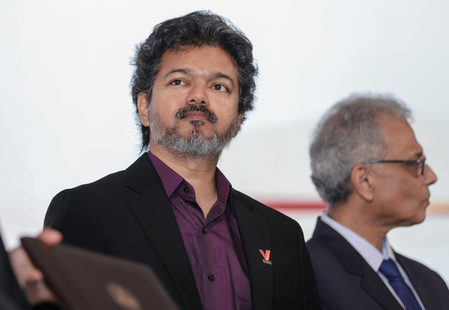
The Tamil Nadu government, led by Chief Minister C. Joseph Vijay, has discontinued the high-level committee on Union–State relations set up by the previous DMK government and transferred its responsibilities.
The decision, formalised through a Government Order, ends the tenure of the three-member panel established by former Chief Minister M.K. Stalin to examine constitutional provisions governing Centre–State relations and recommend measures to strengthen federalism and state autonomy.
The committee was chaired by retired Supreme Court judge Justice Kurian Joseph. Its other members were former IAS officer K. Ashok Vardhan Shetty and former State Planning Commission Vice-Chairman M. Naganathan.
Stalin had announced the formation of the panel in the Tamil Nadu Legislative Assembly in April 2025, describing it as an initiative to protect the state's constitutional rights and administrative powers.
The committee examined constitutional, legal and administrative issues concerning relations between the Union government and the states. It submitted the first part of its report to Stalin on February 16, 2026, containing recommendations on federal governance and state autonomy.
Government Cites Overlapping Responsibilities
The Vijay government has concluded that a separate committee is no longer necessary, as its responsibilities overlap with the existing mandate of the Tamil Nadu State Law Commission.
According to the Government Order, the Law Commission, reconstituted on August 7, 2026, has a broad remit that includes examining Centre–State and inter-state relations, reviewing existing laws and recommending improvements to the state's legal and institutional framework.
The government said maintaining two separate bodies with substantially similar functions could lead to duplication of work. It therefore ordered the immediate discontinuation of the high-level committee and assigned the Law Commission the responsibility of examining issues concerning Centre–State relations.
Decision Marks Shift in Approach to Federalism
The Government Order described the abolished panel as a non-statutory body while setting out the administrative rationale for its discontinuation.
The Tamil Nadu State Law Commission is also a non-statutory institution, having been established through an executive Government Order rather than an Act of the legislature.
The move marks a change from the previous DMK government's approach to examining federal relations. However, the Vijay administration has maintained that the subject will continue to receive institutional attention through the State Law Commission.
Filed under
About the author
Anupam Pandey
Reporting and storytelling across thePolitics vertical for 4thWall Network.
More from 4thWall
Continue with Politics.
Related reporting first, followed by more stories from across the 4thWall Network.
Rajnath Singh to Celebrate Diwali with Soldiers at Sikkim's Nathu La Frontier
7 November 2026
Abhishek Banerjee Alleges Attempt on His Life After Late-Night Clashes Outside His Residence
7 November 2026
Yogi Adityanath to Celebrate Diwali with Van Tangiya Community in Gorakhpur
7 November 2026
Naveen Patnaik to Forego Diwali Celebrations in Solidarity with Flood-Hit Odisha Families
7 November 2026