SC Seeks Responses on Plea Challenging CEC Gyanesh Kumar’s Alleged Unilateral Decisions
The Supreme Court sought responses from the Centre and the Election Commission of India (ECI) on petitions challenging the manner in which Chief Election Commissioner Gyanesh Kumar allegedly exercised powers of the poll.
Written by
Anupam Pandey
Published
5 October 2026
Reading time
4 min read
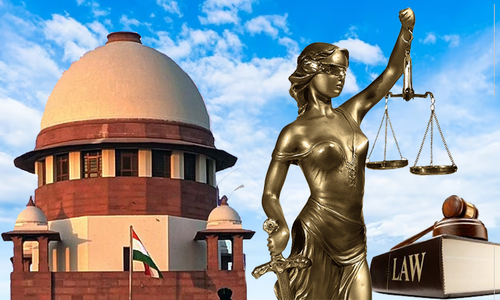
The Supreme Court sought responses from the Centre and the Election Commission of India (ECI) on petitions challenging the manner in which Chief Election Commissioner Gyanesh Kumar allegedly exercised powers of the poll.
A Bench headed by Chief Justice of India Surya Kant and comprising Justices Joymalya Bagchi and V. Mohana issued notice to the concerned authorities after hearing the pleas, which question whether decisions concerning the Election Commission can be taken or represented as decisions of the full poll panel without following the prescribed collective decision-making process.
The petitions challenge several decisions, directions and technical changes linked to the Special Intensive Revision (SIR) of electoral rolls. The petitioners have alleged that some of these measures were undertaken without the approval of Election Commissioners Sukhbir Singh Sandhu and Vivek Joshi.
The pleas rely on Article 324 of the Constitution, which vests the superintendence, direction and control of elections in the Election Commission, and Section 18 of the Chief Election Commissioner and Other Election Commissioners (Appointment, Conditions of Service and Term of Office) Act, 2023, which provides for decision-making by the multi-member Commission, with matters on which there is no unanimity to be decided by majority.
The petitioners have referred to written communications and file notings attributed to Sandhu and Joshi, alleging that the two Election Commissioners had raised objections on multiple occasions over decisions and actions concerning the SIR exercise.
Among the issues raised are alleged changes to Form 6, access to electoral roll data, decisions and communications issued without the approval of the full Commission, and appeals before tribunals in West Bengal. The pleas also raise concerns over the handling and allocation of work involving the Election Commission’s information technology infrastructure.
The petitioners have sought a declaration that powers vested in the ECI under Article 324 cannot be exercised or presented as actions of the Commission except in accordance with the constitutional and statutory framework governing the poll body. They have also sought directions for compliance with the collective decision-making process and preservation and production of relevant records.
The Supreme Court, however, declined to pass an immediate ex-parte interim order seeking suspension of CEC Gyanesh Kumar and instead sought responses from the respondents before considering further relief.
The petitions were filed after reports of differences between the three Election Commissioners over certain decisions taken during the SIR exercise. The ECI has maintained that internal objections and written notes are established mechanisms within a multi-member constitutional body and has disputed the characterisation of the differences as an institutional breakdown.
The matter is now set to proceed after the responses of the Centre and the Election Commission are placed before the Supreme Court.
Filed under
About the author
Anupam Pandey
Reporting and storytelling across theNews vertical for 4thWall Network.
More from 4thWall
Continue with News.
Related reporting first, followed by more stories from across the 4thWall Network.

Anto Augustine's Mother-in-Law Seeks Anticipatory Bail in Wayanad Liquor Case
3 October 2026

Three Family Members Killed, Girl Injured After Trailer Hits Motorcycle in MP's Dhar
3 October 2026

Pune Airport: Cannabis Extract Worth Rs 1 Crore Found Hidden in Cosmetic Jars
3 October 2026

Bengal: 13-Year-Old Girl Found Dead at Home, Family Alleges Sexual Assault and Blackmail
3 October 2026