Rubber Prices Rise in Kanyakumari as Heat Cuts Latex Production
Rubber prices have strengthened in Tamil Nadu's Kanyakumari district, offering some relief to growers even as unusually hot weather has reduced latex production and limited the gains from the higher market rates.
Written by
Anupam Pandey
Published
30 September 2026
Reading time
4 min read
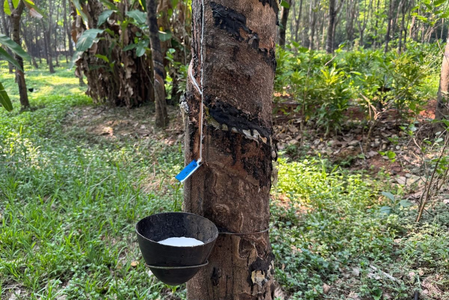
Rubber prices have strengthened in Tamil Nadu's Kanyakumari district, offering some relief to growers even as unusually hot weather has reduced latex production and limited the gains from the higher market rates.
The price rise has been supported by supply constraints in Kanyakumari and neighbouring Kerala, while traders have also pointed to steady industrial demand as a factor keeping the market firm.
Rubber growers in Kanyakumari said latex output had declined by up to 30 per cent over the past two weeks due to the heat. The fall in production has reduced the quantity available for sale despite the improvement in prices.
Moderate showers in some of the district's hilly areas have provided temporary relief, with growers reporting a slight improvement in latex yields after the period of low production.
In the Kottayam market on Tuesday, dealer prices for RSS-4 rubber stood at Rs 271 per kg, while RSS-5 was quoted at Rs 266 per kg. ISS-grade rubber was priced at Rs 256 per kg.
The Rubber Board's published rates were higher, with RSS-4 quoted at Rs 279 per kg and RSS-5 at Rs 274 per kg. The price of 80 per cent processed latex was reported at Rs 191 per kg.
The stronger prices have been welcomed by growers across Kanyakumari, although farmers remain concerned about lower output. Their overall earnings depend not only on the price received but also on the amount of latex they are able to harvest.
A rubber trader in Kulasekharam said developments in the synthetic rubber market, along with the gap between domestic natural rubber production and consumption, had contributed to the price movement.
According to the trader, synthetic rubber prices had earlier risen following disruptions to crude oil supplies to India during the conflict between the United States and Iran. Since synthetic rubber is petroleum-based, higher production costs contributed to an increase in natural rubber prices as well, he said.
Although crude oil imports later stabilised, rubber prices continued to remain firm, the trader added.
He also attributed the sustained demand partly to growth in the automobile sector, which has increased requirements for rubber products, while domestic natural rubber production remains below consumption levels.
The trader said prices could ease if the gap between domestic production and demand narrows. For now, growers are benefiting from the higher rates while closely watching weather conditions and the possibility of a sustained recovery in latex production following the recent heatwave.
Filed under
About the author
Anupam Pandey
Reporting and storytelling across theNews vertical for 4thWall Network.
More from 4thWall
Continue with News.
Related reporting first, followed by more stories from across the 4thWall Network.

Heavy Rain Forecast for 11 Tamil Nadu Districts Today, Temperatures May Rise
30 September 2026

Coast Guard, Gujarat ATS Seize 526 Kg Narcotics Worth Over Rs 3,000 Crore in Arabian Sea
30 September 2026

Delhi-NCR Likely to Turn Dry as Rains Ease, Air Quality Remains Moderate
30 September 2026

Bihar Vigilance Raids Bureaucrat Couple’s Premises, Recovers Nearly Rs 80 Lakh Cash, Jewellery
30 September 2026