Pakistan Has Lost Control of Terror Groups It Created, India Tells UN
India has accused Pakistan of losing control over terrorist groups it had supported, saying the organisations created as instruments against other countries have increasingly turned their violence inward.
Written by
Anupam Pandey
Published
8 October 2026
Reading time
4 min read
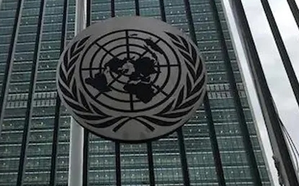
India has accused Pakistan of losing control over terrorist groups it had supported, saying the organisations created as instruments against other countries have increasingly turned their violence inward.
Speaking at the UN General Assembly's Sixth Committee, India's First Secretary at the UN, Raghoo Puri, said Pakistan had portrayed itself as both a frontline state against terrorism and a victim of it while overlooking what India described as its past support for militant groups.
Puri was responding to remarks by Pakistan's Deputy Permanent Representative Usman Jadoon, who had raised allegations against India during the committee's proceedings.
He said recent remarks by Pakistan's Punjab Chief Minister Maryam Nawaz had highlighted the growing threat of terrorism within Pakistan itself. Nawaz had said last month that Punjab faced a greater threat from neighbouring Pakistani provinces than from neighbouring countries. She had also rejected attempts to distinguish between different categories of militants, saying those involved in terrorism should be treated as terrorists regardless of their stated cause.
Puri also referred to remarks made by former Pakistan Prime Minister Nawaz Sharif in a 2018 interview, in which he acknowledged the presence of militant organisations in Pakistan and questioned why such groups were allowed to cross the border and carry out attacks in Mumbai.
The Indian diplomat also criticised Pakistan's claims regarding the outcome of Operation Sindoor, launched by India following the Pahalgam terror attack. He described Islamabad's portrayal of the military operation as part of what he called a broader campaign of misinformation and disinformation.
Responding to a second statement from the Pakistani side, Puri accused Islamabad of repeatedly relying on familiar narratives instead of taking effective action against terrorism. He said greater efforts to counter terrorism rather than focus on what he described as narrative-building would benefit the international community.
Puri also rejected Pakistan's allegations concerning the treatment of minorities in India, pointing to the Pahalgam attack and saying the victims had been targeted after being identified by their religion.
He further criticised Pakistan over its handling of Jaish-e-Mohammed chief Masood Azhar, who is listed as a terrorist by the United Nations. Puri questioned how Pakistani authorities could claim to be seeking Azhar's capture while he continued to appear publicly.
Referring to reports that Azhar had spoken about the impact of Operation Sindoor on his family and facilities linked to his organisation, Puri said Pakistan's past responses to Jaish-e-Mohammed had followed a familiar pattern. He recalled that Pakistani representatives had previously described the group as defunct.
Puri argued that when terrorist organisations are allowed to operate with political or state support and their members receive safe havens, international counter-terrorism commitments lose credibility and victims are denied justice.
He cited the September 11 attacks in the United States, the 2008 Mumbai terror attacks and the Pahalgam attack as examples of terrorism that the international community has not forgotten. He also referred to the discovery of al-Qaeda leader Osama bin Laden in Abbottabad, near the Pakistan Military Academy, years after the 9/11 attacks.
Puri further raised concerns over alleged financial support for terrorism and pointed to the upcoming Financial Action Task Force (FATF) plenary meeting in Paris, scheduled for October 26 to 30.
India has repeatedly called for international action against states and entities that support or provide safe havens to terrorist organisations, maintaining that accountability and effective enforcement are essential to preventing terrorism from spreading across borders.
Filed under
About the author
Anupam Pandey
Reporting and storytelling across thePolitics vertical for 4thWall Network.
More from 4thWall
Continue with Politics.
Related reporting first, followed by more stories from across the 4thWall Network.
AICC Intervention in Focus as Congress Differences Surface Again in Kerala
3 October 2026
IIT-Bombay Student Death: Maharashtra Congress Leaders Meet Sahil Wakode’s Family
3 October 2026

USINDOPACOM Chief Admiral Paparo Begins India Visit to Advance Defence Cooperation
3 October 2026
Navpreet Singh Deported From Türkiye, Brought Back to India: Amit Shah
3 October 2026