NEC Calls for Infrastructure, Value Addition to Raise Nagaland Coffee Farmers’ Incomes
North Eastern Council (NEC) Secretary Satinder Kumar Bhalla has called for a comprehensive approach to coffee cultivation in Nagaland, saying stronger infrastructure, mechanisation, processing, diversification.
Written by
Anupam Pandey
Published
3 October 2026
Reading time
4 min read
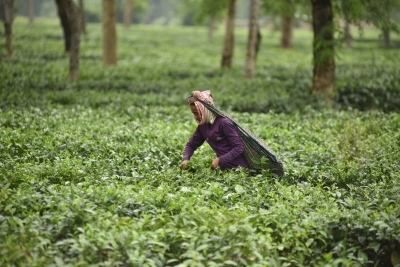
North Eastern Council (NEC) Secretary Satinder Kumar Bhalla has called for a comprehensive approach to coffee cultivation in Nagaland, saying stronger infrastructure, mechanisation, processing, diversification.
North Eastern Council (NEC) Secretary Satinder Kumar Bhalla has called for a comprehensive approach to coffee cultivation in Nagaland, saying stronger infrastructure, mechanisation, processing, diversification and access to markets will be crucial to improving the earnings of growers.
Bhalla made the remarks during a visit to Tuophema village in Kohima district, where he reviewed the progress of coffee cultivation and related infrastructure being developed under the Coffee USP Project.
During the visit, he inspected plantation areas and the Hi-Tech Coffee Washing Station and interacted with members of the Tuophema Cluster and local coffee growers.
Bhalla said the Coffee USP Project should be viewed as more than a programme focused on increasing plantation acreage. He described it as a broader livelihood and economic development initiative aimed at enabling villages, farmer groups and local communities to generate greater economic value from the region's resources.
He said the government's wider objective was to create sustainable livelihoods that could contribute to better access to education, healthcare and modern amenities, while supporting the broader vision of Viksit Bharat by 2047.
According to Bhalla, simply increasing the number of coffee plants would not be sufficient to make the sector commercially successful. He highlighted the importance of reliable roads, modern processing equipment, efficient post-harvest systems, quality control, value-added products and stronger domestic and export market connections.
He said the project could significantly improve incomes for farmers and local communities, but achieving that goal would require coordination between the Centre, Nagaland government, Coffee Board, district administration, growers, technical institutions and private businesses.
Bhalla also asked the state government and Coffee Board to work with agricultural research and other central institutions to identify suitable intercrops and complementary activities that could be introduced in coffee plantations.
Diversifying production, he said, could help farmers use their land more efficiently while creating additional income streams and making coffee cultivation more economically sustainable.
The NEC Secretary further said authorities would examine options involving water harvesting, mechanisation, modern technologies and appropriate equipment to address the practical challenges faced by growers.
He encouraged the local administration to engage with industrial companies, investors and exporters that could help bring greater mechanisation and automation to the sector through suitable financial and institutional arrangements.
Bhalla also highlighted the efforts of young coffee grower Vibei Kense, who travelled to Vietnam and completed specialised training and certification in coffee. He said developing such local expertise could strengthen the emerging coffee ecosystem in Nagaland.
He urged both younger residents and community elders to focus on creating sustainable economic opportunities that can provide better prospects for future generations.
Nagaland Principal Secretary and Development Commissioner Y. Kikheto Sema said efforts to promote coffee cultivation in the state date back to 1981. However, he noted that the sector had not reached its full economic potential because of factors including limited awareness and inadequate market connections.
Sema encouraged growers to adopt a more diversified model, including the cultivation of black pepper and other compatible crops alongside coffee wherever agricultural conditions permit.
The discussions during the visit underlined the need to develop coffee as a complete value chain in Nagaland, linking cultivation with processing, technology, diversification, investment and access to high-value markets.
Filed under
About the author
Anupam Pandey
Reporting and storytelling across theNews vertical for 4thWall Network.
More from 4thWall
Continue with News.
Related reporting first, followed by more stories from across the 4thWall Network.

Three Family Members Killed, Girl Injured After Trailer Hits Motorcycle in MP's Dhar
3 October 2026

Pune Airport: Cannabis Extract Worth Rs 1 Crore Found Hidden in Cosmetic Jars
3 October 2026

Bengal: 13-Year-Old Girl Found Dead at Home, Family Alleges Sexual Assault and Blackmail
3 October 2026

Man Found Dead Inside Car in Patna, Police Investigate Suspected Gunshot Injury
3 October 2026