Maharashtra Waives Technical Criteria to Extend Drought Relief to Excluded Farmers
The Maharashtra government has decided to relax technical criteria used to identify drought-affected areas, paving the way for farmers whose crops have suffered damage but were excluded from the initial drought.
Written by
Anupam Pandey
Published
29 September 2026
Reading time
4 min read
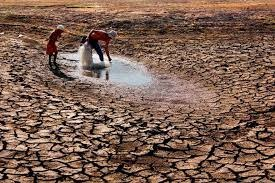
The Maharashtra government has decided to relax technical criteria used to identify drought-affected areas, paving the way for farmers whose crops have suffered damage but were excluded from the initial drought.
The decision was taken by the state Cabinet chaired by Chief Minister Devendra Fadnavis on Tuesday. The government said physical inspections would be carried out in areas where crops have withered despite the absence of the automated indicators normally required for inclusion in the drought-hit list.
Maharashtra had declared drought in 265 of the state’s 358 talukas on September 25 after areas met the Trigger-1 conditions under the Drought Management Code. The declaration covers roughly 74 per cent of the state’s talukas.
Fadnavis said unusual weather patterns had resulted in some areas receiving heavy rainfall during the early part of the monsoon before experiencing prolonged dry conditions. As a result, certain regions where crops have been damaged did not meet the automated criteria despite experiencing significant agricultural distress.
Under the latest decision, government teams will conduct physical crop assessments in such locations. Farmers found to have suffered crop losses will be brought under the relief framework through a special exemption from the technical criteria.
The Chief Minister said detailed guidelines covering financial assistance and other relief measures for the newly identified areas would be issued shortly. A dedicated Cabinet sub-committee will also continue to review the drought situation, with ministers instructed to submit proposals and feedback from their respective regions.
For districts that were not included in the original drought declaration, officials have been asked to use alternative parameters and submit fresh proposals for relief, allowing the government to consider areas that may have been missed by the initial automated assessment.
The government is also preparing a Government Resolution outlining priorities for water allocation. The framework will give precedence to drinking water and explicitly take livestock requirements into account before water is allocated for other purposes.
District Planning and Development Committees have been directed to give maximum priority to drought mitigation works, while guardian ministers have been asked to undertake localised measures based on conditions in individual districts.
The government has also announced relief for students from drought-affected areas. Class 10 and Class 12 students will receive a complete waiver of examination fees upfront, replacing the earlier system under which fees were collected and subsequently reimbursed.
The initial drought package for the 265 affected talukas includes land revenue waivers, restructuring of agricultural loans and a halt to recovery of agriculture-related bank loans. Concessions have also been announced on electricity bills for agricultural pumps above 7.5 HP, while power connections to agricultural pumps in declared scarcity villages are not to be disconnected.
The package further provides for relaxation of employment-generation norms, deployment of water tankers wherever drinking water shortages emerge, measures to maintain fodder supplies and steps to prevent foodgrain shortages among farmers and agricultural labourers.
District administrations have been instructed to undertake field-level crop assessments, including the collection of geotagged photographs and GPS coordinates of damaged farmland, before submitting detailed reports through the Agriculture Commissioner. Direct crop-loss compensation is expected to be determined after these assessments.
The latest Cabinet decision is intended to address the gap between automated drought indicators and the actual condition of farms on the ground, particularly in areas where unusual rainfall patterns have affected crops without triggering the standard assessment mechanism.
With drought conditions affecting a large part of Maharashtra, the government is now relying on field verification alongside technical indicators to identify additional affected farmers and extend relief measures to them.
Filed under
About the author
Anupam Pandey
Reporting and storytelling across theNews vertical for 4thWall Network.
More from 4thWall
Continue with News.
Related reporting first, followed by more stories from across the 4thWall Network.

Heavy Rain Forecast for 11 Tamil Nadu Districts Today, Temperatures May Rise
30 September 2026

Coast Guard, Gujarat ATS Seize 526 Kg Narcotics Worth Over Rs 3,000 Crore in Arabian Sea
30 September 2026
Delhi-NCR Likely to Turn Dry as Rains Ease, Air Quality Remains Moderate
30 September 2026

Bihar Vigilance Raids Bureaucrat Couple’s Premises, Recovers Nearly Rs 80 Lakh Cash, Jewellery
30 September 2026