Karnataka E20 Row: Centre Rejects Claims of Excess Ethanol Blending, Raises Questions Over Testing Method
The Centre on Saturday rejected allegations that petrol sold at certain retail outlets in Karnataka contained excessive levels of ethanol, questioning the sampling and testing procedures used in an October 2026.
Written by
Anupam Pandey
Published
7 November 2026
Reading time
4 min read
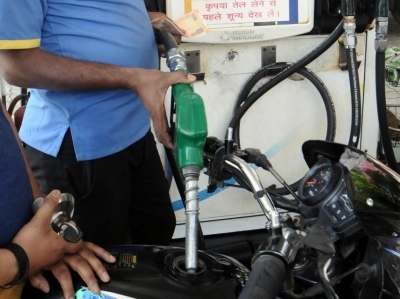
The Centre on Saturday rejected allegations that petrol sold at certain retail outlets in Karnataka contained excessive levels of ethanol, questioning the sampling and testing procedures used in an October 2026.
The Ministry of Petroleum and Natural Gas (MoPNG) said all 56 samples tested in Karnataka as part of a nationwide quality-monitoring exercise complied with the prescribed E20 specifications. The samples recorded ethanol content ranging from 19 to 20 per cent, with an average of 19.30 per cent.
The ministry said the three public sector oil marketing companies (OMCs) — Indian Oil Corporation Ltd (IOCL), Bharat Petroleum Corporation Ltd (BPCL) and Hindustan Petroleum Corporation Ltd (HPCL) — had disputed reports of ethanol blending levels between 26 and 31 per cent at certain outlets.
According to the ministry, tests conducted under the prescribed statutory and technical procedures did not support those claims. It maintained that E20 petrol supplied by the three companies across the country, including Karnataka, meets the Bureau of Indian Standards specification IS 17021 for ethanol-blended motor gasoline.
Centre Questions Karnataka's Sampling and Testing Process
The OMCs raised concerns about the procedure followed during the October 2026 sampling exercise, the ministry said.
Under the Motor Spirit and High Speed Diesel (Regulation of Supply, Distribution and Prevention of Malpractices) Order, 2005, read with the Marketing Discipline Guidelines (MDG) 2024, a defined process governs the collection, retention, testing and communication of fuel sample results.
The prescribed procedure requires six one-litre samples to be collected. Two are to be handed over to the dealer, two retained by the oil company or the concerned department, and the remaining two sent to a designated laboratory.
The ministry said samples collected during a September 2026 exercise had been routed through the State Level Coordinator to designated OMC laboratories and tested for the required quality parameters.
However, the subsequent October exercise reportedly took place without the participation of OMC representatives. The companies also said they had not received the corresponding retention samples, complete outlet-wise information or laboratory reports, despite requesting these through the State Level Coordinator.
The ministry further noted that the reported findings were based on certificates issued by a third-party laboratory rather than one specified under the relevant Control Order.
It said the certificates did not include essential technical information, such as the standard test method used, the dilution procedure followed and the reference material employed to establish ethanol content. According to the ministry, these omissions made independent verification difficult and prevented the companies and dealers from seeking a retest.
The OMCs also flagged inconsistencies in the density readings. Samples reportedly containing 26–31 per cent ethanol showed lower density readings than E20 samples tested by the companies, the ministry said. It argued that this further highlighted the need for testing through prescribed methods and comparison with appropriate reference samples.
All 893 Samples in Nationwide Exercise Met E20 Standards
The ministry cited a nationwide quality-monitoring exercise conducted by the OMC/Centre for High Technology (CHT) Quality Coordination Cell.
A total of 893 E20 samples from 27 states and Union Territories were tested for ethanol content under IS 17021, Annex C, at refinery and OMC quality-control laboratories.
The samples included:
330 from Indian Oil Corporation
280 from Bharat Petroleum
283 from Hindustan Petroleum
All 893 samples contained ethanol within the prescribed range of 19–21 per cent, the ministry said.
In Karnataka, all 56 samples collected across different locations and covering all three OMCs also met the specifications, with ethanol content between 19 and 20 per cent.
The Centre said these results differed substantially from the higher levels reported in the Karnataka press release and underscored the importance of transparent, technically sound and jointly verifiable testing.
It also said ethanol blending at OMC refineries and depots takes place through calibrated and automated systems, governed by prescribed specifications and quality-control protocols, rather than through manual or arbitrary addition.
Centre Disputes Estimates of Consumer Losses
The ministry also questioned claims that ethanol blending could result in annual consumer mileage losses worth around Rs 62,000 crore and vehicle repair expenses of Rs 39,000 crore — an estimated combined impact of approximately Rs 1.01 lakh crore.
It said these figures required scrutiny against established technical evidence and actual vehicle-performance data.
According to the ministry, more than 30 crore two-wheelers and four crore four-wheelers have been using E20 fuel for over three years. It also noted that more than six crore people visit petrol pumps daily to refuel their vehicles.
The ministry argued that the absence of widespread reports of vehicle breakdowns was an important consideration when assessing claims about fuel quality and vehicle performance.
It cited studies conducted by the Inter-Ministerial Committee, IOCL, the Automotive Research Association of India (ARAI) and the Society of Indian Automobile Manufacturers (SIAM) on E20's impact on vehicle performance and mileage.
According to the ministry, vehicles calibrated for E20 may experience a mileage reduction of around 1–2 per cent, while some other vehicles could see a reduction of approximately 3–6 per cent, depending on their category and calibration.
These estimates were also referenced in a response published by the ministry on the Press Information Bureau website in August 2025.
The Centre said applying a uniform assumption of 10 per cent mileage loss across the entire vehicle population to calculate nationwide consumer losses was not supported by established scientific evidence.
It added that the projected vehicle-repair costs would also need to be backed by transparent assessments of vehicle performance, material compatibility and documented repair expenses.
Government Highlights Economic and Environmental Benefits
The ministry reiterated that the Ethanol Blending Programme was intended to reduce India's dependence on imported crude oil, strengthen domestic agricultural value chains and improve energy security.
Since the Ethanol Supply Year (ESY) 2014-15, the programme has generated foreign exchange savings of more than Rs 1.97 lakh crore, replaced approximately 316 lakh metric tonnes of crude oil and helped reduce around 952 lakh metric tonnes of carbon dioxide emissions, according to the government.
It also said that more than Rs 1.66 lakh crore had been transferred to farmers through the programme.
During ESY 2025-26, which ended on October 31, 2026, public sector OMCs procured 1,089 crore litres of ethanol and blended 1,134 crore litres against petrol sales of approximately 5,673 crore litres, as part of efforts to meet the national 20 per cent blending target.
The ministry also rejected the suggestion that OMCs had a commercial incentive to blend ethanol beyond the prescribed target, arguing that additional procurement would increase their costs.
The Centre said it remained committed to maintaining fuel quality, ensuring regulatory compliance and protecting consumers through established quality-assurance and monitoring systems.
Filed under
About the author
Anupam Pandey
Reporting and storytelling across thePolitics vertical for 4thWall Network.
More from 4thWall
Continue with Politics.
Related reporting first, followed by more stories from across the 4thWall Network.
Rajnath Singh to Celebrate Diwali with Soldiers at Sikkim's Nathu La Frontier
7 November 2026
Abhishek Banerjee Alleges Attempt on His Life After Late-Night Clashes Outside His Residence
7 November 2026
Yogi Adityanath to Celebrate Diwali with Van Tangiya Community in Gorakhpur
7 November 2026
Naveen Patnaik to Forego Diwali Celebrations in Solidarity with Flood-Hit Odisha Families
7 November 2026