Iran Says It Could Launch Preemptive Strikes to Prevent 'Enemy' Attacks
Iranian Army spokesman Mohammad Akraminia has said the country could conduct preemptive military operations if necessary to prevent what Tehran considers potential aggression by an adversary.
Written by
Anupam Pandey
Published
8 October 2026
Reading time
4 min read
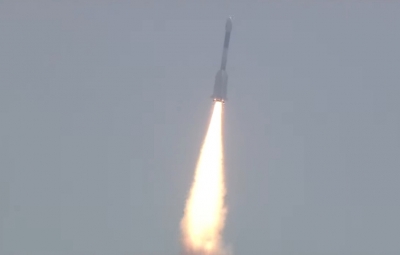
Iranian Army spokesman Mohammad Akraminia has said the country could conduct preemptive military operations if necessary to prevent what Tehran considers potential aggression by an adversary.
In an interview with semi-official Fars news agency, Akraminia said Iranian armed forces had previously undertaken what he described as preemptive operations and would continue to act when required.
He said Iran's military doctrine had shifted from a primarily defensive approach towards a more offensive posture and that the change had been applied during the conflict involving the United States and Israel.
Akraminia cited a missile strike against a US base in Jordan in late July and several missile and drone attacks in recent months against bases of groups Iran describes as "counter-revolutionary and separatist" in Iraq's semi-autonomous Kurdistan region.
He described the strike on the US base as a preemptive operation that, according to him, allowed Iran to seize the initiative and restrict the opponent's ability to respond.
The Iranian military official said Tehran considers preemptive operations legitimate when they comply with principles including necessity, urgency and proportionality.
Asked about the possibility of a US ground invasion of Iran, Akraminia said he believed Washington would not undertake such an operation.
He also said Iran had decided to extend the range of its missile systems following the conflict with the US and Israel. According to Akraminia, the deployment of opposing forces farther from Iran's coastline had influenced the decision to increase missile range.
He said Iranian forces were working to upgrade the capabilities of their missiles and claimed that improvements had already been made in their speed and precision. Future generations, he added, would be designed to be faster and more accurate.
The remarks come against the backdrop of a wider conflict involving Iran, Israel and the United States. According to the account provided by Iranian authorities, Israel and the US launched joint attacks on Tehran and other Iranian cities on February 28, prompting Iran to respond with missile and drone strikes against Israel and US military assets in the region.
A ceasefire was subsequently reached on April 8. On June 18, Iran and the United States signed a memorandum of understanding aimed at ending the conflict across the region.
The two countries were scheduled to hold negotiations within 60 days of the agreement, with August 17 set as the deadline for reaching a final understanding. However, the talks failed to make sufficient progress as tensions continued to rise.
Filed under
About the author
Anupam Pandey
Reporting and storytelling across thePolitics vertical for 4thWall Network.
More from 4thWall
Continue with Politics.
Related reporting first, followed by more stories from across the 4thWall Network.

USINDOPACOM Chief Admiral Paparo Begins India Visit to Advance Defence Cooperation
3 October 2026

Navpreet Singh Deported From Türkiye, Brought Back to India: Amit Shah
3 October 2026

US Recovers More Than $2 Million in Civil Fraud Case Involving Pakistan-Based Firm
2 October 2026

G20 Trade Meet Highlights Divisions Over Future of Global Trade Rules
1 October 2026