G20 Trade Meet Highlights Divisions Over Future of Global Trade Rules
G20 Trade Ministers' Meeting in Milwaukee has brought competing approaches to the future of global trade into sharper focus, with the US pushing discussions on reciprocity, industrial overcapacity and supply chain.
Written by
Anupam Pandey
Published
1 October 2026
Reading time
4 min read
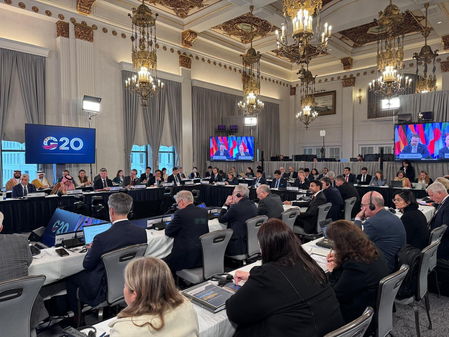
G20 Trade Ministers' Meeting in Milwaukee has brought competing approaches to the future of global trade into sharper focus, with the US pushing discussions on reciprocity, industrial overcapacity and supply chain.
India is represented at the two-day meeting by Commerce and Industry Minister Piyush Goyal. US Trade Representative Jamieson Greer, who is hosting the ministerial, has identified four priorities for the US G20 presidency: the use of trade in food as a coercive tool, structural excess capacity and production, the WTO's Most-Favoured-Nation principle and forced labour in global supply chains.
The debate over the MFN principle is particularly significant. Under the WTO framework, the principle generally requires members to extend the same trade treatment to other WTO members. The US administration has argued that existing arrangements do not adequately address differences in tariffs, market access and economic practices between countries.
India, meanwhile, has reiterated its support for “a rules-based, open, inclusive, transparent, equitable and non-discriminatory” multilateral trading system, with the WTO at its core, while maintaining policy space for developing economies.
A concrete development emerged from discussions on steel overcapacity, with members of the Global Forum on Steel Excess Capacity reaching consensus on the “Milwaukee Framework”. The framework calls for coordinated measures to address excess steel production and the market distortions associated with it.
The forum's membership does not include China or India, despite both being among the world's largest steel producers. The United States has argued that countries facing excess production should consider stronger trade measures. Greer said individual governments would decide what action was appropriate, while advocating greater coordination.
The steel debate forms part of a broader discussion about industrial subsidies, state support and production capacity. These issues extend beyond steel into sectors such as electric vehicles, batteries and other advanced manufacturing industries.
Forced labour in global supply chains is another priority for the US presidency. Washington has called for stronger measures to prevent products made using forced labour from entering international supply chains, while discussions also involve questions around enforcement and supply-chain traceability.
Food security and trade restrictions are also on the agenda. The United States has called on G20 members to oppose what it describes as the weaponisation of food trade, an issue that intersects with longstanding discussions over agricultural exports, food security and the policy flexibility available to developing countries.
The discussions are taking place alongside a series of bilateral trade engagements. Goyal met Greer in Milwaukee and said the two sides had a productive discussion aimed at advancing an interim agreement under the broader India-US Bilateral Trade Agreement.
Goyal has also been engaging with other governments and American industry representatives during his US visit, including discussions on investment, manufacturing and supply-chain cooperation.
The minister's participation therefore combines India's position in the wider G20 debate with its separate effort to advance bilateral economic ties with the United States.
The two-day ministerial continues on Thursday, with further discussions and bilateral meetings scheduled before the closing session. The outcome will offer an indication of how much common ground G20 economies can find on WTO reform, industrial overcapacity, supply-chain standards and the future of international trade rules.
Filed under
About the author
Anupam Pandey
Reporting and storytelling across thePolitics vertical for 4thWall Network.
More from 4thWall
Continue with Politics.
Related reporting first, followed by more stories from across the 4thWall Network.
Israeli President Herzog Hails Indian Pilot Smit Machchhar, Recommends Four Civilians for Heroism Honour
1 October 2026
South Korea's Lee Calls for Practical Steps to Ease Tensions With North Korea
1 October 2026
South Korean President Lee Visits Soldiers Injured in DMZ Landmine Blast
30 September 2026
India, Saudi Arabia Discuss Strengthening Parliamentary Cooperation
30 September 2026