Delhi AQI Stays Moderate, Several Areas Slip Into Poor Category
Delhi’s air quality remained in the ‘moderate’ category on Monday, even as several parts of the national capital recorded pollution levels in the ‘poor’ range, according to data from the Central Pollution Control Board.
Written by
Anupam Pandey
Published
5 October 2026
Reading time
4 min read
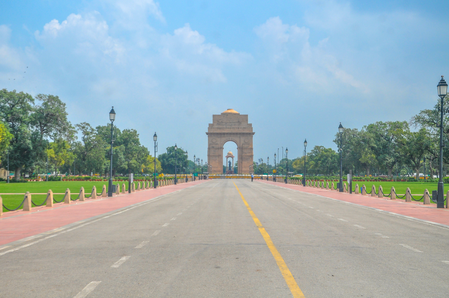
Delhi’s air quality remained in the ‘moderate’ category on Monday, even as several parts of the national capital recorded pollution levels in the ‘poor’ range, according to data from the Central Pollution Control Board.
CPCB readings showed elevated pollution at multiple monitoring stations across the city. AQI levels included 146 at Mandir Marg, 140 at Aya Nagar, 212 at Punjabi Bagh, 225 at CRRI Mathura Road, 175 at Shadipur, 187 at IGI Airport Terminal 3, 238 at Alipur, 135 at JNU and 193 at R.K. Puram. Mundka recorded an AQI of 257, while readings stood at 221 in Wazirpur, 230 in Vivek Vihar, 203 in Okhla Phase-2, 87 in the Cantonment Area, 144 in Nehru Nagar and 179 in Anand Vihar.
The deterioration comes at the beginning of the period when Delhi’s air quality typically starts worsening more noticeably. Pollution levels have increased over the past few days, following a short spell of relatively cleaner air brought by rainfall and stronger winds that helped disperse pollutants.
On Sunday, Delhi recorded its highest average AQI of the season at 187, placing the city towards the upper end of the ‘moderate’ category. With wind speeds now weakening and little rainfall to clear the air, emissions from local sources have contributed to the renewed buildup of pollutants.
PM10 has emerged as one of the prominent pollutants during the recent deterioration. The coarse particles can enter the respiratory system and are commonly associated with sources such as road dust, construction activity and biomass burning.
According to the CPCB’s 4 p.m. bulletin, 14 of Delhi’s 43 operational monitoring stations recorded AQI readings in the ‘poor’ category. Mundka registered the highest reading at 273, followed by CRRI Mathura Road and Narela at 257 each, while Jahangirpuri recorded an AQI of 237. Delhi Cantonment reported the lowest reading at 97, placing it in the ‘satisfactory’ category.
Under the CPCB’s air quality scale, an AQI of 0-50 is classified as ‘good’, 51-100 as ‘satisfactory’, 101-200 as ‘moderate’, 201-300 as ‘poor’, 301-400 as ‘very poor’ and 401-500 as ‘severe’.
CPCB figures also show that Delhi has experienced one of its more polluted starts to October in recent years. The average AQI for the first four days of October stood at 174.5 in 2026, compared with 119.75 in 2025, 167.25 in 2024, 155 in 2023, 161.25 in 2022, 107.25 in 2021 and 176.25 in 2020.
Air quality across Delhi-NCR generally begins to deteriorate from around mid-September. Stubble burning, along with emissions from vehicles, industries, power plants and biomass burning, contributes to the worsening air during the winter months. Firecracker emissions around the festive period, particularly Diwali, can add to the pollution burden despite restrictions.
The Commission for Air Quality Management’s expert assessment has identified PM2.5 as a major contributor to Delhi’s pollution, with secondary particulate matter formed through chemical reactions involving combustion-related emissions also playing an important role during winter.
Filed under
About the author
Anupam Pandey
Reporting and storytelling across theNews vertical for 4thWall Network.
More from 4thWall
Continue with News.
Related reporting first, followed by more stories from across the 4thWall Network.

Anto Augustine's Mother-in-Law Seeks Anticipatory Bail in Wayanad Liquor Case
3 October 2026

Three Family Members Killed, Girl Injured After Trailer Hits Motorcycle in MP's Dhar
3 October 2026

Pune Airport: Cannabis Extract Worth Rs 1 Crore Found Hidden in Cosmetic Jars
3 October 2026

Bengal: 13-Year-Old Girl Found Dead at Home, Family Alleges Sexual Assault and Blackmail
3 October 2026