Tigress from West Bengal’s Buxa Tiger Reserve Safely Captured in Assam After Travelling Over 100 Km
A tigress from West Bengal’s Buxa Tiger Reserve has been safely captured in Assam’s Kokrajhar district after travelling more than 100 km across state boundaries and moving close to human settlements, Assam Minister.
Written by
Anupam Pandey
Published
4 November 2026
Reading time
4 min read
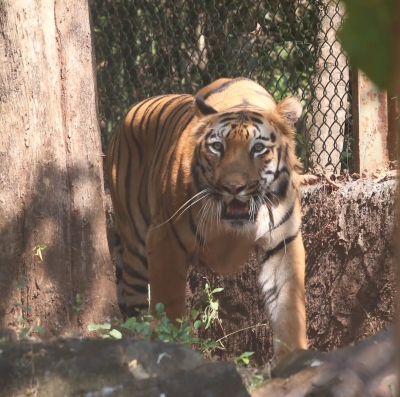
A tigress from West Bengal’s Buxa Tiger Reserve has been safely captured in Assam’s Kokrajhar district after travelling more than 100 km across state boundaries and moving close to human settlements, Assam Minister.
The animal, identified as BT1, was captured during a coordinated operation involving the forest departments of Assam and West Bengal, with support from local authorities, police personnel and residents.
In a post on X, Mallabaruah described the operation as an example of effective inter-state coordination in wildlife conservation. He congratulated the teams and local communities involved in ensuring the animal's safe capture.
Tigress Travelled Through Forest Corridors
BT1 was released into the wild at Buxa Tiger Reserve on October 2. It subsequently travelled more than 100 km, crossed into Assam and reached Raimona National Park in the Bodoland Territorial Region.
According to the minister, the tigress continued moving through forested areas from October 23 before approaching human settlements in Kokrajhar district. Its movement towards inhabited areas raised concerns about the safety of both local residents and the animal.
Forest officials from the two states launched a joint operation to track its movements, monitor its location and assess the potential risks. The district administration, police and local communities also assisted the teams.
The operation culminated in the safe capture of the tigress before the situation could develop into a potential human-wildlife conflict.
Inter-State Coordination in Wildlife Conservation
Mallabaruah said the incident demonstrated that wildlife movement often extends beyond administrative and state boundaries, making cooperation between neighbouring states essential.
He emphasised the importance of coordinated monitoring and timely intervention, particularly in forest corridors where large animals move between protected areas and sometimes approach human settlements.
The minister credited the forest departments, law enforcement agencies, district administration and local communities for their collective efforts, saying the safe capture of BT1 was the most important outcome.
The incident also highlights the challenges of managing wildlife movement across the interconnected forest landscapes of Northeast India, where animals frequently cross state boundaries.
Filed under
About the author
Anupam Pandey
Reporting and storytelling across theNews vertical for 4thWall Network.
More from 4thWall
Continue with News.
Related reporting first, followed by more stories from across the 4thWall Network.

Supreme Court Stays Criminal Contempt Proceedings Against Punjab Chief Secretary in DA Arrears Dispute
5 November 2026

Petrol Bombs Hurled During Andhra Pradesh Local Body Polls; TDP and YSRCP Trade Blame
5 November 2026

Jharkhand High Court Flags Road Safety Risks From Stray Dogs and Cattle on Highways
5 November 2026

Two Killed, One Injured as Speeding Trailer Rams Motorcycle in Rajasthan’s Ajmer
5 November 2026