Supreme Court Upholds Relief to Azam Khan, Stays Convictions of Wife and Son in Fake Birth Certificate Case
The Supreme Court on Tuesday dismissed the Uttar Pradesh government's plea challenging the Allahabad High Court's decision to stay the conviction and seven-year prison sentence of senior Samajwadi Party leader.
Written by
Anupam Pandey
Published
17 November 2026
Reading time
4 min read

The Supreme Court on Tuesday dismissed the Uttar Pradesh government's plea challenging the Allahabad High Court's decision to stay the conviction and seven-year prison sentence of senior Samajwadi Party leader.
A Bench of Justices Dipankar Datta and Sheel Nagu also granted relief to Khan's wife, Tazeen Fatima, and son, Abdullah Azam Khan, by staying their convictions in the case.
The matter came before the Supreme Court through three separate petitions. The Uttar Pradesh government had challenged the relief granted to Azam Khan, while Abdullah Azam Khan and Tazeen Fatima had approached the apex court against the Allahabad High Court's refusal to stay their convictions.
In May 2024, the Allahabad High Court had stayed Azam Khan's conviction and seven-year sentence but declined to extend similar relief to his wife and son. All three had, however, been granted bail.
The Uttar Pradesh government subsequently challenged the High Court's decision before the Supreme Court, seeking to overturn the relief granted to the senior Samajwadi Party leader. Meanwhile, Abdullah Azam Khan and Tazeen Fatima sought a stay on their convictions, pointing out that they had also been sentenced to seven years in prison by the trial court in the same case.
The case dates back to January 3, 2019, when Akash Saxena, now a BJP MLA from Rampur, lodged a complaint alleging that Azam Khan and his wife had obtained two birth certificates for their son.
According to the prosecution, one birth certificate issued by the Rampur Municipality recorded Abdullah Azam's date of birth as January 1, 1993, while another certificate issued in Lucknow mentioned September 30, 1990.
On October 18, 2023, a sessions court convicted all three and sentenced them to seven years' imprisonment in the case.
The convictions were under several provisions of the Indian Penal Code, including Section 420 (cheating), Section 467 (forgery of valuable security), Section 468 (forgery for the purpose of cheating), Section 471 (using a forged document as genuine) and Section 120-B (criminal conspiracy).
Filed under
About the author
Anupam Pandey
Reporting and storytelling across theNews vertical for 4thWall Network.
More from 4thWall
Continue with News.
Related reporting first, followed by more stories from across the 4thWall Network.

Amritpal Singh Flown to Delhi Under Tight Security Ahead of Grandmother's Cremation in Punjab
20 November 2026
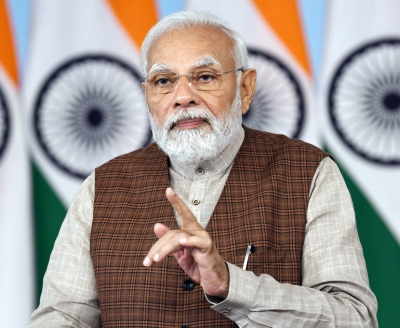
PM Modi to Attend IIT Kharagpur's Platinum Jubilee Celebrations on Saturday
20 November 2026

India Reiterates Support for Safe and Speedy Return of Rohingya Refugees to Myanmar
20 November 2026

Indore Bank Manager Arrested for Allegedly Confining Customer Over Loan Dues
20 November 2026