Supreme Court Issues Notice on PIL Seeking Barrier-Free Access in Residential Buildings Nationwide
The Supreme Court on Thursday agreed to hear a Public Interest Litigation (PIL) seeking mandatory barrier-free access in residential buildings, apartment complexes, and group housing projects across the country.
Written by
Anupam Pandey
Published
5 November 2026
Reading time
4 min read
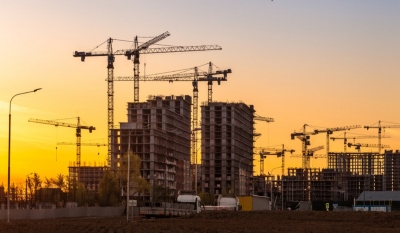
The Supreme Court on Thursday agreed to hear a Public Interest Litigation (PIL) seeking mandatory barrier-free access in residential buildings, apartment complexes, and group housing projects across the country.
A bench comprising Justices Vikram Nath and Aparesh Kumar Singh issued notices to the Centre, the Ministry of Housing and Urban Affairs (MoHUA) and the Ministry of Rural Development. The respondents have been asked to respond within four weeks.
During the hearing, counsel for the petitioner pointed out that the Supreme Court was already examining accessibility-related concerns in other proceedings, but the specific issue of accessibility in residential buildings had not been addressed. The counsel requested that the PIL be tagged with an ongoing case to ensure a comprehensive examination of the matter and avoid fragmented consideration.
Accepting the request, the bench directed that the petition be tagged with Writ Petition (Civil) No. 243 of 2005.
PIL Highlights Gaps in Accessibility Compliance
Filed through advocate Ashutosh Senger, the petition raises concerns over the alleged failure of authorities to ensure barrier-free access in residential buildings and their common-use facilities despite the provisions of the 2016 Act.
The plea argues that accessibility is a statutory obligation rather than an aspirational goal. It cites Sections 40 and 44 of the RPwD Act, which provide for the formulation and enforcement of accessibility standards and restrict the grant of building permissions, completion certificates and occupation certificates where prescribed requirements have not been met.
The petitioner has also relied on Section 2(x) of the Act, which includes housing within the definition of public facilities and services, to argue that accessibility standards should apply to residential buildings as well.
Highlighting the everyday difficulties faced by persons with disabilities, the petition states that poorly designed homes can prevent residents from independently accessing and using their own living spaces.
It identifies narrow doorways, inaccessible bathrooms and toilets, and insufficient circulation space as some of the barriers that can restrict the mobility and independence of wheelchair users and others with disabilities.
Petition Seeks Uniform National Accessibility Standards
The plea also points to differences in how states implement accessibility requirements. According to the petition, some states extend these standards to residential buildings and apartment complexes, while others limit their application to group housing projects or exclude private residential properties.
As a result, access to barrier-free housing can depend on the development control regulations applicable in a particular state, rather than a consistent nationwide framework, the petitioner contends.
The petition further refers to the Pradhan Mantri Awas Yojana-Urban (PMAY-U) 2.0 Operational Guidelines, which call on states and Union Territories to make appropriate provisions for ramps and other facilities to ensure barrier-free access in housing projects.
It argues that the absence of mandatory accessibility requirements in residential construction could undermine the statutory provision for reservation of housing for persons with benchmark disabilities under Section 37 of the RPwD Act, particularly when allotted homes themselves are inaccessible.
Accessibility Should Be Incorporated at Planning Stage
The petitioner has sought directions to the Centre and other authorities to ensure that accessibility standards are incorporated into the planning, design and construction stages of residential buildings.
The plea argues that accessibility should be treated as an essential requirement from the outset, rather than an additional facility considered only after construction has been completed.
The Supreme Court's decision to issue notice brings the matter before the concerned authorities for their responses.
Filed under
About the author
Anupam Pandey
Reporting and storytelling across theNews vertical for 4thWall Network.
More from 4thWall
Continue with News.
Related reporting first, followed by more stories from across the 4thWall Network.
Supreme Court Stays Criminal Contempt Proceedings Against Punjab Chief Secretary in DA Arrears Dispute
5 November 2026

Petrol Bombs Hurled During Andhra Pradesh Local Body Polls; TDP and YSRCP Trade Blame
5 November 2026

Jharkhand High Court Flags Road Safety Risks From Stray Dogs and Cattle on Highways
5 November 2026

Two Killed, One Injured as Speeding Trailer Rams Motorcycle in Rajasthan’s Ajmer
5 November 2026