South Korea Set to Break Annual Tourism Record Early as Arrivals Approach 19 Million
South Korea is estimated to have surpassed its previous annual record for foreign tourist arrivals with more than two months remaining in 2026, putting the country on course to cross 20 million visitors.
Written by
Anupam Pandey
Published
27 October 2026
Reading time
4 min read
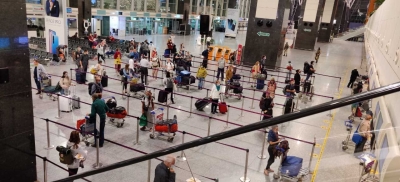
South Korea is estimated to have surpassed its previous annual record for foreign tourist arrivals with more than two months remaining in 2026, putting the country on course to cross 20 million visitors.
Preliminary figures showed that foreign arrivals reached approximately 18.91 million through Monday. The total is believed to have exceeded the previous annual record of 18.94 million, set last year, the Yonhap News Agency reported on Tuesday.
The ministry expects around 1.94 million foreign visitors next month if the current trend continues. On that basis, South Korea could cross the 20-million mark in the third week of November.
Government Targets 23 Million Foreign Visitors
Culture, Sports and Tourism Minister Chae Hwi-young said breaking the annual record more than two months before the end of the year has brought the government's target of attracting 23 million foreign visitors within reach.
Tourist arrivals have increased across most major source markets, including Chinese-speaking regions, Japan, Southeast Asia, Europe and the Americas.
The growth is also spreading beyond Seoul, with more international visitors entering through regional airports and ports and travelling to destinations outside the capital. Chae described the trend as encouraging, highlighting the potential for tourism to benefit a wider range of regions.
The minister said the government would focus not only on increasing visitor numbers but also on improving the quality of the tourism experience, with the aim of establishing South Korea as a distinctive destination in the global travel market.
Tourist Spending Rises 47.7%
The increase in international arrivals has been accompanied by a sharp rise in spending by foreign visitors.
According to the report, tourist spending increased 47.7 per cent from a year earlier, supported mainly by shopping, accommodation, and medical and wellness services.
The government attributed the tourism surge to the global popularity of South Korean pop culture, innovation within the tourism industry and public hospitality towards international visitors.
The figures point to the growing economic significance of inbound tourism, with spending across retail, hospitality and wellness services contributing to the sector's broader impact.
Migrant Population Reaches 2.81 Million
Separately, data released by South Korea's Ministry of Data and Statistics showed that the country's population with a migrant background increased to 2.81 million in 2025, up from 2.71 million a year earlier.
The group accounted for 5.4 per cent of South Korea's total population of 51.82 million.
The ministry defines people with a migrant background as individuals who are immigrants themselves or have at least one parent from overseas. The category includes foreign nationals, naturalised South Korean citizens and second-generation immigrants.
Foreign nationals made up 75.1 per cent of the migrant-background population, while second-generation immigrants accounted for 14.1 per cent. A further 9.1 per cent had acquired South Korean citizenship through naturalisation or recognition of parentage.
Younger Adults Drive Population Increase
People in their 20s recorded the largest increase among age groups in the migrant-background population, rising by 36,000 over the period.
Those in their 30s formed the largest age group, numbering 667,000, or 23.7 per cent of the total. People in their 20s followed with 607,000, accounting for 21.6 per cent, while those in their 40s numbered 439,000, or 15.6 per cent.
The working-age population, comprising people aged 15 to 64, stood at approximately 2.3 million in 2025.
Men accounted for 52.5 per cent of the migrant-background population, compared with 47.5 per cent for women. This represented 110.7 men for every 100 women.
Majority of Migrant Population Lives Near Seoul
The data also showed that 56 per cent of people with a migrant background lived in the greater Seoul metropolitan area. Seoul itself was home to 17.1 per cent of the total.
The concentration reflects the importance of the capital region as a centre of employment and settlement, even as international tourism expands into other parts of the country.
Together, the tourism and population figures highlight two developments in South Korea: the growing global appeal of its travel and cultural offerings, and the increasing presence of people with migrant backgrounds within its population.
Filed under
About the author
Anupam Pandey
Reporting and storytelling across theNews vertical for 4thWall Network.
More from 4thWall
Continue with News.
Related reporting first, followed by more stories from across the 4thWall Network.

Supreme Court Stays Criminal Contempt Proceedings Against Punjab Chief Secretary in DA Arrears Dispute
5 November 2026

Petrol Bombs Hurled During Andhra Pradesh Local Body Polls; TDP and YSRCP Trade Blame
5 November 2026

Jharkhand High Court Flags Road Safety Risks From Stray Dogs and Cattle on Highways
5 November 2026

Two Killed, One Injured as Speeding Trailer Rams Motorcycle in Rajasthan’s Ajmer
5 November 2026