Shiv Sena (UBT) Questions Legality of Alleged Phone Tapping, Cites Telegraph and Telecom Acts
The Shiv Sena (Uddhav Balasaheb Thackeray) has questioned the legality of alleged phone tapping by government agencies, accusing the Centre of using surveillance against political opponents.
Written by
Anupam Pandey
Published
16 November 2026
Reading time
4 min read
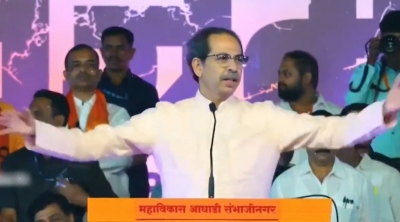
The Shiv Sena (Uddhav Balasaheb Thackeray) has questioned the legality of alleged phone tapping by government agencies, accusing the Centre of using surveillance against political opponents.
The Shiv Sena (Uddhav Balasaheb Thackeray) has questioned the legality of alleged phone tapping by government agencies, accusing the Centre of using surveillance against political opponents and describing the practice as an assault on Indian democracy.
In an editorial published on Monday in the party's mouthpiece Saamana, the Uddhav Thackeray-led faction referred to recent allegations by Lok Sabha Leader of Opposition Rahul Gandhi. Gandhi had claimed that incriminating evidence against Prime Minister Narendra Modi was stored on his phone and alleged that authorities were attempting to erase or monitor it.
The editorial argued that intercepting the communications of opposition leaders at the direction of the Prime Minister would amount to a serious criminal offence and a violation of privacy.
Citing Section 5(2) of the Indian Telegraph Act, 1885, and Section 20 of the Telecommunications Act, 2023, the editorial said that lawful interception by authorised central or state government officials is subject to specified conditions, including threats to national security, sovereignty and public emergencies. It argued that these provisions cannot be used to target political opponents.
The party also alleged that surveillance concerns could extend beyond Rahul Gandhi, naming Uttar Pradesh Chief Minister Yogi Adityanath, Maharashtra Chief Minister Devendra Fadnavis, Defence Minister Rajnath Singh and senior military officers as possible targets. These claims were presented in the editorial without independent evidence.
Drawing a parallel with the controversy over Israeli-developed Pegasus spyware, the editorial recalled allegations of surveillance during Prime Minister Modi's tenure and compared the political fallout to developments involving former Israeli Prime Minister Benjamin Netanyahu.
It further claimed that Netanyahu's political difficulties following allegations of surveillance against rivals offered a warning for India's current leadership. The editorial predicted that similar political developments could affect the Centre and suggested that Rahul Gandhi could eventually assume power.
The article also revisited earlier controversies in Maharashtra, accusing Fadnavis of using the state police machinery and senior police officials to monitor political rivals and journalists during previous changes in government. It alleged that senior Director General of Police-level officials had been sent to Israel for training related to phone tapping.
The editorial concluded by warning that the alleged misuse of surveillance powers and the erosion of constitutional safeguards could undermine public confidence in democratic institutions. It said such developments could provoke public protests against what it described as a corrupt and authoritarian government.
The allegations and political predictions in the editorial reflect the Shiv Sena (UBT)'s position and have not been independently established.
Filed under
About the author
Anupam Pandey
Reporting and storytelling across thePolitics vertical for 4thWall Network.
More from 4thWall
Continue with Politics.
Related reporting first, followed by more stories from across the 4thWall Network.
India in touch with Qatar authorities to ascertain well-being of naval veteran: MEA
20 November 2026
PM Modi to Launch Projects Worth Rs 34,470 Crore in Bihar, Dedicate ‘Nitish Setu’ on November 21
20 November 2026
Kerala Sanctions Rs 41.64 Crore for Smartphones for Anganwadi Workers
20 November 2026
Congress Removes Sanjana Jatav, Divya Maderna as National Secretaries; Appoints Four New Rajasthan Co-In-Charges
20 November 2026