Shiv Sena (UBT) Accuses Centre of ‘Police Raj’ Over Arrest of CJP Activists
Shiv Sena (Uddhav Balasaheb Thackeray) has criticised the BJP-led Central government over the arrest and detention of two Cockroach Janta Party (CJP) youth activists, accusing it of restricting peaceful protests.
Written by
Anupam Pandey
Published
23 October 2026
Reading time
4 min read
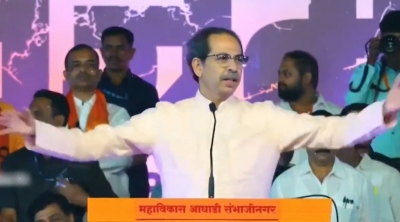
Shiv Sena (Uddhav Balasaheb Thackeray) has criticised the BJP-led Central government over the arrest and detention of two Cockroach Janta Party (CJP) youth activists, accusing it of restricting peaceful protests.
In an editorial published in its party mouthpiece *Saamana*, the Uddhav Thackeray-led faction questioned the authorities’ decision to detain Saurav Das and Ashutosh Ranka for seven days following their protest at Delhi’s Jantar Mantar against Chief Election Commissioner Gyanesh Kumar.
The editorial alleged that the government was displaying insecurity towards dissent and creating what it described as a virtual “Police Raj”. It questioned whether peaceful demonstrations involving young citizens carrying the national flag were being treated as a threat.
The party also criticised restrictions on public protest venues in several cities, including Mumbai, Delhi, Patna, Lucknow and Kolkata, arguing that such measures curtailed the right to peaceful assembly.
The editorial drew a comparison between the treatment of young protesters and the legal proceedings involving former politician Kuldeep Sengar, who was convicted in a rape case. It questioned what it viewed as differences in the treatment of protesters and those accused or convicted of serious offences.
According to *Saamana*, the two CJP activists were sent to Tihar Jail after allegedly violating prohibitory orders governing demonstrations at Jantar Mantar. The editorial claimed that restrictions on the venue had made it increasingly difficult for citizens to organise protests against the government.
“The children did not go to Jantar Mantar to play ‘Dandiya’; they went to raise their voice against corrupt electoral practices,” the editorial stated, arguing that requiring government permission for protests against state authorities undermined the purpose of democratic dissent.
The Thackeray faction also challenged the argument that prior police clearances were necessary to prevent disruptive elements from entering demonstrations. It cited public figures, opposition MPs and economist Parakala Prabhakar among those who had participated in protests, questioning whether such participants should also be viewed with suspicion.
The editorial further criticised the use of police forces and barricades to manage demonstrations, arguing that elected representatives should engage directly with protesters rather than rely primarily on restrictions and security measures.
It also expressed disappointment with observations attributed to the High Court concerning student unrest in countries such as France and Albania. The party urged the judiciary to examine the underlying reasons for youth protests instead of focusing solely on their consequences.
The editorial alleged that the current political climate discouraged citizens from questioning those in power or demanding accountability. It concluded that a government’s response to peaceful demonstrations should be assessed against its commitment to democratic freedoms.
The remarks add to the political dispute surrounding the detention of the two activists and the restrictions governing protests at Jantar Mantar.
Filed under
About the author
Anupam Pandey
Reporting and storytelling across thePolitics vertical for 4thWall Network.
More from 4thWall
Continue with Politics.
Related reporting first, followed by more stories from across the 4thWall Network.
Amit Shah Challenges Rahul Gandhi to Write to PM Modi, Says Special Parliament Session Can Be Convened for SIR Debate
5 November 2026
Karnataka CM Thanks PM Modi for Rajyotsava Greetings, Seeks Drought Relief and Action on Sugarcane Farmers’ Demands
5 November 2026
From Gunfire to Bullet Trains: Assam Embarking on New Era of Progress, Says CM Himanta Biswa Sarma
5 November 2026
Tamil Nadu BJP Chief Accuses Vijay Government of Interfering in Hindu Religious Practices
5 November 2026