Maharashtra Government Rolls Out Measures to Tackle Drought and Water Scarcity Across 304 Talukas
The Maha government has introduced a series of measures and issued comprehensive guidelines to address drought and severe water scarcity across the state after declaring drought in 304 talukas due to deficient rainfall.
Written by
Anupam Pandey
Published
16 November 2026
Reading time
4 min read
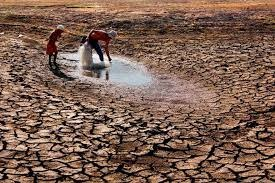
The Maha government has introduced a series of measures and issued comprehensive guidelines to address drought and severe water scarcity across the state after declaring drought in 304 talukas due to deficient rainfall.
In a statement released late Sunday, the state government outlined a series of Government Resolutions (GRs), circulars and directives issued between October 5 and November 6. The measures include decentralising administrative powers, accelerating water and soil conservation projects, ensuring fodder availability for livestock and establishing coordination committees at district and taluka levels.
To strengthen water conservation and infrastructure, the government has extended administrative deadlines for projects under the District Annual Plan (General) for 2026-27. Administrative approvals for these works can now be granted until November 30.
The Chief Secretary's directives have authorised local secretaries and District Collectors to expedite technical approvals. Under the MLA Local Area Development programme, District Collectors can sanction drought- and water scarcity-related projects costing up to Rs 25 lakh each in both rural and urban areas. Members of Parliament have also been requested to recommend priority projects under the MP Local Area Development scheme.
In the 304 talukas categorised under Trigger-1 and Trigger-2 drought conditions, various soil and water conservation projects are being undertaken through NGOs and the VB G RAM G scheme. These include deepening and widening streams, constructing farm ponds, building recharge shafts, installing check dam gates and developing rainwater harvesting structures.
A state-level high-powered committee headed by the Chief Minister has also been established to monitor the implementation of soil and water conservation projects.
Fodder security and livestock management
To address the shortage of fodder, the government is scaling up production across agricultural land, forest areas and reservoir submergence zones.
The state has fixed a base price of Rs 12 per kg for fodder, while silage has been capped at Rs 8 per kg, excluding transportation costs.
Suitable forest department land and reservoir silt-bed areas with irrigation facilities are being allocated for cultivating short-duration, multi-cut fodder crops. District Collector-led committees will oversee the allocation process.
The Forest Department has also suspended regular grass auctions within its jurisdiction until further notice to ensure adequate fodder supplies for livestock and wildlife.
District Executive Drought Management Committees will decide on setting up fodder camps, with a provision for one camp in each revenue circle depending on livestock numbers and water availability.
Corporate Social Responsibility (CSR) funds will be used to support fodder depots, water supply arrangements, hygiene facilities, CCTV systems and balers. The government has prohibited the transportation of fodder outside Maharashtra and its use for non-fodder purposes, including biofuel production, power generation and industrial packaging.
Drinking water and public health measures
The guidelines also place emphasis on ensuring access to safe drinking water in schools and anganwadis. These institutions have been directed to maintain clean drinking water facilities, functional handwashing stations and conduct regular biological testing of water samples.
Where permanent infrastructure remains incomplete, temporary arrangements such as water tankers and pipeline extensions must be provided.
Priority measures include deepening wells, removing silt, acquiring private borewells, introducing temporary supplementary piped water supply schemes and constructing recharge shafts near existing water sources.
Urban and rural local bodies have also been authorised to restore disconnected electricity supplies to water supply schemes after collecting one month's security deposit and the applicable reconnection charges.
New water connections can be provided upon payment of standard connection charges, even if the applicant has outstanding dues from an earlier period.
Additionally, taluka-level cells under the Chief Minister's Relief Fund and coordination committees are being established to strengthen the delivery of public health services in drought-affected areas.
The government said the measures are intended to accelerate drought response, improve water availability, protect livestock and ensure essential services continue in affected regions.
Filed under
About the author
Anupam Pandey
Reporting and storytelling across theNews vertical for 4thWall Network.
More from 4thWall
Continue with News.
Related reporting first, followed by more stories from across the 4thWall Network.

Amritpal Singh Flown to Delhi Under Tight Security Ahead of Grandmother's Cremation in Punjab
20 November 2026
PM Modi to Attend IIT Kharagpur's Platinum Jubilee Celebrations on Saturday
20 November 2026
India Reiterates Support for Safe and Speedy Return of Rohingya Refugees to Myanmar
20 November 2026

Indore Bank Manager Arrested for Allegedly Confining Customer Over Loan Dues
20 November 2026