ISI Suspected of Building Local Terror Network in J&K, Intelligence Inputs Point to Possible Larger Strikes
Two separate security incidents in Jammu and Kashmir have renewed concerns over a possible resurgence of terrorist activity, with security officials and experts alleging that Pakistan's Inter-Services Intelligence (ISI).
Written by
Anupam Pandey
Published
12 November 2026
Reading time
4 min read
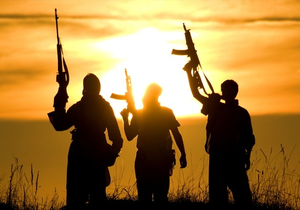
Two separate security incidents in Jammu and Kashmir have renewed concerns over a possible resurgence of terrorist activity, with security officials and experts alleging that Pakistan's Inter-Services Intelligence (ISI).
On Wednesday, three Central Reserve Police Force (CRPF) personnel were injured when terrorists attacked a security checkpoint at Akhran, near Mira Bazar in Kulgam district.
In another incident, the bullet-riddled bodies of two missing Special Police Officers (SPOs) were recovered in Kishtwar district. Security agencies are investigating a possible terror angle in the killings, particularly after the officers' service weapons were found missing from the scene.
The incidents have brought the security situation in Jammu and Kashmir under renewed scrutiny following a period of relative calm after earlier episodes of violence.
In July, a police party deployed for the Amarnath Yatra was targeted by terrorists, resulting in the death of Head Constable Aashiq Hussain Qureshi. Around the same period, The Resistance Front (TRF), described as a proxy of the Lashkar-e-Taiba (LeT), reportedly resumed targeting migrant workers and issued warnings to members of the Kashmiri Pandit community.
Dr Abhinav Pandya, founder of the Udaipur-based Usanas Foundation, a think tank specialising in geopolitical and security affairs, said the recent incidents indicated that the ISI continued to maintain operational networks in Jammu and Kashmir.
Pandya alleged that the Pakistani intelligence agency was operating through proxies such as the TRF, whose activities, according to him, had increased following the abrogation of Article 370.
He described the recent attacks as attempts to demonstrate the continued operational capabilities of these networks rather than launch large-scale strikes immediately.
According to Pandya, smaller attacks allow such groups to maintain their presence in the region while sending a message about their capabilities.
A security official also cautioned against underestimating these incidents because of their limited scale. The official alleged that the ISI was deliberately keeping attacks relatively small to maintain operational activity while building resources and strengthening its local network.
Pandya further claimed that the ISI had assumed a more direct role in coordinating operations involving the Lashkar-e-Taiba, Jaish-e-Mohammed and Hizbul Mujahideen in Jammu and Kashmir. He alleged that resources were being mobilised at the grassroots level in preparation for possible larger attacks.
Another official said Pakistan had faced difficulties in carrying out infiltration attempts following the abrogation of Article 370 and Operation Sindoor. The official claimed that nearly 1,000 terrorists were waiting at launchpads across the border and suggested that Pakistan was increasingly looking to develop a stronger local network in Jammu and Kashmir.
According to the official, relying on local operatives could reduce the need for cross-border infiltration and make it more difficult to establish a direct link to Pakistan following an attack.
Investigations into the Kulgam attack have reportedly brought local TRF commanders under scrutiny. Security agencies are searching for Mohammad Lateef Bhat, a 22-year-old alleged local commander of the outfit and a resident of Kulgam in South Kashmir.
The agencies are also looking for Bilal Ahmad Mir, Mohammad Umar Mir and Abid Qayoom, all residents of Baramulla in North Kashmir.
Officials believe the search for these individuals points to a possible strategy of relying increasingly on local operatives to carry out attacks. They suspect that smaller operations could provide the network with time to expand its ground-level resources before attempting more extensive strikes in the Valley.
Pandya said Indian security agencies would need to strengthen human intelligence (HUMINT) capabilities alongside technical intelligence (TECHINT) to counter the evolving threat.
He argued that greater coordination between local intelligence gathering and technological surveillance would be essential, particularly if the ISI continued to rely on locally based operatives rather than militants infiltrating from Pakistan.
Security officials have also stressed the need to integrate both intelligence mechanisms to identify emerging networks and prevent further attacks.
Filed under
About the author
Anupam Pandey
Reporting and storytelling across theNews vertical for 4thWall Network.
More from 4thWall
Continue with News.
Related reporting first, followed by more stories from across the 4thWall Network.

Amritpal Singh Flown to Delhi Under Tight Security Ahead of Grandmother's Cremation in Punjab
20 November 2026
PM Modi to Attend IIT Kharagpur's Platinum Jubilee Celebrations on Saturday
20 November 2026
India Reiterates Support for Safe and Speedy Return of Rohingya Refugees to Myanmar
20 November 2026

Indore Bank Manager Arrested for Allegedly Confining Customer Over Loan Dues
20 November 2026