India’s Development Cooperation a Key Pillar of Foreign Policy, Says MP at UN
India's development cooperation remains a central pillar of its foreign policy, and the country uses partnerships across the Global South to support infrastructure, healthcare, climate resilience, and capacity-building.
Written by
Anupam Pandey
Published
23 October 2026
Reading time
4 min read
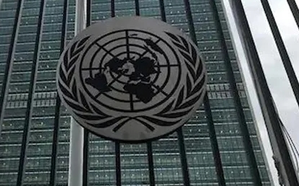
India's development cooperation remains a central pillar of its foreign policy, and the country uses partnerships across the Global South to support infrastructure, healthcare, climate resilience, and capacity-building.
Addressing the India-UN Fund Annual Event 2026 on Thursday, Singh Deo, who represents Bolangir in Odisha, highlighted the role of the India-UN Development Partnership Fund in supporting development projects across partner countries.
Established in 2017 with an initial commitment of $150 million, the fund supports initiatives spanning concessional financing, infrastructure, humanitarian assistance, digital cooperation and cultural heritage conservation.
Singh Deo said India's approach was based on consultation, mutual respect and the sovereignty of partner nations. She emphasised that recipient countries identify their own priorities, with India working alongside them to translate those needs into practical development outcomes.
The event brought together representatives from countries across the Pacific, Southeast Asia, Europe, Africa and Latin America to discuss the impact of India's development assistance.
**Fund Has Supported Projects in 64 Countries**
UN Under-Secretary-General Hao Liang Xu said the India-UN Development Partnership Fund had supported 94 projects across 64 countries, combining India's financial resources and development experience with the needs identified by partner nations.
He cited a recent visit to Burkina Faso, where he observed the impact of Indian-supported initiatives, including the construction of the Nyando Dam. The projects have supported irrigation, women's cooperatives, community fisheries and school improvements, benefiting more than 50,000 people, he said.
India's Permanent Representative to the UN, P. Harish, linked the country's development cooperation approach to the civilisational principle of *Vasudhaiva Kutumbakam*, meaning that the world is one family.
He said sharing knowledge, strengthening the capabilities of partner countries and working collectively could help create more sustainable development outcomes across the Global South.
**Partner Countries Highlight Impact of Indian Assistance**
Representatives from several countries outlined how the fund has supported projects addressing local development challenges.
Tuvalu's Permanent Representative to the UN, Tapugao Falefou, highlighted a solar home energy system installed for the community of Funaota, providing access to more reliable and sustainable electricity.
Sri Lanka's Permanent Representative, Jayantha Jayasuriya, emphasised the importance of development partnerships at a time when international development financing faces growing pressure. He also referred to India's assistance during Sri Lanka's 2022 economic crisis, including a $1 billion line of credit.
Jayasuriya further noted India's response to Cyclone Ditwah in November 2025, when rescue teams were deployed under Operation Sagar Bandhu within 24 hours, according to his remarks.
Moldova's Permanent Representative, Gheorghe Leuca, described projects supported by the fund to improve population and migration statistics and strengthen the country's capacity to respond to humanitarian emergencies.
Tanzania's Permanent Representative, Togolani Edris Mawora, highlighted the country's climate-related challenges, including droughts, floods and changing rainfall patterns. He welcomed the fund's Climate Change and Resilience Programme as a timely intervention to address these risks.
Cuba's Permanent Representative, Ernesto Soberon Guzman, praised India's support for South-South cooperation and highlighted a fund-backed initiative aimed at reducing maternal and neonatal mortality and morbidity.
Jarbaz Barbosa, Director of the Pan American Health Organisation, also discussed health programmes supported by the fund and their impact on communities. He cited a health network established for the Indigenous Nivacle community in Paraguay, highlighting the importance of culturally sensitive healthcare.
**South-South Cooperation Remains Central to Development Agenda**
The discussions underscored the role of South-South cooperation in addressing development challenges through partnerships between developing countries.
Participants highlighted initiatives spanning renewable energy, healthcare, disaster response, climate adaptation and statistical capacity-building, illustrating the range of projects supported through India's partnership with the United Nations.
The fund's approach, based on priorities identified by recipient countries, remains focused on translating development assistance into practical outcomes for communities, particularly those facing economic, environmental and social vulnerabilities.
Filed under
About the author
Anupam Pandey
Reporting and storytelling across theNews vertical for 4thWall Network.
More from 4thWall
Continue with News.
Related reporting first, followed by more stories from across the 4thWall Network.

Supreme Court Stays Criminal Contempt Proceedings Against Punjab Chief Secretary in DA Arrears Dispute
5 November 2026

Petrol Bombs Hurled During Andhra Pradesh Local Body Polls; TDP and YSRCP Trade Blame
5 November 2026

Jharkhand High Court Flags Road Safety Risks From Stray Dogs and Cattle on Highways
5 November 2026

Two Killed, One Injured as Speeding Trailer Rams Motorcycle in Rajasthan’s Ajmer
5 November 2026