India Now Has Four Navigation Satellites in Orbit; Five More Launches Planned This Financial Year: ISRO Chief
India now has four navigation satellites in orbit after the GSLV-F18 mission successfully deployed the NVS-03 satellite, ISRO Chairman V. Narayanan said on Saturday.
Written by
Anupam Pandey
Published
31 October 2026
Reading time
4 min read
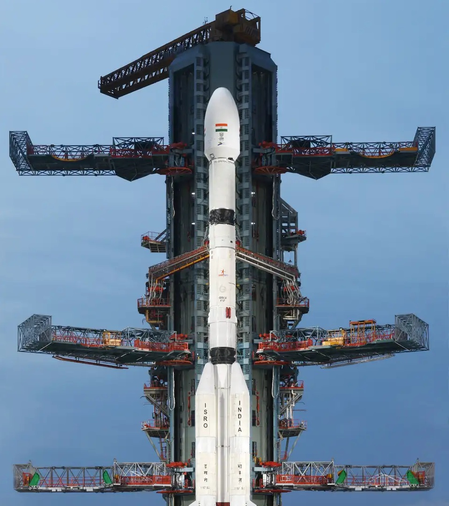
India now has four navigation satellites in orbit after the GSLV-F18 mission successfully deployed the NVS-03 satellite, ISRO Chairman V. Narayanan said on Saturday.
Speaking after the successful deployment of NVS-03, Narayanan said four satellites are required to provide enhanced Positioning, Navigation and Timing (PNT) services. However, a constellation of seven satellites is needed to ensure uninterrupted services and greater positioning accuracy.
“For enhanced PNT services, a minimum of four satellites are required, and with today's launch, we now have four satellites in orbit,” he said.
Narayanan added that two additional satellites were in the final stages of preparation, while approval for another satellite was being processed. Once the planned constellation is in place, India will join a select group of countries operating their own navigation satellite systems.
ISRO Targets Five More Launches
Outlining the agency’s launch schedule, the ISRO chief said it was targeting five more missions before the end of the current financial year. These include the uncrewed Gaganyaan G mission, at least two Polar Satellite Launch Vehicle (PSLV) missions and two Small Satellite Launch Vehicle (SSLV) missions.
ISRO is also planning a launch for the private sector. Narayanan said the agency was looking at six launches overall, although completing at least five missions remained its primary target.
More Than 8,000 Tests Completed for Gaganyaan
Highlighting the significance of the Gaganyaan programme, Narayanan described it as a major technological undertaking aimed at sending Indian astronauts, known as Gaganyatris, into space aboard an indigenous launch vehicle.
He said ISRO had completed more than 8,000 tests so far. Before undertaking a crewed spaceflight, the agency must successfully complete three missions without astronauts on board.
“Gaganyaan is a highly prestigious, technologically intensive and important programme. Its objective is to send Indian astronauts, or Gaganyatris, into space using an indigenous launch vehicle. So far, we have completed more than 8,000 tests. Before sending humans into space, we must successfully execute three missions without any crew on board,” he said.
Narayanan stressed that astronaut safety remained the programme's foremost priority, explaining that ISRO was currently concentrating on the uncrewed missions and conducting extensive simulations of critical systems.
He said teams led by the directors of the LPS and URC centres had been developing and testing key systems. Meanwhile, the IPRC and BSSE teams had prepared the launch vehicle and contributed to software development for the service and crew modules.
Describing the programme as progressing well, Narayanan expressed confidence that India would achieve the milestone in the near future under the guidance of the Prime Minister.
Filed under
About the author
Anupam Pandey
Reporting and storytelling across theNews vertical for 4thWall Network.
More from 4thWall
Continue with News.
Related reporting first, followed by more stories from across the 4thWall Network.

Supreme Court Stays Criminal Contempt Proceedings Against Punjab Chief Secretary in DA Arrears Dispute
5 November 2026

Petrol Bombs Hurled During Andhra Pradesh Local Body Polls; TDP and YSRCP Trade Blame
5 November 2026

Jharkhand High Court Flags Road Safety Risks From Stray Dogs and Cattle on Highways
5 November 2026

Two Killed, One Injured as Speeding Trailer Rams Motorcycle in Rajasthan’s Ajmer
5 November 2026