Delhi HC Denies Bail to Man Accused of Passing Classified Military Documents to Pakistan High Commission
The Delhi High Court has rejected the regular bail plea of Habib Ur Rahman, accused in a case under the Official Secrets Act involving the alleged possession and transmission of classified military documents.
Written by
Anupam Pandey
Published
23 October 2026
Reading time
4 min read
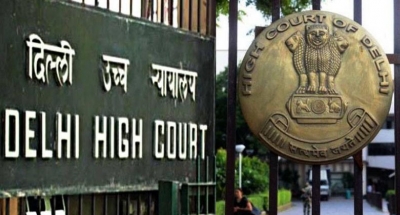
The Delhi High Court has rejected the regular bail plea of Habib Ur Rahman, accused in a case under the Official Secrets Act involving the alleged possession and transmission of classified military documents.
A single-judge Bench of Justice Sanjeev Narula held that the material on record prima facie linked Rahman to the alleged chain of transmission and that his prolonged incarceration and medical condition did not warrant his release at this stage.
In an order dated September 25, the court said the sensitivity of the documents, the nature of the allegations and their alleged intended destination weighed against granting bail.
“The gravity of the offence is an important consideration, but it does not relieve the Court of the duty to assess the case on its own facts. An allegation bearing upon national security calls for a close scrutiny; it does not place the matter beyond the Court's bail jurisdiction,” the court observed.
Prosecution alleges transmission of sensitive military material
Rahman was arrested on July 14, 2021, following the registration of an FIR at the Crime Branch police station under Sections 3 and 9 of the Official Secrets Act, 1923. The case also invokes provisions of the Indian Penal Code relating to criminal breach of trust, destruction of evidence, theft, house trespass, criminal conspiracy and common intention.
According to the prosecution, Rahman was apprehended with copies of documents relating to military training, the operationalisation of the Armed Forces Special Operations Division (AFSOD), an intelligence summary and other military material marked confidential or restricted.
Army authorities subsequently verified the documents as genuine, classified and sensitive, the prosecution submitted.
Investigators alleged that Rahman was not merely in possession of the documents but acted as an intermediary between co-accused Naik Clerk Paramjeet Kumar and Rana Muhammad Qasim Zia, described in the case as an official of the Pakistan High Commission.
Opposing bail, the prosecution cited the recovery and authentication of the documents, financial transactions mentioned in the chargesheet, mobile phone records and call detail records. It also relied on the statement of Rahman's employee, Mohd. Arif, who allegedly delivered documents to the Pakistan High Commission on Rahman's instructions.
The prosecution further referred to subscriber details of a SIM card allegedly obtained in the employee's name, with Rahman's number provided as the alternate contact. Investigators also cited Rahman's alleged access to the Army establishment through business dealings and his association with Paramjeet Kumar.
These remain prosecution allegations, and the High Court clarified that its observations on the bail plea did not determine the merits of the case.
Court weighs prolonged custody and trial delay
Seeking release, Rahman's counsel argued that he had undergone more than three years and four months of actual custody, the investigation had been completed and the evidence was largely documentary, already in the possession of the prosecution or the court.
The defence also pointed out that Rahman had remained on interim bail from April 2024 until he surrendered on February 6, 2026. According to his counsel, there had been no allegation that he absconded, approached witnesses or tampered with evidence while on interim bail.
The defence further submitted that only four witnesses had been examined and that the trial was unlikely to conclude in the near future, making continued detention punitive.
The High Court acknowledged that Rahman's compliance with the interim bail conditions and the absence of allegations of misuse of liberty weighed in his favour. However, it held that these factors did not outweigh its prima facie assessment of the prosecution material.
The court noted that the latest nominal roll recorded three years, four months and 13 days of actual custody as of September 18, 2026.
Referring to Supreme Court judgments concerning bail in cases involving prolonged incarceration and delayed trials, the High Court observed that the seriousness of an offence could not, by itself, justify detention for an indefinite period when the trial was unlikely to conclude within a reasonable time.
“The custody undergone is substantial; at this stage, however, it does not outweigh the prima facie assessment of the record noticed above,” the order stated.
Medical condition not sufficient for regular bail
The court also examined Rahman's medical condition, with the latest medical report stating that he was wheelchair-dependent, required assistance with daily activities and suffered from post-traumatic paraplegia, left upper limb paresis, neurogenic bladder and other ailments.
The report recorded that he was receiving treatment and follow-up care at Safdarjung Hospital, Dr BSA Hospital, G.B. Pant Hospital and other specialist departments. His general medical condition was described as sick.
However, the court noted that the report did not establish that the prescribed treatment could not be provided while he remained in custody or that his continued incarceration was medically incompatible with his condition.
“The medical record, therefore, does not by itself justify release on regular bail at this stage,” the court said.
Trial court directed to expedite proceedings
While dismissing the bail application, the High Court directed the trial court to accord due priority to the case and make efforts to record prosecution evidence expeditiously. It also instructed that unnecessary adjournments should not be granted to either side.
Justice Narula separately directed the jail superintendent to ensure that Rahman received all necessary investigations, specialist consultations, physiotherapy and other prescribed treatment without avoidable delay. Any treatment unavailable within the jail was to be arranged at an appropriate government hospital.
The High Court clarified that its observations were limited to the bail application and should not be interpreted as findings on the merits of the prosecution's case.
Filed under
About the author
Anupam Pandey
Reporting and storytelling across theNews vertical for 4thWall Network.
More from 4thWall
Continue with News.
Related reporting first, followed by more stories from across the 4thWall Network.
Supreme Court Stays Criminal Contempt Proceedings Against Punjab Chief Secretary in DA Arrears Dispute
5 November 2026

Petrol Bombs Hurled During Andhra Pradesh Local Body Polls; TDP and YSRCP Trade Blame
5 November 2026

Jharkhand High Court Flags Road Safety Risks From Stray Dogs and Cattle on Highways
5 November 2026

Two Killed, One Injured as Speeding Trailer Rams Motorcycle in Rajasthan’s Ajmer
5 November 2026