Chhath Puja in Maharashtra: When Cultural Identity Becomes a Political Battleground
Maharashtra has always been a state shaped by movement, diversity and competing identities. Mumbai, in particular, is a city built by generations of people who arrived from different parts of India and made it their home
Written by
Anupam Pandey
Published
16 November 2026
Reading time
4 min read
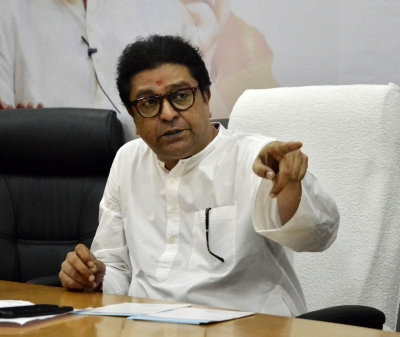
Maharashtra has always been a state shaped by movement, diversity and competing identities. Mumbai, in particular, is a city built by generations of people who arrived from different parts of India and made it their home
Every few years, the question of who belongs, whose culture deserves space and what constitutes regional identity returns to the political conversation.
The latest controversy surrounding Chhath Puja and Maharashtra Navnirman Sena chief Raj Thackeray's remarks is another reminder of how easily cultural practices can become political flashpoints.
In his November 13 statement, Raj Thackeray accused the Bharatiya Janata Party of attempting to manufacture social and cultural tensions in Mumbai by using Chhath Puja as a political issue.
He alleged that social media videos depicting the festival and attempts to play Bhojpuri songs at some railway stations were part of a strategy to provoke friction between Marathi and North Indian communities, particularly with an eye on the forthcoming Uttar Pradesh Assembly elections. He urged Marathi people and MNS workers not to fall into what he described as the BJP's political trap.
There is a legitimate political question in Thackeray's argument: can festivals and cultural expressions be selectively amplified by political parties to consolidate support among particular communities?
Political mobilisation around identity is hardly new in India. Religious celebrations, linguistic pride and regional symbols have often been used to build political narratives. Parties across the political spectrum have found ways to connect cultural events with electoral messaging.
However, questioning the political use of a festival is not the same as questioning the presence of the festival itself. That distinction appears to have been blurred in the current debate.
Chhath Puja is an important religious and cultural observance, particularly among communities from Bihar and parts of eastern Uttar Pradesh.
For many families living outside their home states, celebrating it is not an attempt to replace the culture of their adopted city. It is a way of preserving family traditions, faith and a connection with their roots. Mumbai's identity has never depended on people abandoning their cultural backgrounds when they move here.
At the same time, Maharashtra's regional identity and the preservation of Marathi language and culture are legitimate subjects of public discussion.
Marathi is central to the state's historical and cultural life. Its promotion, protection and continued use in public institutions deserve serious attention. But protecting a regional language does not require treating the cultural practices of other Indian communities as an intrusion.
The more important question, therefore, is not whether Chhath Puja belongs in Maharashtra. It is whether public spaces, civic arrangements and cultural events are being managed fairly, lawfully and without political discrimination.
If railway announcements, public celebrations or the use of shared infrastructure violate established rules, the authorities should address those issues through transparent and consistent procedures. The identity of the language being played or the community organising a celebration should not determine how rules are applied.
Thackeray has also accused the BJP of using the controversy to create divisions ahead of elections in Uttar Pradesh.
That allegation remains his political interpretation and should be examined against evidence rather than accepted as a fact. The BJP, meanwhile, has rejected the MNS position, with its spokesperson Keshav Upadhye questioning the relevance of the party's objections.
Union Minister Chirag Paswan and Jan Suraaj founder Prashant Kishor also criticised Thackeray's remarks, arguing that they targeted people from Bihar and Uttar Pradesh and encouraged regionalism. The reactions underline how the dispute has moved beyond Maharashtra's internal politics and become a national political argument.
There is another dimension that deserves attention: the everyday contribution of migrant communities to Maharashtra. Workers, small business owners, professionals, traders and entrepreneurs from different states are part of the state's economic and social landscape.
Their contribution does not diminish the role of Marathi-speaking communities or Maharashtra's distinct identity. Both realities can coexist. Treating them as competing claims risks reducing a complex society to a contest over cultural ownership.
Mumbai's economy depends on people from different backgrounds working, trading, building businesses and participating in public life. A city of this scale cannot function by drawing rigid cultural boundaries around its residents.
Nor should regional pride be dismissed as outdated or unreasonable. The challenge is to recognise both without allowing political rhetoric to turn difference into hostility.
The BJP, too, must answer questions about how it approaches cultural events. If a festival is being promoted primarily when it offers electoral visibility, political parties should be open to scrutiny.
Cultural celebrations should not become instruments for manufacturing a confrontation between communities. But that scrutiny must be applied consistently, not used to suggest that a particular festival or its devotees have no place in Maharashtra.
The responsibility also lies with the state government and local authorities. They must ensure that public spaces remain accessible, permissions are handled transparently, and public order is maintained without favouring or targeting any community. Political parties should not be allowed to turn routine administrative decisions into tests of regional loyalty.
Ultimately, Chhath Puja does not threaten Marathi culture simply by being celebrated in Maharashtra. Equally, the celebration of a festival should not be used as a convenient backdrop for political mobilisation.
Maharashtra can preserve its language, history and cultural heritage while respecting the traditions of people who have made the state their home.
The real test of Maharashtra's social fabric is not whether every resident celebrates the same festivals or speaks the same language. It is whether people with different identities can share public spaces without being made to feel that their presence needs political permission.
Raj Thackeray's allegations about the BJP's motives deserve scrutiny. So does the wider politics of regional identity that his remarks have brought back into focus.
But the debate should not lose sight of the people at its centre: ordinary residents who want to practise their traditions, earn a living and live without being drawn into a manufactured contest over belonging.
Maharashtra's cultural confidence should be measured by its ability to preserve its own heritage while making room for the diversity that has long shaped it. That is a more sustainable expression of regional pride than turning a festival into a dividing line.
Filed under
About the author
Anupam Pandey
Reporting and storytelling across thePolitics vertical for 4thWall Network.
More from 4thWall
Continue with Politics.
Related reporting first, followed by more stories from across the 4thWall Network.
India in touch with Qatar authorities to ascertain well-being of naval veteran: MEA
20 November 2026
PM Modi to Launch Projects Worth Rs 34,470 Crore in Bihar, Dedicate ‘Nitish Setu’ on November 21
20 November 2026
Kerala Sanctions Rs 41.64 Crore for Smartphones for Anganwadi Workers
20 November 2026
Congress Removes Sanjana Jatav, Divya Maderna as National Secretaries; Appoints Four New Rajasthan Co-In-Charges
20 November 2026