BHAVYA Scheme Aims to Transform India’s Manufacturing Sector with 100 Industrial Parks
India’s manufacturing sector is set for a major structural shift under the Rs 33,660 crore Bharat Audyogik Vikas Yojna (BHAVYA), a government initiative to develop 100 plug-and-play industrial parks across the country.
Written by
Anupam Pandey
Published
14 October 2026
Reading time
4 min read
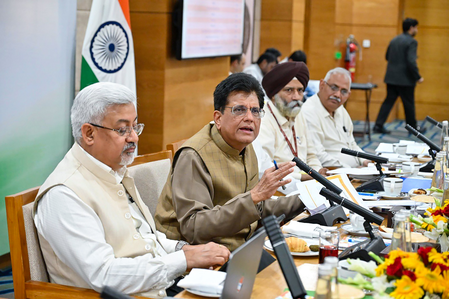
India’s manufacturing sector is set for a major structural shift under the Rs 33,660 crore Bharat Audyogik Vikas Yojna (BHAVYA), a government initiative to develop 100 plug-and-play industrial parks across the country.
Manufacturing currently contributes around 16–17 per cent of India’s GDP and employs more than 27 million workers. The National Manufacturing Mission aims to increase the sector’s contribution to 25 per cent by 2035, according to a government factsheet released on Wednesday.
Manufacturing is also changing, with medium- and high-technology industries accounting for 46.3 per cent of manufacturing value addition. This points to a gradual shift towards technology-intensive production and higher-value industrial activities.
As manufacturing expands, businesses increasingly require dependable infrastructure, efficient logistics and predictable approval processes. Diversifying global supply chains has further increased the importance of well-connected industrial locations.
Plug-and-play industrial parks aim to meet these needs by providing essential infrastructure and shared facilities before companies begin operations. The model is intended to reduce the time and cost involved in establishing manufacturing units.
Approved by the Cabinet in March 2026, the BHAVYA scheme is being implemented in partnership with state governments and private developers. It aims to expand domestic manufacturing capacity and improve the ease of doing business through streamlined approvals, effective single-window clearance systems and investor-friendly reforms.
By lowering barriers to entry and providing ready-to-use industrial infrastructure, the initiative is expected to help businesses move more quickly from investment to production. The scheme also seeks to attract investment, support micro, small and medium enterprises (MSMEs), strengthen supply chains, generate employment and promote industrial growth across regions.
India’s industrial development strategy has evolved through several phases. The initial focus was on industrial estates and Special Economic Zones (SEZs), which provided industrial land, common infrastructure and regulatory incentives. As of February 2026, the country had 370 notified SEZs, which had attracted investments worth Rs 7.82 lakh crore and generated employment for more than 31.7 lakh people.
The approach subsequently expanded from individual industrial zones to larger manufacturing hubs. As of October 14, 2026, the India Industrial Land Bank had mapped a total of 4,164 industrial parks.
The National Industrial Corridor Development Programme (NICDP) further broadened this approach by integrating manufacturing zones with utilities, logistics infrastructure and urban services. Industrial locations such as the Dholera Special Investment Region in Gujarat, the Shendra-Bidkin Industrial Area in Maharashtra, Vikram Udyogpuri in Madhya Pradesh, and the Integrated Industrial Township in Greater Noida, Uttar Pradesh, illustrate the focus on integrated industrial planning.
Under BHAVYA, the scheme will provide financial assistance of up to Rs 1 crore per acre for industrial park development. Eligible infrastructure includes internal roads, power supply, water networks, drainage systems, common effluent treatment facilities, value-added infrastructure and information and communication technology-enabled administration.
The scheme also permits up to 25 per cent of approved funding to be allocated to external infrastructure, including road and rail links and last-mile logistics connectivity, to integrate industrial parks with wider transport networks.
BHAVYA will be implemented over six years, from the 2026–27 financial year to 2031–32. During the first phase, up to 50 industrial parks will be selected through a challenge-based process conducted in two rounds. Subsequent phases will select additional parks, bringing the total supported under the scheme to 100.
The proposed industrial parks will cover areas ranging from 25 to 1,000 acres, subject to the mandatory land-size criteria specified in the scheme guidelines.
Filed under
About the author
Anupam Pandey
Reporting and storytelling across theNews vertical for 4thWall Network.
More from 4thWall
Continue with News.
Related reporting first, followed by more stories from across the 4thWall Network.

Maharashtra Announces Drought Relief Package, Rs 5,000 Advance Aid for Farmers Before Diwali
14 October 2026
Terror Outfits Using AI, ‘Liar’s Dividend’ to Undermine Security Agencies and Recruit Members
14 October 2026
Air India Flight Cleared After Hijack Alert, Security Checks Find Nothing Suspicious
14 October 2026
Gujarat Govt Raises Anganwadi Meal Budget by 67 PC; Adds Green Gram to Menu
14 October 2026